english
  deutsch
  français
Work of the Week – Atsuhiko Gondai: ZEN
- 22 Jun 2026
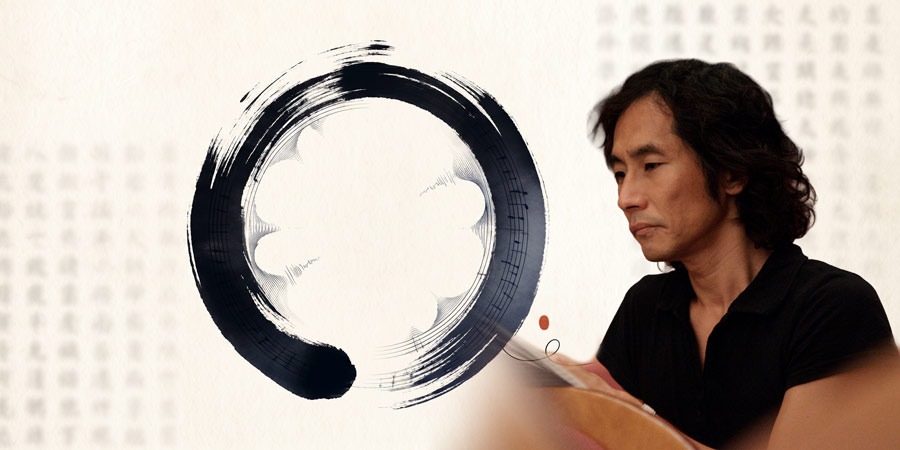
With ZEN, Atsuhiko Gondai presents an opera that deliberately resists narration. Its world premiere will take place on 26 June 2026 at the Chofu City Cultural Center Tazukuri in Tokyo as part of the Chofu International Music Festival. Masato Suzuki conducts the Bach Collegium Japan Choir and Orchestra, with staging by Tetsu Taoshita. This constellation already signals a work that intertwines historical depth, spiritual reflection and concentrated sound.
The libretto refers to the life and thought of the Buddhist scholar Daisetsu Teitaro Suzuki, who introduced Zen Buddhism to a global audience, and to his companion Kitarō Nishida, whose philosophy of the “concept of the good” shaped modern Japanese thought. Gondai situates these figures against the backdrop of the Second World War and the post-war period—not as a dramatic narrative, but as an intellectual and spiritual field of resonance. The young people who lived and died with these ideas are also remembered, without their stories being staged in detail.
Sound Instead of Plot
Crucially, ZEN does not seek to be a narrative opera. Gondai explicitly formulates the principle of independence from words. Language is not a vehicle of action, but a material and a threshold. Music attempts to leave behind the realm of discursive meaning and to open a space in which sound itself carries significance. In doing so, the work echoes central ideas of Zen: insight arises not through explanation, but through experience.
This attitude shapes the musical design. The chanting of sutras, the reduction to elemental sonic gestures and the avoidance of operatic dramatization lead to an aesthetic of focus and restraint. In the final chapter, this movement culminates in a single, symbolic tone of the shakuhachi. The moment feels less like a conclusion than like a pause—an opening rather than a resolution.
Within Gondai’s oeuvre, ZEN occupies a pivotal position. The composer, known for engaging with spiritual, philosophical and existential questions, here radicalizes his search for a music beyond narrative logic. The collaboration with the Bach Collegium Japan is more than a practical choice: it connects historically informed performance culture with contemporary composition and underlines the work’s transcultural ambition.
In a time of constant verbal overproduction, ZEN gains particular relevance. The opera offers no theses and no explanations. Instead, it invites listeners to submit to sound and to practise a different kind of attention through listening. ZEN is thus less an opera about Zen than a musical attempt to approach its essence.
Learn more
- ZEN – work page with online score
- Composer profile: Atsuhiko Gondai
- Chofu International Music Festival – event page
Illustration: Michiharu Okubo (portrait of Atsuhiko Gondai), background created using artificial intelligence