english
  deutsch
  français
Work of the Week – Harald Weiss: Darkness Project
- 15 Jun 2026
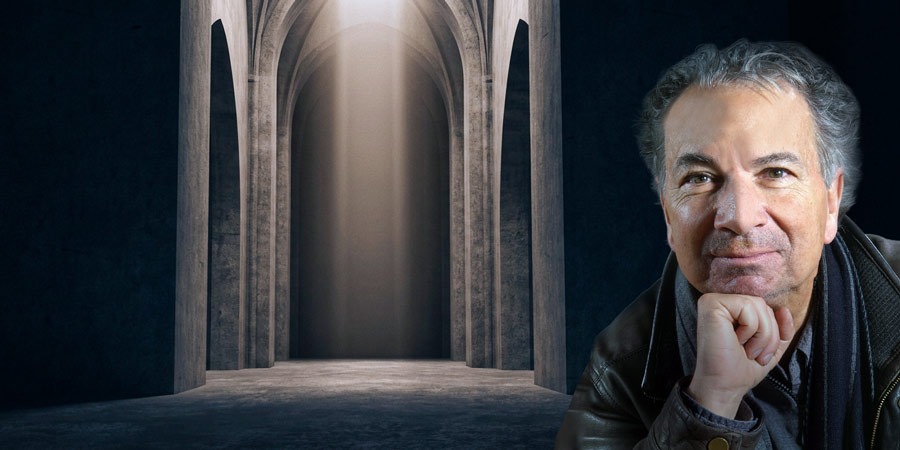
With the Darkness Project, Harald Weiss brings together one of the central threads of his compositional thinking: an exploration of darkness, silence and existential thresholds. Developed over a period of roughly fifteen years, the project is less a single work than an open constellation of compositions – a musical space of reflection in which night and light, sound and fading, finitude and hope continuously intersect.
The occasion for this Work of the Week is the world premiere on 21 June 2026 at the Kulturkirche St. Stephani in Bremen. Conducted by Tim Günther, the project is presented in a newly configured form and complemented by the organ piece Gebet, a fragment derived from the string quartet Stille Mauern. The church itself is an integral part of the concept: its acoustics, spatial depth and silence form a resonant framework that Weiss consciously incorporates into the music.
At the core of the Darkness Project lies no conventional narrative trajectory. Instead, the music unfolds as a sequence of states that foreground the act of listening itself. Slow tempos, restrained dynamics and a heightened awareness of pauses and decay shape Weiss’s musical language. Darkness is not treated as menace, but as a condition for heightened perception – a space in which sound can emerge, recede and resonate inwardly.
Between Sound and Dissolution
The works associated with the Darkness Project span a wide range of scorings, from chamber music to large-scale vocal and ensemble pieces. Despite their diversity, they share a consistent aesthetic stance. Weiss avoids overt gestures and focuses instead on sonic precision and attentiveness. Sound is not driven toward climax but allowed to withdraw, creating intensity through restraint. The acoustic space itself becomes an active participant in the musical process.
The additional performance of Gebet exemplifies this approach. Originally a fragment from Stille Mauern and later expanded for organ, the piece condenses the project’s core principles: extremely slow movement, subdued dynamics and a sustained sonic equilibrium. Rather than striving toward resolution, the music cultivates a state of contemplation. In the church setting, resonance is not amplified but internalized as part of the musical meaning.
Within Harald Weiss’s oeuvre, the Darkness Project represents a phase of deliberate reduction and reflection. Following earlier experimental works and large-scale music theatre projects, Weiss here turns toward a language that cautiously reconnects with tradition without quoting it. Existential themes such as death, letting go and silence are not illustrated but translated into sound itself.
In today’s accelerated and stimulus-saturated world, the Darkness Project gains renewed significance. It does not demand attention but invites concentration. The Bremen premiere underscores that this project is not a closed cycle but a living process – one that takes shape anew in each space, each moment, and each act of listening.
Learn more
Performance page (world premiere, Kulturkirche St. Stephani Bremen)
Work page Darkness Project with Online Score
Composer profile Harald Weiss
Illustration: Joachim Giesel (photo by Harald Weiss), background created using artificial intelligence