english
  deutsch
  français
Work of the Week – Atsuhiko Gondai: ZEN
- 22 Jun 2026
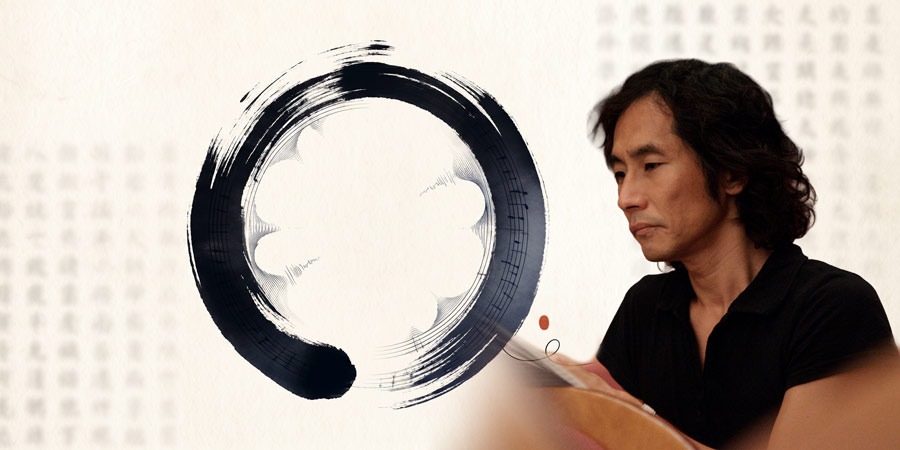
Atsuhiko Gondai’s opera ZEN abandons narrative in favour of sound as experience. Premiering in Tokyo in 2026, it invites a focused and wordless mode of listening.
Atsuhiko Gondai’s opera ZEN abandons narrative in favour of sound as experience. Premiering in Tokyo in 2026, it invites a focused and wordless mode of listening.

Japanese Premiere: Viktor Ullmann's "The Emperor of Atlantis," composed in Terezín in 1943. A timeless plea against tyranny.

On August 11, 2025, the New National Theatre Tokyo will host the world premiere of a remarkable new opera: Natasha by Toshio Hosokawa. Under the musical direction of Kazushi Ono and staged by Christian Räth, this opera confronts some of the most pressing issues of our time.

A new concerto for a celebration: Peter Eötvös's 80th birthday will be celebrated with a symposium and gala concert in Paris next weekend. Among other works by the Hungarian composer, his new Harp Concerto will see its world premiere. Eötvös wrote the concerto for harp and orchestra for the virtuoso Xavier de Maistre (pictured), who will perform it for the first time on 18 January with the Orchestre Philharmonique de Radio France conducted by Gergely Madaras at the Maison de le Radio et de la Musique.

A Belated Birthday Celebration: On 25 August 2023, as part of the Composer’s birthday celebrations, the Tokyo Metropolitan Symphony Orchestra will present the world premiere of Joji Yuasa’s, Locus of the Orchestra, with Yoichi Sugiyama once more at the musical helm in Tokyo.
I seek to depict this idea with a quality of sound that a person can feel on their skin. The sound fluctuates according to subtle changes within the listener’s body, or in accordance with a particular place or space and so on. In this piece, I stop and turn my attention to the various layers of sound and focus on their essence. Akiko Yamane
My musical idea is to find harmony between nature and humans. Therefore, the tsunami of 2011 was a great shock to me. Nature just isn’t only nice and beautiful, it can also be cruel sometimes. We Japanese seem to have lost our respect for nature. - Toshio Hosokawa
Toru Takemitsu’s Nostalghia for violin and orchestra will be performed on 13 September in the Martinskirche in Basel, and on 14 September in St. Peter's Church in Zurich, by violinist Ilya Gringolts and the I Tempi chamber orchestra conducted by Gevorg Gharabekyan.
Composed in 1987 for Yehudi Menuhin, Nostalghia draws inspiration from Andrei Tarkovsky’s 1983 film of the same name, and its central theme of homesickness. While the word nostalgia refers to desire for a time since past, in both Russian and Italian nostalghia means to acutely miss a place or a person.
Takemitsu was attracted to the quiet camera work, sparing use of music, and tendency for long uncut scenes in Tarkovsky’s film, and after the filmmaker’s death in 1986 he dedicated Nostalghia to Tarkovsky’s memory. After a brief introduction, a simple solo violin melody dominates the composition, seeking to evoke a sense of memory, loss and longing. Maintaining the contrasts characteristically found in Tarkovsky’s films, Takemitsu uses a divided string orchestra beneath the violin to musically represent the differing states of water and fog. At the work’s end, the orchestral groups divide again into polyphony, while the solo violin remains in the highest heights.
I would like to follow both Japanese tradition and Western innovation, and to maintain both musical styles simultaneously has become the core focus of my compositional operations. It is a contradiction I do not want to solve – on the contrary, I want the two styles to combat each other. I want to achieve a sound that is as intense as the silence. – Toru Takemitsu
The same concert will also feature Karl Amadeus Hartmann's Concerto funebre for solo violin and string orchestra. On 14 and 15 September, the NHK Symphony Orchestra conducted by Paavo Järvi will play Takemitsu’s A Way a Lone II arranged for string quartet and How Slow the Wind for orchestra in the Suntory Hall in Tokyo. Also on 15 September, the Tokyo Sinfonietta conducted by Yasuaki Itakura will perform Rain Coming in the Supporo Concert Hall Kitara in Hokkaido. On 16 September, Pirmin Grehl plays Itinerant for flute at the Schumann Festival in Leipzig, and a day later the Philharmonic State Orchestra Mainz performs Night Signal at the theatre festival Mainz, conducted by Hermann Bäumer.
All my compositions, as indeed my life does, take place between these two musical lineages (oriental and occidental). Turkish music has a stronger rhythmical character, German music has a great history. Both cultures interact with each other. - Fazıl Say