english
  deutsch
  français
Halloween Music: Five Works for the Spooky Season
- 20 Oct 2025
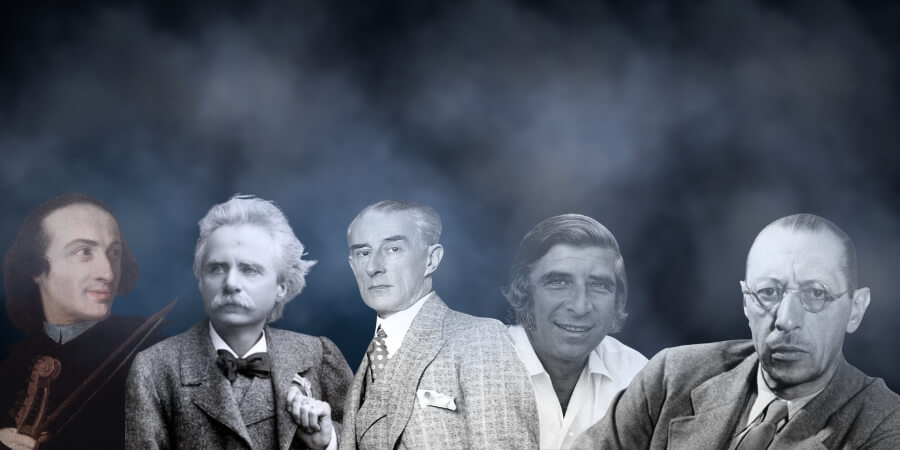
Halloween marks the eve of All Hallows’ Day, otherwise known as All Saints’ Day, and has been a cultural fixture for the month of October for quite some time. Ireland and Scotland can trace Halloween celebrations back hundreds of years, with the various traditions carried across by immigrants to North America where it was modernised and formed into the festival that we recognise today.
The spirit of Halloween is reflected in all things haunted, ghostly, and macabre. Naturally, music from across all eras has become inextricably linked with the festival by drawing on similarly sinister energies, whether through unsettling harmonies, supernatural tales, or simply through evoking mystery.
To celebrate the spooky season, we’ve taken a trip through Western music history to highlight a handful of pieces and works whose sound and stories feel especially at home for when the nights grow darker.
Tartini and the Devil
Channelling the same energy as Marlowe and Goethe’s Faust, later providing inspiration for similar rumours of devilish dealings like Robert Johnson’s rumoured crossroad encounter, Giuseppe Tartini went to bed one night in 1713 and met someone he did not expect: the Devil himself. The composer was offered a pact, with the Devil to serve as his servant and teacher. A music lesson followed, after which Tartini handed his violin to the Devil to see what his new tutor could make of it. Tartini is quoted as stating that the Devil then “played with such great art and intelligence, as I had never even conceived in my boldest flights of fantasy.”
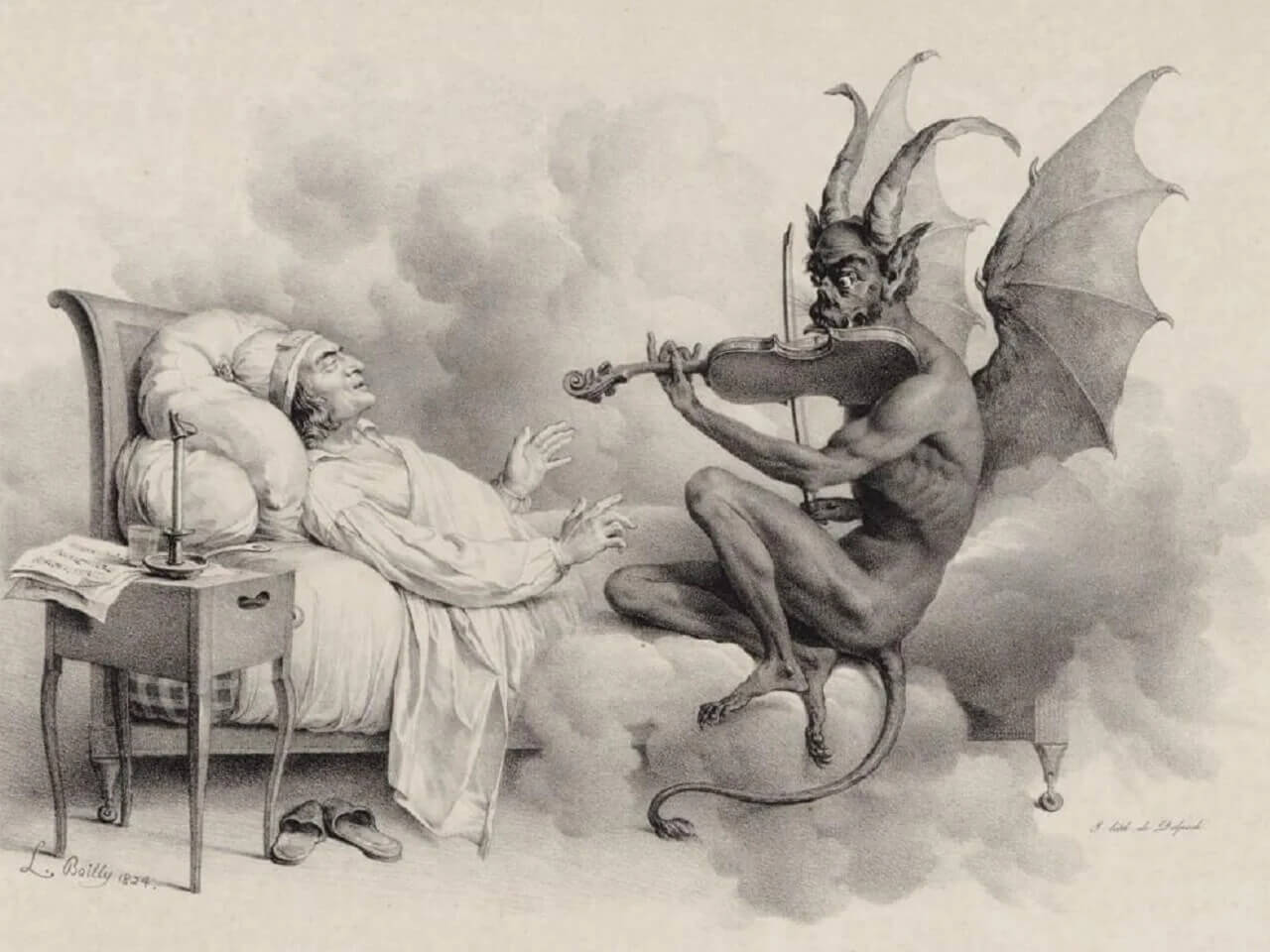
After he awoke, the composer set about writing what would come to be his most popular piece, the Violin Sonata in G Minor, which is known today as the Devil’s Trill Sonata. Earning its nickname with the iconic trill heard as a prominent part of its theme, the work and the accompanying story have gained a hallowed reputation, a story mightily suitable for Halloween.
Grieg goes to the Mountain
|
Ever get a creeping feeling, as though something is sneaking up on you? If that same thing appears to be getting louder, akin to a crescendo, with a menacingly descending chromatic tilt, it might just be “In the Hall of the Mountain King”, a piece for orchestra taken from Edvard Grieg’s Peer Gynt suite (1888). Commonly found amidst movie soundtracks and thematic October repertoire, this piece evokes images of Peer, as in Ibsen’s original 5-act play, escaping at a mad dash from the troll king’s hall, with gnomes and goblins in hot pursuit. From the off, there’s some trepidation in Grieg’s theme, a sneakiness that tiptoes around in piano. As the music progresses, the situation grows more pressing, with each repetition giving way to an increase in tempo and dynamics, as the chase eventually devolves into a life-or-death escape from the mountain. |
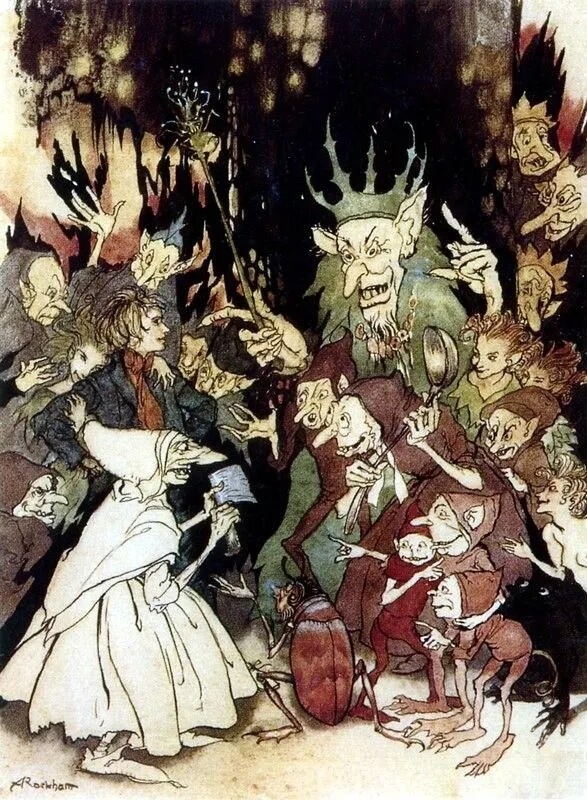 |
Given its dark, menacing energy, not short of evil creatures from dangerous deeps, the work has long felt at home among October’s shadows, its impish momentum and mounting panic a perfect echo of the thrills and frights that surround Halloween night.
Ravel at the Gibbet
A certain eeriness befogs Maurice Ravel’s Gaspard de la Nuit (1908), a musical adaptation of Aloysius Bertrand’s macabre poetry collection. The piano suite is separated across three unsettling portraits; ripples in the water as the alluring mermaid of Ondine invites you beneath the surface; the swaying corpse at sunset, silent but for the bell tolling in Le Gibet; and Scarbo’s mischievous goblin, flickering in and out of sight, taunting the terrified observer.
The discomfiting beauty of Ravel’s suite, propelled at times by its eldritch subject matter, makes for a fitting haunt on Halloween night.
Stravinsky’s Rite
Unlike the spookiness implied in some of the other works we’ve looked at, Igor Stravinsky’s The Rite of Spring really did shock audiences in 1913 with its wildly modern sound and choreography. The primal terror conjured by percussive representations of sacrificial dances to the death and other assorted pagan activity is conveyed with rhythmic brutality, not to mention its no holds barred dynamics.
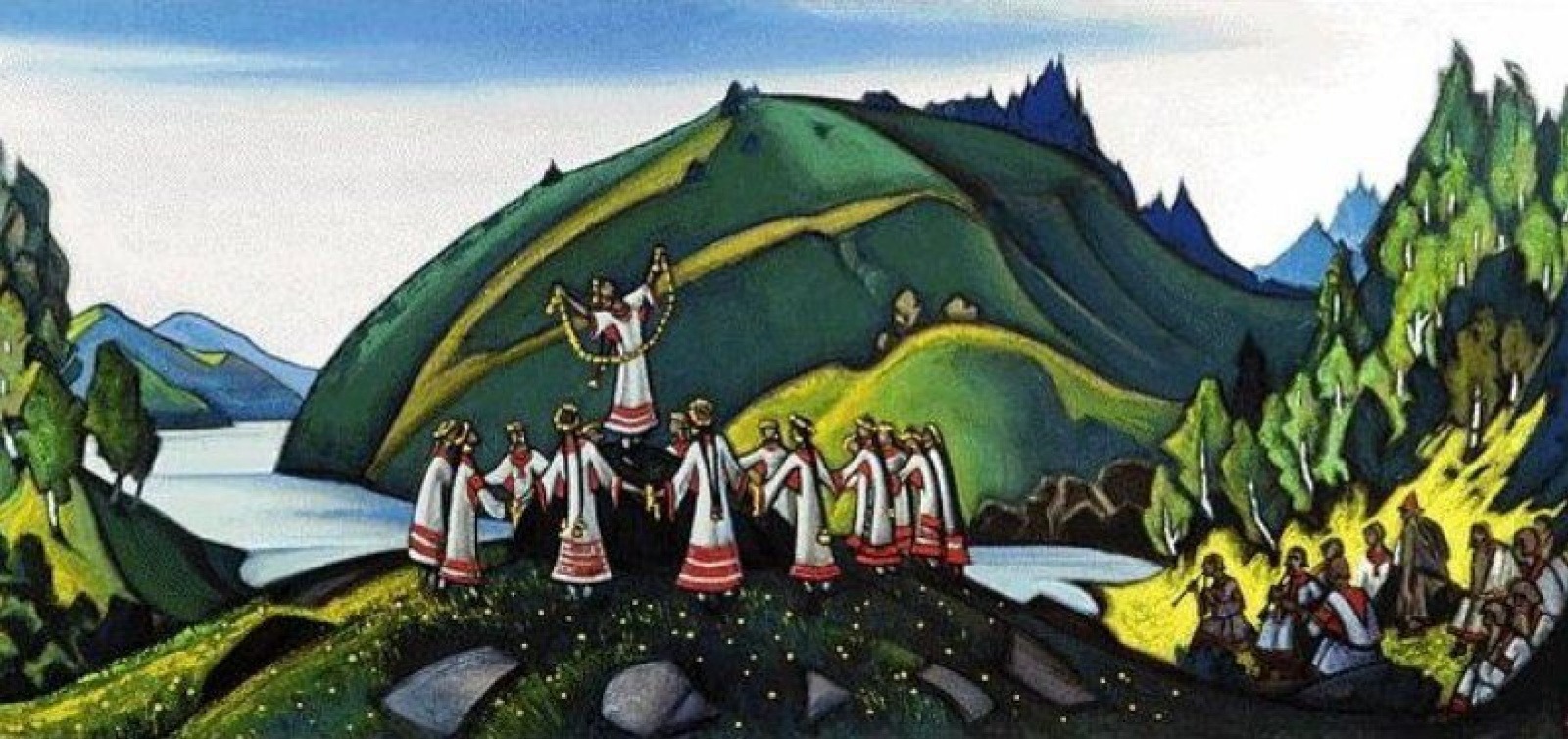
Commencing with a celebration of the earth’s awakening, a tribe erupts in ritual frenzy as the ceremonial sacrifice of a chosen maiden draws near. Vaslav Nijinsky’s choreography is startling in its ferocity, a big reason its initial early-20th century reception was literally riotous. However, the music itself fully completes a haunting picture of unyielding religious fervour, with unpredictability baked into every moment. With its themes of death, rebirth and sudden chaos, The Rite of Spring finds a real kinship with Halloween’s ties to the wild and uncanny.
Hollywood Hauntings
Given the festival’s commercialisation in the US, much of Hollywood’s horror and otherwise ghostly output has resulted in natural ties to Halloween, whether through specific references within the films themselves or just by eerie association. Various soundtracks spring to mind, some leaning more towards the creepier side, and others somewhat bombastic, happy spirits. Naturally, that staple of Halloween watch parties and costuming comes into view: Ghostbusters.
Released in 1984, the battle for New York City was waged with Elmer Bernstein at the musical podium, providing a soundtrack that oozes jazzy Big Apple swagger, with spooky wailings provided by the ondes Martenot. It’s a wonderful composite of tongue-in-cheek terror with popcorn action and cements Ghostbusters as a Halloween classic that celebrates the lighter side of the supernatural.
Halloween Night
From legends of demonic bargains to cinematic ghost-busting, Halloween soundtracks have the scope to reach across the scary, the wacky, and even the profound. Each of these works engage in the mystery and thrill of the unknown; a concept that has never stopped inspiring composers to explore the darkest corners of creativity.
The Haunting Continues
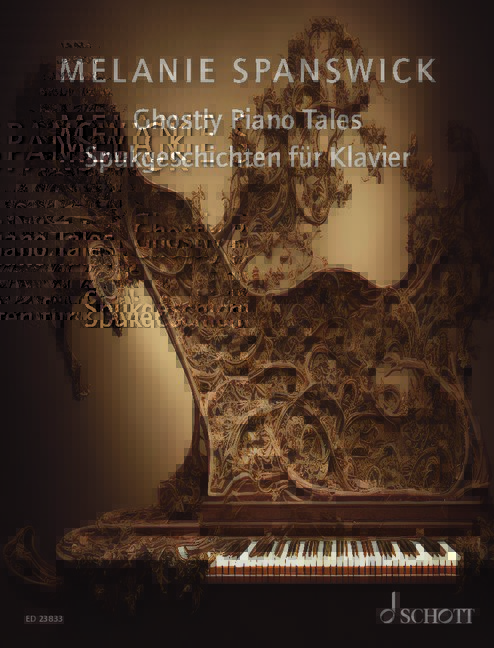 |
Ghostly Piano TalesMelanie SpanswickGhostly Piano Tales is a collection of 24 imaginative solo piano pieces of very easy to medium difficulty, which are ideally suited for beginners' lessons and first auditions. The selection presents mysterious stories of ghostly and supernatural phenomena from all over the world. Some of the numerous mythical legends, beings and places date back centuries. With interpretation notes on experimental playing techniques.
|