english
  deutsch
  français
‘A musical bridge to the world of classical music’
- 6 Feb 2026

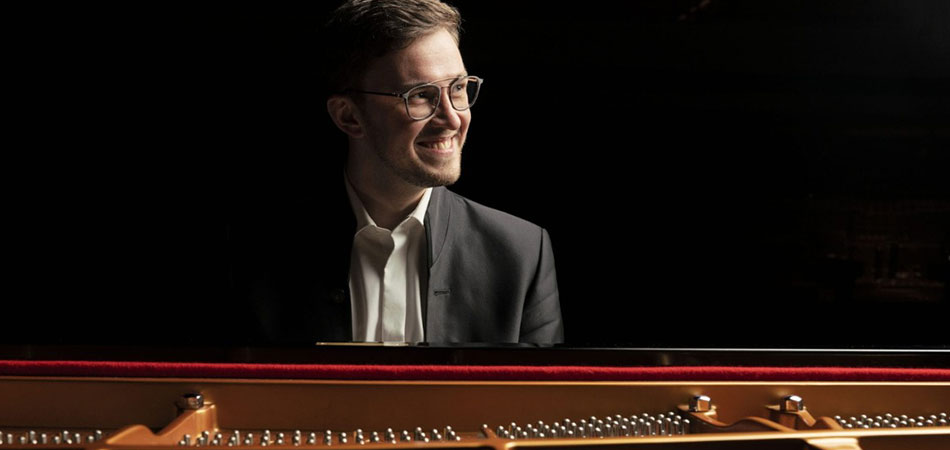
Tautrinker – this stage name is not only a translation of the surname of Austrian-born Michael Zlanabitnig but also reflects his visionary approach to music education. Inspired by the music he listened to during his childhood, Tautrinker was drawn to the piano from a young age where he began to explore improvisation and composition.
His aim with his innovative Piano Mantras series, is to build a musical bridge between the world of classical music that is modern, accessible and intuitive. Following the first volume, "Imagine Beethoven", in which he reimagined the powerful music of Ludwig van Beethoven, Tautrinker devotes himself to the immortal melodies of Wolfgang Amadeus Mozart in the latest volume, "Magic Mozart".
This article explores how these short piano miniatures make playing the piano even more enjoyable, whilst also offering an entirely new approach to the greatest masterpieces in music history.
New release: Magic Mozart – Discover classical hits as piano mantras
The journey continues! Following on from Imagine Beethoven, composer and arranger Tautrinker now turns his attention to one of the greatest musical geniuses of all time: Wolfgang Amadeus Mozart.
Why Magic Mozart fills a crucial gap
Once they are no longer a complete beginner, many students experience a familiar problem: feeling that they’re not advanced enough to tackle works by Bach, Satie or even Yann Tiersen. This is where Magic Mozart comes in.
It is ideal for anyone who:
-
is looking for quick musical rewards without having to battle through five-page scores
-
wants to develop aural skills in a playful, intuitive way
-
enjoys atmospheric miniatures that capture the essence of Mozart’s music
The concept: 12 miniatures for a new generation
Tautrinker presents 12 ‘Piano Mantras’ in his signature style. What makes them special is that these pieces draw upon Mozart's greatest works, from the famous "Alla Turca" to the magical moments of "The Magic Flute" to the emotional depth of the “Requiem”.
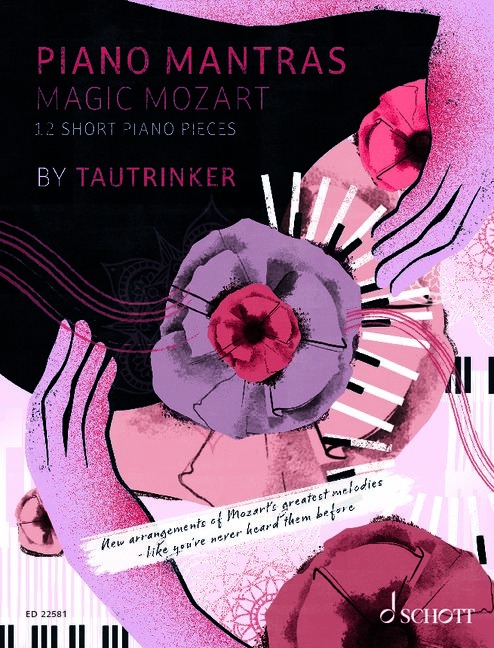 |
What are piano mantras? They are short, catchy piano tunes (usually no longer than 8 bars) that are repeated like mantras. This repetitive character not only creates a sense of calm whilst playing but also guarantees the melodies stick in your mind.
|
More than just notes: a holistic experience for aspiring pianists
"Magic Mozart" offers pianists:
-
Visual inspiration – each piece is accompanied by an illustration that deepens the mantra concept
-
Aural support – all 12 pieces are available as streamed recordings, ideal for understanding the character
-
Creative freedom – sometimes very close to the original, sometimes subtly adapted, the pieces invite players to hear Mozart with new ears
Whether as a supplement to lessons or as a way to unwind after work, this second volume of Piano Mantras makes classical music education modern, accessible and, above all, fun!
The interview
How did you come up with your unique stage name, “Tautrinker”, and what does it mean to you?
Tautrinker is more than just a stage name for me. It is actually a translation of my surname, which has Slavic roots. I always found this translation very poetic and began using Tautrinker as a pseudonym for my work as a solo artist. The image of ‘dew’ or ‘morning dew’ reminds me of the essence I want to convey with my music.
Your first publication from the "Piano Mantras" series focuses on Ludwig van Beethoven. Why this composer in particular, and how has he influenced you?
With the "Piano Mantras", I am trying to build a musical bridge into the world of classical music – or perhaps the other way round. Ever since I was a child, it felt completely natural to me to draw inspiration from the great melodies of classical music and to let them lead me into improvisation, without feeling the need to play the original version straight away, or exclusively. Music is for everyone after all. Beethoven in particular has left us such a rich legacy of timeless, immortal melodies, and I think it's a shame if this remains undiscovered or unattainable for many people. Anyone can listen to recordings, but if you want to play the original works yourself, the level of difficulty and skill required is very high and can only be achieved after many years, if at all. In my view, truly immersing yourself in the music means playing it yourself and making it your own. Not to mention it’s more fun and provides a completely different experience. It is exactly this opportunity, this sense of building a bridge, that I am aiming to create with the "Piano Mantras". Beethoven himself started small, and I am sure he would be curious to hear his melodies in a modern guise.
Can you tell us how the pieces in "Piano Mantras" are selected?
That’s an easy one to answer. We wanted to present what we consider to be the best melodies from the greatest composers in musical history. This ultimately makes the selection subjective however as it’s too presumptuous to claim that one could truly portray a composer like Beethoven with 12 short pieces. That said, we hope players get an impression and, hopefully, the desire and curiosity to discover even more of the original classical works – that’s the aim of the Piano Mantras series really. The first volume, Imagine Beethoven, features 12 miniatures based on Beethoven's most famous works, from his piano sonatas to his symphonies. Sometimes recognisably close to the original, sometimes only hinted at, these pieces also train the musical ear and the ability to think abstractly.
More information about the product
 |
Piano MantrasTautrinkerThe 12 lyrical miniatures offer surprising moments at the piano, drawing on elements from Ludwig van Beethoven’s most famous works. Starting from well-known motifs from the "Moonlight" or "Waldstein" Sonatas, as well as melodies from the great orchestral works, Tautrinker develops short, atmospheric pieces that invite players to lose themselves in repetition and continue playing instinctively. A beautiful gift for pianists of all ages, featuring striking illustrations.
|
The creative process behind Piano Mantras
Could you tell us more about the creative process behind Piano Mantras? What ideas or concepts were behind it?
It began with a recurring observation. Over many years of teaching piano, I repeatedly noticed that after a certain point my students had mastered the basics but then encountered a large gap in the repertoire. Well-known and much-loved pieces from classical music, film scores or pop songs, think "Für Elise", "Amélie", "River Flows in You", which are particularly appealing to teenagers and the young-at-heart, were still far too difficult or simply too long for many of them. There was little to no suitable sheet music available for this in-between stage. All too often I have seen students lose their enthusiasm and enjoyment when they are told they first need to work their way through five pages of notation, sometimes at an overly demanding level. That is admittedly laborious, requires a great deal of time and dedication, and for many people this is where they give up, which is a shame. And yet, everyone knows the simple main melodies, the hooks and earworms, and everyone wants to play them. Actually, I am a pop singer/songwriter, and as such I firmly believe in the art of simplicity – precisely what lies hidden in the essence of the great classical melodies. So why make things complicated when they can be simple? That was the initial idea and starting point for "Piano Mantras". What could be more natural than to connect pop and classical music in this way, and to dress these timeless classical melodies in a contemporary, simple form that makes them playable for *almost* everyone? Because the most important thing is that it should be fun and enjoyable. Not tiring, but inspiring. The inspiration I feel (and have felt since childhood) when I play freely on the piano, letting my thoughts fly and immersing myself completely in the music, is a feeling of freedom, security and lightness that I want to make accessible to everyone with Piano Mantras. It is like learning to swim – you experience how the music carries you. In that sense, "Piano Mantras" is less about a rigid concept and more about the desire and idea of reducing music to what is essential, to its simplicity, without making it any less appealing. And, almost incidentally, of connecting yesterday with today. This is how something new is created.
What is so special about "Piano Mantras"?
Alongside the musical qualities described above – atmospheric, accessible piano earworms inspired by classical “world hits” – there is one further distinctive feature: no piece is longer than eight bars. That may sound very short at first, but each piece can be repeated endlessly, very much in the spirit of a mantra. This creates a repetitive, meditative character that players can surrender to, allowing them to be one with the music. Ideally, the pieces are memorised after a short time, freeing the player to be captivated by the mandala-like illustrations that mirror each piece (designed by illustrator Monika Tomaszewska).
To what extent is your personal style reflected in "Piano Mantras"? Are there certain musical elements that are characteristic of you and your compositions?
Playing the piano has always felt like second nature to me. I taught myself to play from a young age and was immediately drawn to it; I couldn't help but start playing. When I heard music, I tried to imitate it on the piano, even if it was orchestral music or, later, rock and pop. I’ve continued to adopt this playful approach as it seems to me to be fundamentally important when we talk about learning an instrument. After all, it is a form of play, something that children instinctively understand. Joy comes hand in hand with play, and joy is the glue that is needed to build a lasting connection with an instrument – the fertiliser, so to speak, with which a delicate plant must be nurtured if it is to grow strong. This improvisatory, open and curious approach is certainly characteristic of my piano playing: the desire to experiment and to connect different musical worlds. Even today, when I play the piano, I still feel like a big child.
Have there been any initial reactions or interesting feedback to the release of "Piano Mantras" that have influenced you?
I hope there will be lots of reactions and am very curious to see how it is received. After the success of Imagine Beethoven, we are now continuing the concept with Mozart. I am very grateful for Schott Music’s openness to this new idea, and particularly thankful to Chief Publisher Dr Hanser-Strecker for supporting the concept within the publishing house from the very beginning. Let’s hope for the best.
What role does spirituality or meditation practice play in your music, especially in relation to "Piano Mantras"? Did this play an important role when writing the pieces?
I am convinced that music is something fundamentally spiritual. It is a direct path into spirituality, though less in a religious sense and perhaps more akin to a kind of natural religion – a law of nature that finds expression through music. Music moves and touches us at our very core, quite literally, purely through the physical phenomenon of sound waves. Allowing ourselves to be touched by it is, perhaps, our own task – or even a conscious choice. There is also a psychological aspect. Music can have astonishing effects: calming or stirring, but in every case, emotionally intensifying and deeply engaging. In moments of great happiness or deep sorrow, few things can support us as much as music, which accompanies, supports and influences us. It has been scientifically proven that music strengthens resilience and emotional intelligence in unborn children, has measurable effects on plants and animals, and even alters the structure of water molecules when they come “into contact” with music. Anyone who is aware of the strengthening and connecting power of music will understand just how great its force is – its sheer intensity, like any force of nature. As musicians and composers, we can harness this power. This is particularly noticeable in the great masters such as Beethoven, and I greatly admire the respect and humility with which they approached this primal force of music, becoming part of it themselves.
The artist Tautrinker
How has working on Piano Mantras impacted you as an artist? Has this work opened new doors or new creative avenues for you?
Above all, I have had, and continue to have, enormous fun engaging creatively with music in this way. I approach the music of the great masters, as well as my own musical ideas, without preconceptions and try to let myself be inspired by them in a childlike way. I am neither a classical specialist nor a musicologist, so I have no desire to explain or intellectualise. What I do find exciting, however, is connecting different styles and creating artistic points of intersection, where music remains grounded and close to people. The beauty of music is that we are all equal before it. It does not ask whether you are tall or small, rich or poor, black or white. Everyone is free to approach music in their own way. I believe we should not always try to explain, analyse and dissect everything, but should equally preserve the ability to marvel like a child, cultivate a sense of play, and in doing so surrender ourselves, unprotected, to the wonder of music – because that is when it has the greatest effect. I hope that, through the small pieces of the Piano Mantras, I can pass on my own sense of wonder and enthusiasm for music and its great melodies, and in this way invite as many people as possible to join me on this remarkable and healing journey.
Is there a special message you want to convey to the listeners of "Piano Mantras"? What emotions or thoughts do you want to evoke in the musicians who play your short pieces?
Just close your eyes while playing. Take the time to listen to yourself, to enjoy the sound and let the music speak. Immerse yourself in the moment, because music can make it last forever. Be free, feel your weight being lifted. And dare to cross the bridge to where Beethoven stands on the other side, or better yet, meet him in the middle.