english
  deutsch
  français
In Memoriam: Bernard Rands (1934-2026)
- 5 Mar 2026
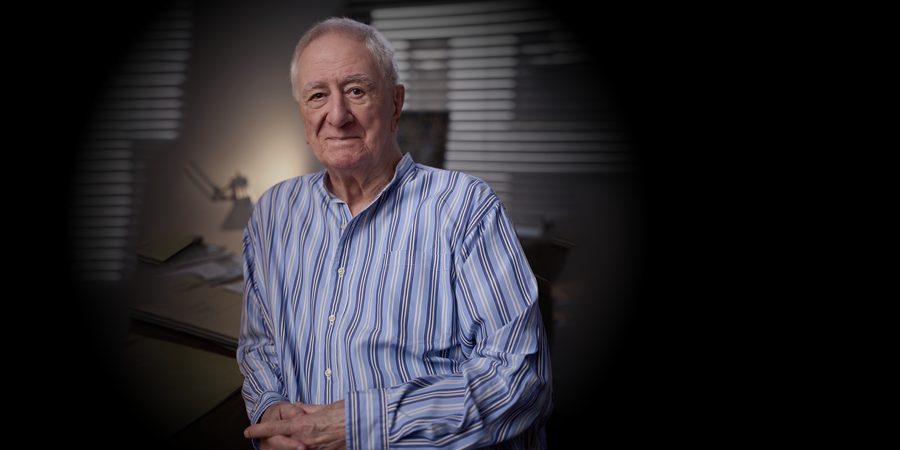
Bernard Rands, the distinguished British composer long resident in the USA, most recently in Chicago, has died there on March 4, 2026, at the age of 92 in the company of his wife Augusta Read Thomas, herself a prominent composer. He leaves behind a catalogue of nearly 100 pieces, widely performed and recorded, all published by Schott, as well as an enormous and varied list of students.
Rands' long musical and personal journey began in Sheffield, in the north of England, on 2 March 1934. (For many years, even in reference works, Rands' year of birth was given as 1935, a confusion that began when a concert celebrating his 35th birthday was somehow reinterpreted as a celebration of being born in 1935.) Taken as a child to the far north of England during World War II, he was initially unsure whether to pursue a career in literature or in music, having a fondness for both. Music ultimately won out, but his sensitivity to, and awareness of, the nuances of poetry was to manifest itself in many pieces, even and perhaps especially those without a vocal line.
Between Rigor and Resonance: The Lyric Turn
Having studied in Bangor, in the north of Wales, he went to Italy first to study with Roman Vlad and later with Luigi Dallapiccola, perhaps the foremost pedagogue of his time and a formidable post-twelve-tone composer, he soon found himself in the circles of Luciano Berio (also a disciple of Dallapiccola), Pierre Boulez and Bruno Maderna, then three of the leading lights in European modernism. After signing with the Viennese publisher Universal Edition (his catalogue was transferred to Schott after Rands moved to the US) in his late 20s and spending two formative years in the US on a Harkness Fellowship, Rands' career catapulted by fulfilling several high-profile commissions in the UK, including the cantata like Metalepsis II (conducted by Berio) and the piano concerto Mésalliance for Roger Woodward (conducted by Boulez), works in an uncompromising, at times aggressive complexity. During this era, he began the Memo series, (usually) solo works exploring virtuosity, the most recent of which, for cello, dates from 2023.
His musical style began to move more and more in the direction of what would retroactively be called postmodernism, drawing inspiration from earlier material. As composers found various ways out of the post-serial crisis – whether aleatory, conceptual, electronic, minimal, neo-romantic – Rands remained loyal to the modernist principles of craft and rigor while softening around the edges and incorporating more lyrical tendencies. A prime example is found in the five Madrigali for chamber orchestra, based on both Claudio Monteverdi and Berio's arrangements of Monteverdi, a cohesive and charming blend of disparate centuries and styles. He continued in this vein in his Canti trilogy, for soprano, tenor and bass, respectively, the middle of which, Canti del Sole for tenor, won the Pulitzer Prize. In these through-composed compositions, available in both ensemble and orchestral versions, with poems in a dizzying multiplicity of languages, the line between symphony, vocal symphony, cantata, and song-cycle is blurred to the point of irrelevance.
A Tapestry of Languages: The Transatlantic Mentor
Rands' music later took on introspective, even melancholic tendencies, as evident in the orchestral ...body and shadow... and Symphony and the much later concerto for English horn (for Robert Walters), while the cello concerto (for Mstislav Rostropovich) is an unalloyed tribute to the cantabile tone of its dedicatee. A richness of harmony, a broad but consummately restrained dynamic palette and a sensuousness of sonority are all typical of his mature style, as are a sense of static tranquility and seriousness of purpose that could be seen alternately as shortcomings or as essential elements of his mature style, deliberate aesthetic choices that may to some ears seem old-fashioned. His opera Vincent, a summing-up of the final days of the painter Vincent van Gogh to a libretto by J. D. McClatchy, received its première in 2011 after decades of on-and-off work, with sketches dating back to the 1970s and with two orchestral suites, Le Tambourin, already performed in the 1980s. He also wrote a piano concerto for Jonathan Biss and a set of wide-ranging Preludes for Robert Levin, and well into his 80s wrote an impressive, and on occasion vehement, orchestral series: Dream, Symphonic Fantasy, Aura, and Chant, the last of which has not yet been performed.
Though he began his teaching career in Bangor, he subsequently took a post in York, where his students included Jonty Harrison, Vic Hoyland, Roger Marsh, Dominic Muldowney, George Nicholson, and Vivienne Olive. In the mid-1970s, he accepted a job at the University of California, San Diego, where he would direct the new-music ensemble Sonor and teach, among others, Lam Bun-Ching and Jeffrey Mumford, deciding to become a US citizen in the process. After visiting posts at Boston University, the Juilliard School and Yale University, he became the Walter Bigelow Rosen Professor of Music at Harvard University until his retirement, where his students included Lei Liang, Christoph Neidhöfer, Kurt Stallmann, and Ken Ueno. He made an impact on innumerable students through his years-long participation at the Aspen Festival in Colorado and was later a regular presence at Tanglewood in Massachusetts, as well. As a teacher, he would often guide his students in extramusical pursuits, instilling in them a love of Italian cuisine and a passion for poetry in several languages while regaling them with anecdotes told in a characteristic wit.
In addition to his wife, universally known as Gusty, survivors include two sons Siôn Philip Rands and Stephen Jon Rands from his first marriage, as well as his second wife Susan and a previous partner Nele, plus four grandchildren and four great-grandchildren, as well as his brother John Rands. There will be no service.
Norman Ryan, Senior Vice President of Schott Music, notes:
It is with deep sadness that we bid farewell to Bernard Rands, a great artist, humanitarian, and friend. Feted with prestigious awards and honors received during a long life in music, Bernard gifted us with music that traces a line of lineage from Debussy and Sibelius through to Berio, his unique voice characterized by arresting instrumental colors and melodic invention. His love for music and for those that created it knew no bounds. At all times, he was the consummate gentleman – elegant, dignified and erudite. It was a great privilege to be his publisher. Bernard’s spirit and boundless creativity will live on his music.
James M. Kendrick, President of Schott/EAMDC and Partner at the firm of Alter, Kendrick & Baron, states:
When I first joined European American Music in the Fall of 1977, I already knew that Bernard Rands was one of the leading British contemporary composers of his generation. I also knew that he had recently moved to the US. But this was only the first part of a long and distinguished career, as Bernard quickly cemented his position as one of the premier composers of the world, and also as one of the most influential composition teachers of his time. It was a joy and privilege to know him and Gusty, and I join the music world in mourning the death of one of its greats.
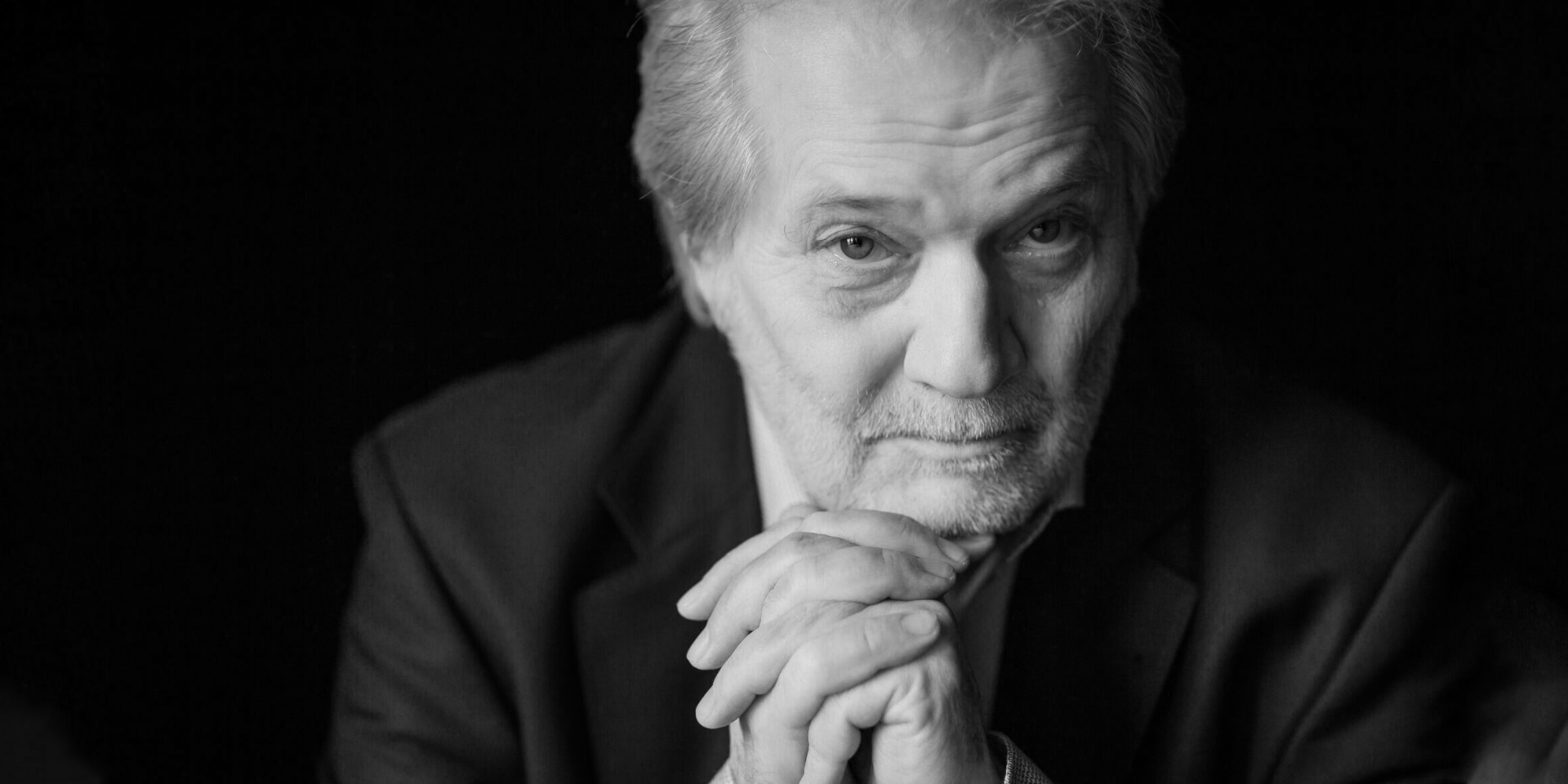
Obituary by Schott Music Group, March 5, 2026 – photo by Grittani Creative LTD
Learn more: