
 english
  deutsch
  français
Symphony No 6
- 9 Oct 2024

Shostakovich's Symphony No 6 opens with an expansive, introverted Largo followed by a short Scherzo and a brilliant “music hall gallop”, which the composer considered the most accomplished piece of the symphony.
Shostakovich's Symphony No 6 opens with an expansive, introverted Largo followed by a short Scherzo and a brilliant “music hall gallop”, which the composer considered the most accomplished piece of the symphony.
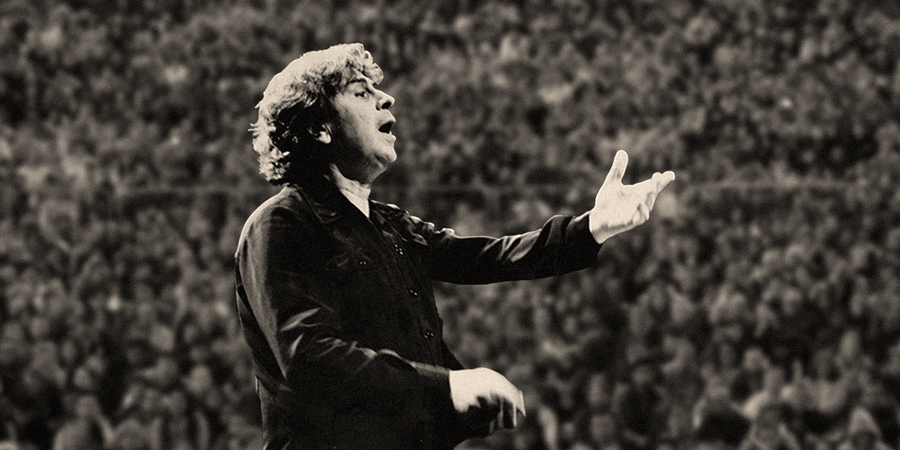
Joie de vivre across all borders: the Turkish premiere of Mikis Theodorakis' Zorbas Suite will take place in Ankara on 11 October 2024. The version for flute and orchestra will be performed in the Ziraat Bankası Ana Salon of the CSO Ada cultural campus. The solo part will be performed by Yubeen Kim, accompanied by the Cumhurbaşkanlığı Senfoni Orkestrası under the direction of Wilson Ng.

The best-selling diary returns for 2025 with a user-friendly portrait format, extra space for weekend appointments, and birthdays of hundreds of famous people in the world of music.

Perennial Karl Jenkins favourite Benedictus in the male-voice version featured on the best-selling EMI Classics recording This Land of Ours, performed by Cantorion and Cory Band.

A unique connection to nature becomes music: Dobrinka Tabakova's new orchestral work Rewilding will be premiered at the Queen Elizabeth Hall in London on 4 October 2024. The BBC Concert Orchestra will perform the piece for the first time under the direction of Anna-Maria Helsing.

From the bedroom to the big stage: on 27 September 2024, the National Theatre in Brno, Czech Republic, celebrates its ballet premiere. The choreography ‘Cyrano of Bergerac’ by Jiří Bubeníček integrates the famous Goldberg Variations by Johann Sebastian Bach in the orchestral version by Józef Koffler, conducted by Jakub Klecker.

A monumental event: the Hamburg State Opera will stage Carl Orff's triptych Trionfi on 21 September 2024. The production will be directed by Calixto Bieito and conducted by Kent Nagano.
The Carmina Burana with their mighty O Fortuna choirs are undoubtedly one of the most famous musical works of the modern era. However, the performance as a ‘Trittico teatrale’, i.e. as a combination of the three works Carmina Burana, Catulli Carmina and Trionfo di Afrodite, is a rarity on the world's stages. With Trionfi, Carl Orff created a trilogy that searches for new forms of expression for music theatre and moves between the poles of opera, oratorio and cantata.
The title of the triptych refers back to the so-called Trionfi, the pageants and masquerades in the Italian republics and principalities of the Renaissance: heroes and gods of antiquity and their entourages were traditionally presented in these processions. In Orff's Trionfi, however, it is not a mythical figure that is at the centre of the action, but the world-dominating driving force of love itself is shown in its most diverse facets. In a sense, this driving force is explored by going back to the beginnings of our occidental history: from the Middle Ages back to Roman antiquity, and from there back to ancient Greece.
From a monastery text via Catullus to the Greek poet Sappho: Orff's enthusiasm was ignited by her timeless love poetry. However, as only fragments of this poet have survived, Orff felt compelled to mould lyrical fragments, individual stanzas and short verses into a whole. In contrast to the visually powerful Carmina Burana and the action-packed Catulli Carmina, the Trionfo di Afrodite is a ‘scenic concerto’ based primarily on words and music. (Johannes Schindlbeck, Orff Centre Munich)
Trionfi will be performed in a total of six performances at the Hamburg State Opera until 12 October 2024. This rarity is not to be missed.
Further Reading:
Carl Orff: composer profile https://www.schott-music.com/en/person/carl-orff
Trionfi: work details and online score https://www.schott-music.com/en/trionfi-no250853.html
Website Hamburg State Opera https://www.staatsoper-hamburg.de/en/schedule/event.php?AuffNr=210249
photo: Andrii Yalanskyi
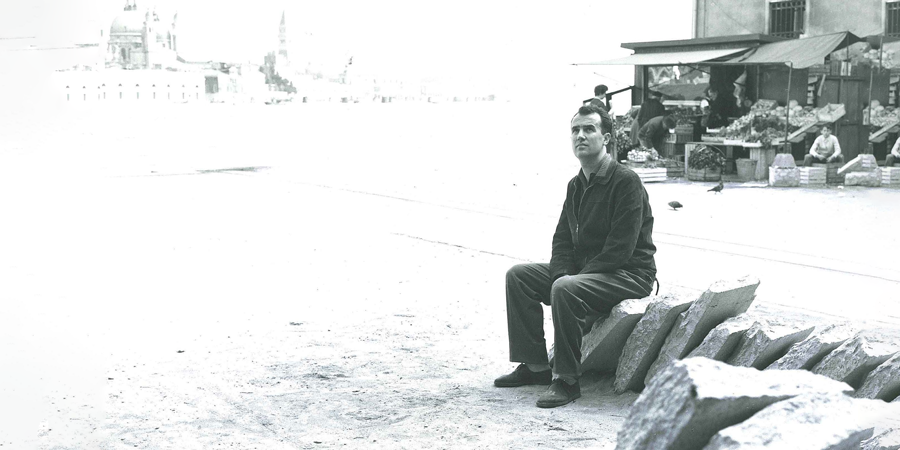
About life and love in dark times: The work Canti di vita e d'amore by Luigi Nono will be performed at Musikfest Berlin on 10 September 2024. The orchestra of the Deutsche Oper Berlin will perform under the direction of Donald Runnicles, with Lilit Davtyan (soprano) and Thomas Cilluffo (tenor) taking on the vocal roles.

From the background to the limelight: Richard Ayres' work No. 57 (K's Strange Day) for solo timpani and orchestra will be premiered in Helsinki on 4 September 2024. The YLE Radio Symphony Orchestra will perform at Musiikkitalo under the baton of its chief conductor Nicholas Collon.
Ayres wrote his new piece for the orchestra's principal timpanist, Kazutaka Morita. The composer generally uses consecutive numbering for the titles of his pieces, in this case No. 57. The addition (K's Strange Day) can be seen as an allusion to Franz Kafka’s The Trial and the protagonist Josef K. The peculiar thing here is the emergence of the timpani from the background of the orchestra into the limelight. Questions arise: Does the imaginary figure do this voluntarily? In what situation does it find itself? Is she acting or is she subject to the circumstances?
For long stretches, Ayres attempts to create a kind of ‘film without images’ in the audience's imagination. The composer has repeatedly been influenced by early cinema and artists such as Charlie Chaplin. There is often a central character around whom the story revolves.
When I was still playing in orchestras, this person seemed to be a mysterious figure sitting alone behind a wall of huge magical cauldrons. He often seemed to lean over the instrument as if he were talking to it. Half musician, half magician. (Richard Ayres)
No. 57 (K's Strange Day) will be performed again in the same place the day after the premiere. The German premiere can be experienced in May 2025 with the Philharmonisches Staatsorchester Mainz. The next world premiere by Richard Ayres will follow on 13 September 2024 in Amsterdam, where the Asko|Schönberg Ensemble will present Ayres' homage to the current Anton Bruckner year, which is logically entitled No. 58 (Bruckner).
Further Reading:
Richard Ayres: Composer Profile
No. 57 (K's Strange Day): Work Details and Online Score
Website YLE Radio Symphony Orchestra
photo: Miguel Chamorro / Adobe

It is with great sadness that we announce the death of Alexander Goehr at the age of 92. Distinguished composer and teacher, Goehr’s substantial impact on contemporary music in Britain and abroad is perceptible through his significant compositional output as well as the many noteworthy composers whom he taught. Sandy (to all who knew him) passed away on 26 August 2024.


