• Joy of Music – Over 250 years of quality, innovation, and tradition

Blog

Work of the Week – Carl Orff: Trionfi

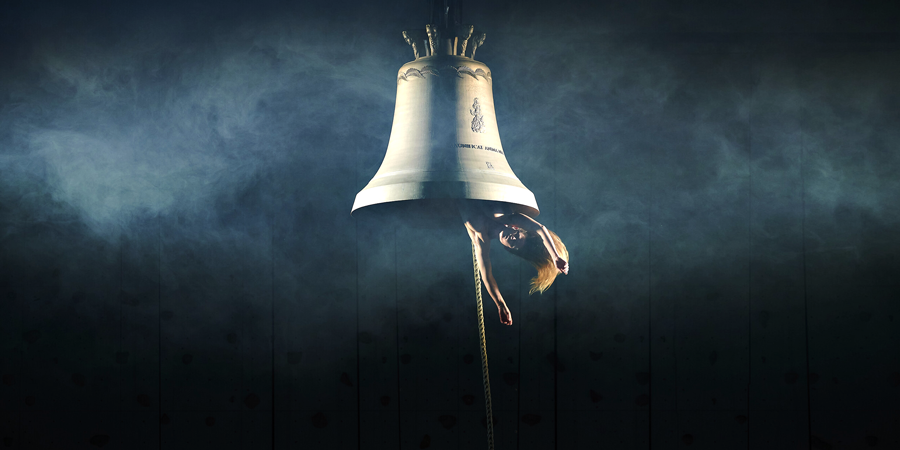
A monumental event: the Hamburg State Opera will stage Carl Orff's triptych Trionfi on 21 September 2024. The production will be directed by Calixto Bieito and conducted by Kent Nagano.

The Carmina Burana with their mighty O Fortuna choirs are undoubtedly one of the most famous musical works of the modern era. However, the performance as a ‘Trittico teatrale’, i.e. as a combination of the three works Carmina Burana, Catulli Carmina and Trionfo di Afrodite, is a rarity on the world's stages. With Trionfi, Carl Orff created a trilogy that searches for new forms of expression for music theatre and moves between the poles of opera, oratorio and cantata. 

Trionfi by Carl Orff: an XXL version of Carmina Burana

The title of the triptych refers back to the so-called Trionfi, the pageants and masquerades in the Italian republics and principalities of the Renaissance: heroes and gods of antiquity and their entourages were traditionally presented in these processions. In Orff's Trionfi, however, it is not a mythical figure that is at the centre of the action, but the world-dominating driving force of love itself is shown in its most diverse facets. In a sense, this driving force is explored by going back to the beginnings of our occidental history: from the Middle Ages back to Roman antiquity, and from there back to ancient Greece.

From a monastery text via Catullus to the Greek poet Sappho: Orff's enthusiasm was ignited by her timeless love poetry. However, as only fragments of this poet have survived, Orff felt compelled to mould lyrical fragments, individual stanzas and short verses into a whole. In contrast to the visually powerful Carmina Burana and the action-packed Catulli Carmina, the Trionfo di Afrodite is a ‘scenic concerto’ based primarily on words and music. (Johannes Schindlbeck, Orff Centre Munich)

Trionfi will be performed in a total of six performances at the Hamburg State Opera until 12 October 2024. This rarity is not to be missed. 


Further Reading:

Carl Orff: composer profile https://www.schott-music.com/en/person/carl-orff

Trionfi: work details and online score https://www.schott-music.com/en/trionfi-no250853.html 

Website Hamburg State Opera https://www.staatsoper-hamburg.de/en/schedule/event.php?AuffNr=210249


photo: Andrii Yalanskyi

Work of the Week – Richard Ayres: No. 57 (K's Strange Day)

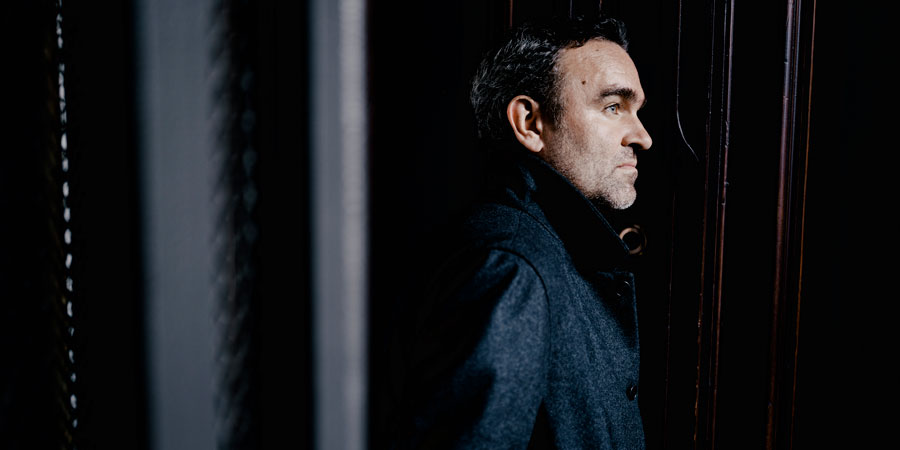
From the background to the limelight: Richard Ayres' work No. 57 (K's Strange Day) for solo timpani and orchestra will be premiered in Helsinki on 4 September 2024. The YLE Radio Symphony Orchestra will perform at Musiikkitalo under the baton of its chief conductor Nicholas Collon.

Ayres wrote his new piece for the orchestra's principal timpanist, Kazutaka Morita. The composer generally uses consecutive numbering for the titles of his pieces, in this case No. 57. The addition (K's Strange Day) can be seen as an allusion to Franz Kafka’s The Trial and the protagonist Josef K. The peculiar thing here is the emergence of the timpani from the background of the orchestra into the limelight. Questions arise: Does the imaginary figure do this voluntarily? In what situation does it find itself? Is she acting or is she subject to the circumstances?

No. 57 (K's Strange Day) by Richard Ayres: Grand entrance for the timpani

For long stretches, Ayres attempts to create a kind of ‘film without images’ in the audience's imagination. The composer has repeatedly been influenced by early cinema and artists such as Charlie Chaplin. There is often a central character around whom the story revolves.

When I was still playing in orchestras, this person seemed to be a mysterious figure sitting alone behind a wall of huge magical cauldrons. He often seemed to lean over the instrument as if he were talking to it. Half musician, half magician. (Richard Ayres)

No. 57 (K's Strange Day) will be performed again in the same place the day after the premiere. The German premiere can be experienced in May 2025 with the Philharmonisches Staatsorchester Mainz. The next world premiere by Richard Ayres will follow on 13 September 2024 in Amsterdam, where the Asko|Schönberg Ensemble will present Ayres' homage to the current Anton Bruckner year, which is logically entitled No. 58 (Bruckner)


Further Reading:

Richard Ayres: Composer Profile

No. 57 (K's Strange Day): Work Details and Online Score 

Website YLE Radio Symphony Orchestra


photo: Miguel Chamorro / Adobe

Alexander Goehr (1932–2024)

It is with great sadness that we announce the death of Alexander Goehr at the age of 92. Distinguished composer and teacher, Goehr’s substantial impact on contemporary music in Britain and abroad is perceptible through his significant compositional output as well as the many noteworthy composers whom he taught. Sandy (to all who knew him) passed away on 26 August 2024.

Read more

Work of the Week – Nikolai Kapustin: Concerto for violin, piano and string orchestra

Big band swing and ballroom dancing from Eastern Europe? What sounds like an unconventional combination, to say the least, comes across as enchantingly natural with Nikolai Kapustin. The Nordic Chamber Orchestra will perform Kapustin's Concerto for violin, piano and string orchestra op. 105 on 29 and 30 August 2024 in Västernorrland, Sweden, under the direction of Gilles Apap. The solo parts at this Swedish premiere will be played by Mona Kontra (piano) and the conductor himself (violin).

Kapustin knows how to fuse romanticism with jazz like no other. Yet he never saw himself as a jazz musician. He wrote down everything that seemed improvised from the outside in order to let it grow with the composition. The result is a unique music that - like Kapustin himself - has only become increasingly well-known since the 2000s. 

Concerto by Nikolai Kapustin: Duke Ellington meets Rachmaninoff

In addition to jazz and blues, Kapustin also makes use of ragtime in this Concerto. Traits of this rousing dance music permeate the work and allow it to oscillate between ecstasy and tender restraint. Sometimes Kapustin can simply be ‘blue’.

He mixes Shostakovich, Rachmaninoff, Schnittke and Prokofiev with the blues. It’s a mix of American-influenced jazz music plus the Russian education. (Frank Dupree, Pianist)

In a word: Kapustin's music is fun and there is still a lot to discover from him. More can be heard on 30 August 2024 in Tokyo, where Kapustin's second piano concerto will be performed, and in October in Sydney and Brisbane, where Nobuyuki Tsujii will perform the 8 Concert Studies.


Further Reading:

Nikolai Kapustin: Composer Profile

Concerto for violin, piano and string orchestra: Work Details and Online Score 

Website Music Västernorrland


photo: Peter Andersen, background: Adobe Firefly