english
  deutsch
  français
Work of the Week – Elisabeth Naske: Zack bumm!
- 25 May 2026
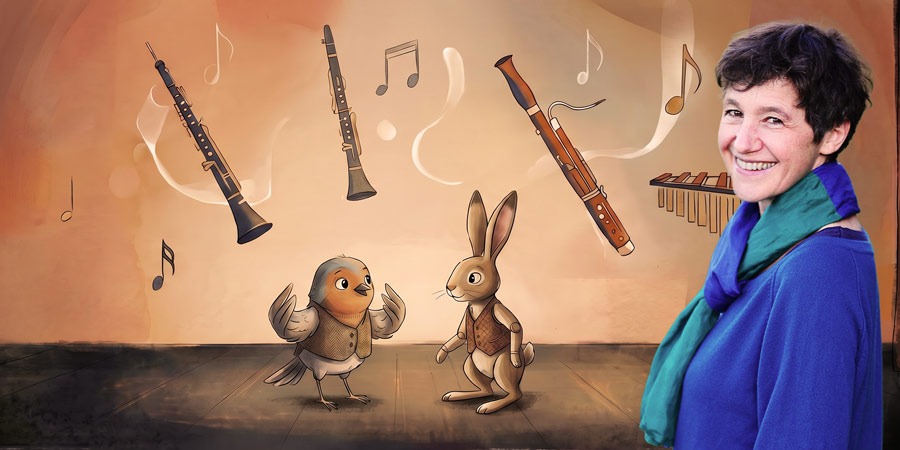
A bird who can only say “Zack bumm!” ('Bang boom!'): Elisabeth Naske’s new music theatre tells a story without words, using sound and puppetry to explore difference and connection.
A bird who can only say “Zack bumm!” ('Bang boom!'): Elisabeth Naske’s new music theatre tells a story without words, using sound and puppetry to explore difference and connection.

Anthony Davis's chamber opera Pancho Rabbit and the Coyote is a binational commission exploring the migrant experience at the U.S.-Mexico border. Based on Duncan Tonatiuh’s award-winning children's book, the opera uses a bilingual animal fable to make themes of hope, exploitation, and family unity musically tangible. The production blends jazz, classical, and Mexican folklore into a contemporary "Animal Farm".

Tobias Picker’s Fantastic Mr. Fox premieres at Opera Omaha – a musical adventure for the whole family.

Mirror, mirror on the wall, who is the cleverest of them all? Based on the story by the Brothers Grimm, Carl Orff's fairytale opera Die Kluge (The Wise Girl) will be performed at the Salzburg Festival on 20 August 2024 under the musical direction of Anna Handler.

A girl has to be good and sweet? Not at all. The princess in the children's opera The Princess and the Pea by Ernst Toch has a mind of her own. The cheeky piece will be performed from 2 February 2024 in the BlackBox of the Landestheater Linz. The production is directed by Martin Philipp and the Bruckner Orchestra is conducted by Ingmar Beck.

In their Christmas concerts these days, the Elbland Philharmonie Sachsen under the direction of Ekkehard Klemm and the Beethoven Orchestra Bonn under the direction of Hermes Helfricht will be performing the suite to the opera Tuttifäntchen by Paul Hindemith.

Does my hair color make me a worse person? This is the question Friederike has to ask herself in the children's opera Die feuerrote Friederike (“Fiery Frederica”). The play, based on the children's book of the same name by Christine Nöstlinger, can now be seen in Switzerland for the first time. The new production will open at Theater St. Gallen on 16 November 2023, directed by Annika Nitsch and conducted by Stéphane Fromageot.

How does one find one's way back into life after a bad experience? Anno Schreier shows this path in his children's opera Mina. First performed in Bonn in 2022, the piece was recently seen at the Opera Factory in Freiburg and a new production will open on October 25, 2023 at the Staatstheater Darmstadt, directed by Ulduz Ashraf Gandomi. The musical side is provided by baritone David Pichlmaier and flutist Olga Koring.

On 18 December 2022, a new production of Ludger Vollmer's "Road Opera" Tschick will celebrate its opening at the Vienna State Opera whilst simultaneously marking the Austrian premiere.