english
  deutsch
  français
The Eurovision Song Contest 2026
- 15 May 2026

Once a year, Europeans descend on a major city to showcase some of the very best of their musical talent on a continental stage, to sing songs, share a little unity, and have an all-around good time. But what makes the Eurovision Song Contest so important?
We’re going to take a quick look at the competition: where it started, where it’s been as we approach its 70th anniversary on Saturday 16th May, and what’s going on for the Eurovision Song Contest 2026!
What is Eurovision?
The Eurovision Song Contest is a music competition that started way back in May 1956. The impetus was the formation of the European Broadcasting Union six years previously in 1950, which amassed a membership of 23 broadcasting organisations across Europe, including major countries like France, Italy, and the Netherlands. For the first Eurovision, only six countries competed, with Switzerland taking the win with Lys Assia’s “Refrain”.
In the years since, Eurovision has become an industry in and of itself, with upwards of 43(!) countries competing for entry to the final, and with the remaining 26 countries having it out in pursuit of the grand prize.
This Year's Eurovision Song Contest
Given the 70th anniversary, this year's Eurovision will certainly be a spectacular celebration of European music, and some from further afield.
35 countries have competed across two semi-finals ahead of Saturday's Grand Final in Vienna. The resulting 25 finalists include the Big Five, France, Germany, Italy, Spain, and the UK, all of whom are able to skip the semis alongside the host nation Austria, alongside a fantastic variety of other qualifiers including Denmark and Sweden.
On top of all that, last year's winner, JJ, will be back to premiere his brand new single, with other interval acts giving some of that good old Eurovision nostalgia, including performances from Alexander Rybak, Ruslana, Lordi, and more, all performing reimagined versions of their own entries to celebrate 70 years of Eurovision.
The Winners Take it All
Shall we take a dive into the nuts and bolts of the competition? After all, how does one win this competition? This can be a controversial question, depending on who you’re asking…
One of the best things about Eurovision is the way it invites the TV audience to take part in deciding the winner in a public televote. Citizens of each country are able to phone in and vote for their favourite countries’ performance, but are specifically not allowed to vote for their own nation. The points are awarded in scales, depending on the number of votes, in descending order from 12, to 10, 8, 7, 6, 5, 4, 3, 2, and 1. During the live results, if a country receives 12 points, it’s cause for a big celebration on camera!
With that said, the other side of voting, which incidentally carries just as much weight, is down to national juries. Consisting of five music industry professionals per competing nation, they watch the live show and independently rank all of the songs (other than their own country’s), awarding the same points scale as the televote. Whilst this is done to help rule out any possible bloc voting, wherein neighbouring countries vote for each other concluding in either predictable or unfair results, the jury voting can sometimes give seemingly too much support in some cases, uplifting a song that did not necessarily compete well in the televote, and so it can be a bone of contention for some viewers.
Eurovision to International Celebrity
Eurovision has propelled plenty of artists to stardom, and elevated already-established stars to new heights. Over the years, there have been different scales of success that Eurovision winners are measured by, namely; those who won big on the night, those who won and became superstars, and those who didn’t win but went on to celebrity anyway.
Starting with the big winners of the given night, Salvador Sobral is the first port of call. After a beautiful performance of his song, “Amor Pelos Dois”, written by his singer-songwriter sister Luísa, Sobral stormed to first place in 2017, winning with a rare combination of both the televote and the jury vote, with a total record score of 758 points for Portugal. Another winner worth mentioning is the Norwegian singer Alexander Rybak, who won in 2009 with his song “Fairytale”, and achieved a 169-point lead over second place, the record for largest margin in all of Eurovision.
As for winners that went on to big international careers, few can compare to the likes of ABBA, who won the competition for Sweden in 1974 with their smash-hit “Waterloo”. Also, Céline Dion’s performance in 1988 representing Switzerland led to a wildly successful career which is still ongoing. In more recent years, Måneskin practically exploded in popularity after winning Eurovision 2021 for Italy with their hard-hitting song “Zitti e buoni”, practically taking the world by storm and securing concert slots across much of Western Europe and the US.
It often happens that some of the best and most beloved among us don’t achieve early accolades and instead find better fortunes further down the road. This much is true for Olivia Newton-John, who represented the UK in 1974, placing fourth behind ABBA; which is completely fair… The singer went on to have a storied career, starring in the blockbuster film Grease and going on to become one of the best-selling music artists of all time. It’s worth mentioning Julio Iglesias, Spain’s artist for the 1970 competition, who achieved fourth place despite being relatively unknown, and selling over 100 million records worldwide in later years; as well as having a son, Enrique, that did rather well too.
Schott and Eurovision
Here at Schott Music, we both publish and distribute Eurovision sheet music containing songs from previous competitions, including multiple winners. Below are some of our favourites!
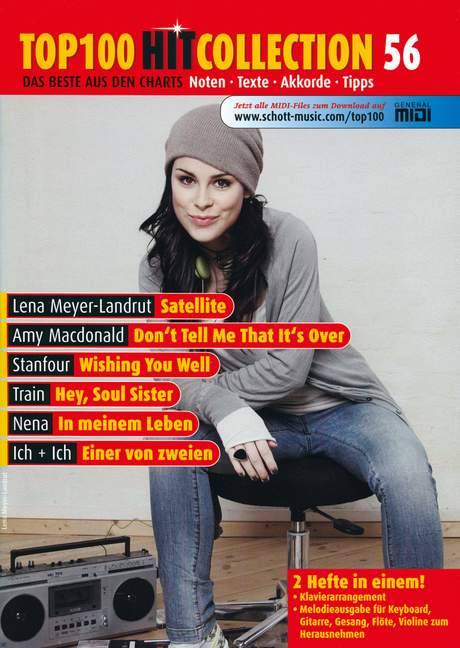 |
Top 100 Hit Collection: Volume 56Features Lena Meyer Landrut – "Satellite" Winner of Eurovision Song Contest 2010
|
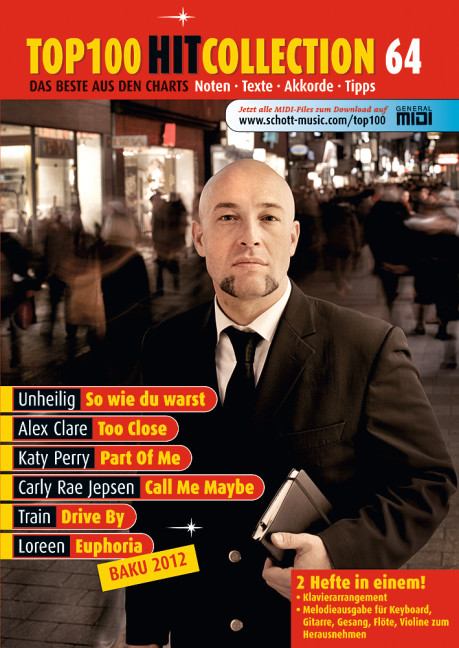 |
Top 100 Hit Collection: Volume 64Features Loreen – "Euphoria" Winner of Eurovision Song Contest 2012
|
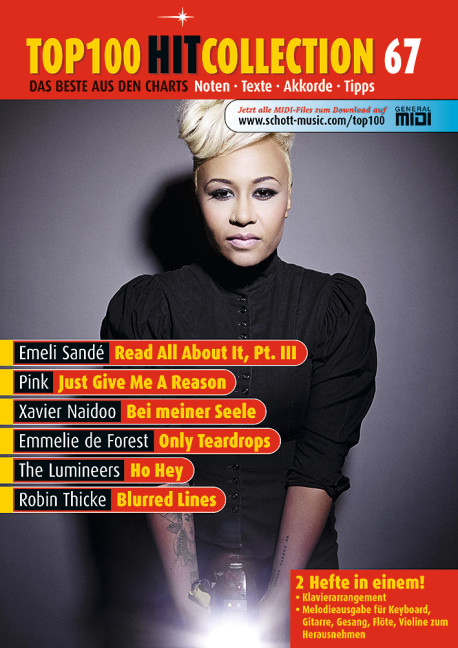 |
Top 100 Hit Collection: Volume 67Features Emmelie de Forest – "Only Teardrops" Winner of Eurovision Song Contest 2013
|
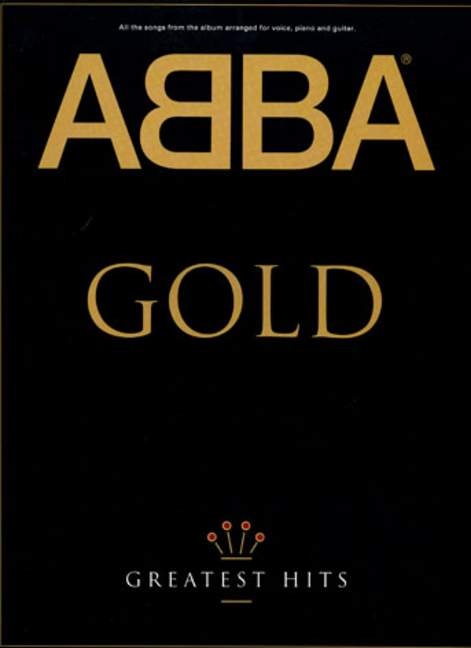 |
ABBA: GoldIncludes "Waterloo" Winner of Eurovision Song Contest 1974
|
FAQs
1. Where is the Eurovision Song Contest taking place this year?
Eurovision 2026 is taking place in Austria this year at the Wiener Stadthalle in Vienna.
2. How many countries are competing this year?
There will be 25 countries competing in Eurovision this year.
3. Who is favoured to win the Eurovision Song Contest this year?
Currently, the biggest bets are on artists like Linda Lampenius and Pete Parkkonen (Finland) or Akylas (Greece), with Delta Goodrem (Australia) as a possible wildcard.
4. How and where can you watch Eurovision 2026?
You can catch all the action live on BBC One and BBC iPlayer this Saturday at 8pm.