english
  deutsch
  français
The Barber of Seville: Two Centuries Later
- 20 Feb 2026
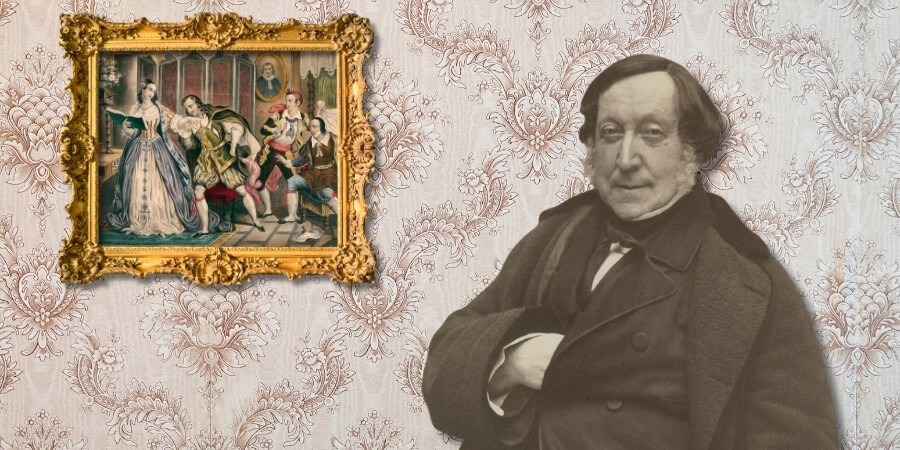
On Tuesday 20th February 1816, Gioachino Rossini’s opera buffa The Barber of Seville received its premiere at the Teatro Argentina in Rome. Written in just over three weeks (with revisions added later), it is now hailed as a masterclass of the operatic canon and considered by some to be the composer’s magnum opus—put down the pitchforks, William Tell “Overture” fans. At the time, however, it wasn’t quite so clear that it would go on to so storied a reputation. Worse yet, the first performance was nothing short of a cataclysm for the then-27 year old Rossini.
There were a few things standing in the way of a worthier reception:
- Another adaptation of Il barbiere di Siviglia, composed by Giovanni Pasiello, had premiered in 1782, with some attendees in 1816 making their thoughts of Rossini’s version known throughout the premiere.
- The opera wasn’t ready to be premiered when it did, with issues arising from the performances onstage.
To go further on the first point, Rossini himself must have had some idea of possible clashes. To differentiate his work from that of Pasiello’s, the Rossini opera was premiered as Almaviva, o sia L'inutile precauzione (English: Almaviva, or The Needless Precaution), after the tenor protagonist of the story.
Despite these difficulties, a disappointing start to an icon of opera, when The Barber of Seville was revived in Bologna later that year, this time under its true name, it found an enthusiastic audience; an enduring quality of such performances to the present day. Sadly, Rossini was not in attendance, hoping to avoid a repeat shame of failure a second time.
Well, how has the passing of over two centuries done for the opera? Let’s have a look!
The Opera Itself
To begin, what of the opera itself? What is it about; and, most importantly, why is it considered so good? For an opera buffa (comic opera), The Barber of Seville has a tale which is about as classic as it gets.
Having fallen in love with the young Rosina, Count Almaviva arrives in Seville with his heart's desire kept under lock and key by the jealous guardian, Doctor Bartolo, who wishes to marry her himself. To ensure the love is true and unrelated to his wealth, Almaviva resolves to court Rosina whilst in disguise, aided by the gifted barber, Figaro (“Largo al factotum”). Almaviva dons the act of Lindoro (“Ecco ridente in Cielo”), a poor student, as Rosina reveals her intelligence and intention to wrest back control of her future (“Una voce poco fa”) from Bartolo.
Almaviva continues his visitations in a variety of mounting uproarious disguises, whilst Bartolo’s scheming ally Don Basilio attempts to crush Almaviva’s social standing with reems of gossip (“La calunnia”). As the story comes to a head, with confusion, arrests, and near cataclysm for the couple, the lovers finally outwit Bartolo; Almaviva reveals his true identity, wins the heart of Rosina, and they celebrate in a final ensemble (“Ah, qual colpo insapettato”).
Despite comparisons with Pasiello’s own operatic adaptation, following Pasiello’s death later in 1816, Rossini’s work was given its proper name, The Barber of Seville, and snowballed into increased popularity and admiration as it found audiences further afield of its native Italy. There was nothing that quite matched the energy and pace of the comedy; not to mention the seemingly flawless symbiotic relationship between music and play. The characters are relatable and fantastical, filled with life and verve in a way that echoes in perfect tune across the years; overall, a social comedy that, while outrageous at times, still hits just the same.
The Impact of Seville (on Vocal Repertoire)
Whilst The Barber of Seville , excerpted works and arias have provided substantial material for musicians of all sorts, especially among the repertoire of baritone singers that wish to sing as Figaro. “Largo al factotum”, specifically, became an integral work at recital and audition. Weaving strong technicality with swaggering theatricality; Figaro’s introductory aria is an opportunity for the baritones among us to fully flaunt their comedic flair.
Switching sides, the dually bel canto mezzo-soprano and coloratura soprano of Rosina’s standout “Una voce poco fa” has cemented its place among the most common repertoire for both voices, with great demands made of a suitable singer’s flexibility, ornamentation, and overall ability to put on a proper show of dramatics.
Almaviva’s opening serenade, “Ecco ridente in Cielo”, is another mainstay of vocal repertoire. Tenors wishing to perform this work often find it demanding of strong technique, including smooth legato, expert control of their upper register and more than able phrasing. As with much of nineteenth-century opera, it allows such singers to showcase their sensitivity and poise.
Looking beyond the scope of individual arias, Rossini’s work would be much the lesser without the ingenuity of its orchestral backing, including the signature crescendo wherein gradually layered repeating figures are played to firmly bubble the excitement of the work. Present in the overture and throughout the opera, it became a fixture of nineteenth-century opera and influenced composers at home and abroad.
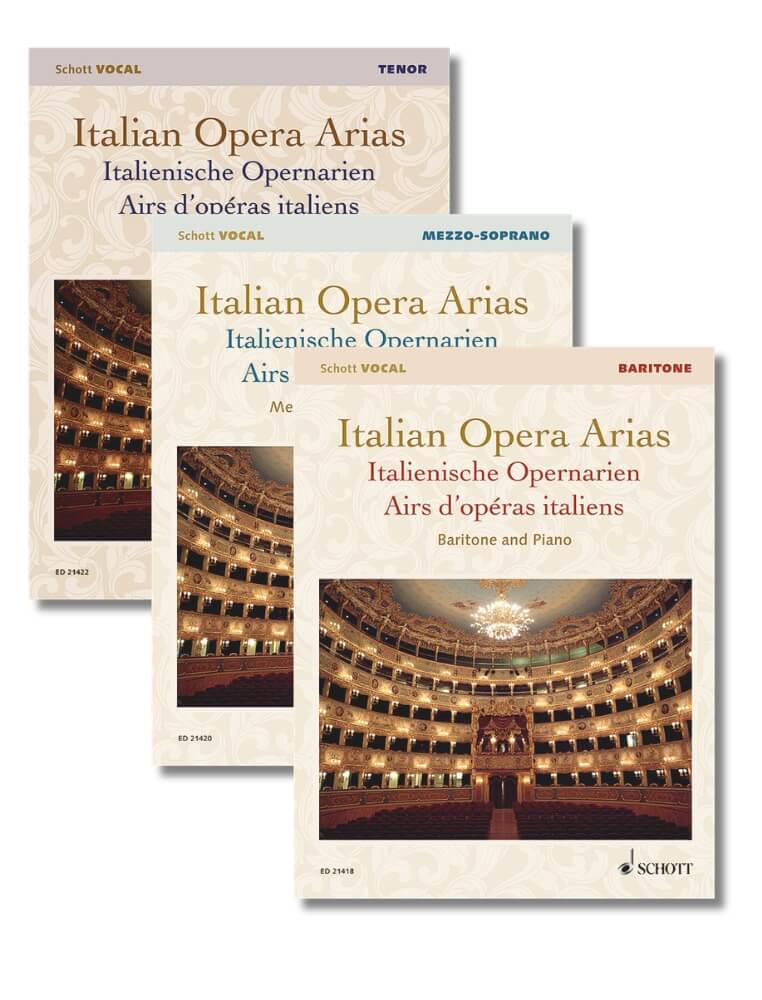 |
Italian Opera AriasCollections for SingersDrama, passion, a good dose of humour and, first and foremost, immortal melodies are the ingredients of the great masterpieces of Italian opera history. This collection of arias contains the most beautiful and popular solo pieces of music theatre in one volume each. A cross-section of the art of singing spanning three centuries.
|
The Barber Today
It may have originated as a comedy work—which contemporaneously may have set it lower in terms of artistic sophistication—but The Barber of Seville has enjoyed a steady ascension to high art much like other beloved works of the western musical canon. So much so, it is held in regular rotation in-and-out of opera seasons across Europe, and internationally.
In the end, each component of the work, from the orchestral backing to the vocals supreme to the comical plot, has earned The Barber of Seville and Rossini a well-deserved legacy.
FAQs
1. What are the most famous arias from The Barber of Seville?
Among the most famous arias are:
- “Largo al factotum” (Figaro)
- “Una voce poco fa” (Rosina)
- “Ecco ridente in cielo” (Almaviva)
- “La calunnia” (Don Basilio)
2. Is the Barber of Seville suitable for first-time opera audiences?
Absolutely! Both the story and the music are accessible, humours and endearing, providing a wonderful start for the opera newcomer.
3. What voice types sing the main roles in The Barber of Seville?
- Figaro – Baritone
- Rosina – Mezzo-soprano (or coloratura soprano)
- Count Almaviva – Tenor
- Doctor Bartolo – Bass
- Don Basilio – Bass
4. How long is The Barber of Seville?
A performance of The Barber of Seville usually lasts around 2.5 to 3 hours, including an interval.