english
  deutsch
  français
Film Music: Classics, Insider Tips, and Sheet Music
- 3 Oct 2025
Music has become an integral part of films. What began in the silent film era as an accompaniment to images and a way to cover up projector noise is now an indispensable part of the movie-going experience. Film music both creates and enhances suspense, moves us to tears, and often stays in our minds longer than the images themselves. It is more than just background noise, it is an invisible actor that has a decisive influence on the impact of a story.
At Schott Music, you will find not only numerous iconic works to play, but also published original works by great film composers. In this article, you will learn what makes film music special, how it is created, which composers have shaped it, and how you can play film music yourself.
What is Film Music?
Film music refers to music that is specially composed or deliberately selected for films. A distinction is made between:
- Score: Original composition for the film, usually for orchestra, electronic instruments, or hybrid ensembles.
- Soundtrack: A compilation of existing pieces, often from genres like pop, jazz, or classical music.
While the score precisely accompanies scenes and creates leitmotifs for characters or locations, the soundtrack provides cultural references and recognition value. Both forms have an emotional effect, but in different ways.
Icons of Film Music
Nino Rota
Nino Rota was born in Milan on December 3rd, 1911. Although he wrote numerous chamber music works, solo concertos, symphonies, oratorios, and stage works, his name is inextricably linked with 158 incomparable film scores for directors such as Federico Fellini and Francis Ford Coppola.
His music contributed significantly to the worldwide success of classics such as La Dolce Vita, The Leopard (Il Gattopardo) and 8½ (Otto e mezzo).
How do you compose film music?
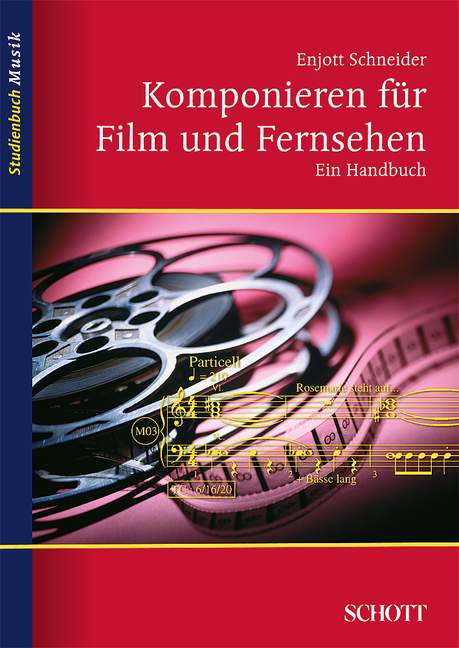 |
Composing for Film and TelevisionEnjott SchneiderCombining theory and practice, this book offers a guide to composition that goes far beyond the subject of film. Since 1980, composing has generally no longer meant solely logical development using the traditional materials of space, time, and sound: the theme of music is rather associative composing, the integration of pop, rock, world music, and jazz, also with the aid of state-of-the-art studio technology. In his book, Schneider describes the use of these components in the creation of film music and provides practical tips on topics such as music and film editing, synchronisation of image and music, mixing, sound sampling, and even everyday problems such as studio costs and fees.
|
Howard Shore
Howard Shore is one of the world's most important and honoured composers of film and orchestral music. He has set international standards with his moving and expressive film scores, including the music for The Lord of the Rings trilogy. His concert works are regularly performed by leading orchestras around the world. In 2003, Shore conducted the premiere of The Lord of the Rings Symphony in Wellington, New Zealand. To date, Howard Shore has won four Grammys and three Academy Awards for his music for The Lord of the Rings trilogy, including the Oscar for Best Original Song for “Into the West” alongside singer Annie Lennox and screenwriter Fran Walsh.
The University of York awarded Shore an honorary doctorate in 2007. Countless institutions and organisations around the world have honoured him with awards for his work.
- For Voice and Piano: The OPERA America Songbook
- For Guitar: In Dreams (from: The Lord of the Rings: The Fellowship of the Ring)
Erich Wolfgang Korngold
In 1929, Erich Wolfgang Korngold, who had become internationally renowned thanks to the success of his early stage works Violanta, Der Ring des Polykrates (1916) and Die tote Stadt (1920), adapted Johann Strauss's Die Fledermaus for a production, directed by Max Reinhardt. Reinhardt then brought Korngold to Hollywood in 1934 for the production of A Midsummer Night’s Dream. The composer later settled there in 1938 after the occupation of Austria by Nazi Germany.
Korngold became one of the most sought-after film music composers in the US, and perfected the genre of symphonic film music during his career as house composer for Warner Bros. Studios. This honing was particularly evident in his music for classics of the swashbuckling genre such as The Prince and the Pauper (1937) The Adventures of Robin Hood (1938), The Private Lives of Elizabeth and Essex (1939), and The Sea Hawk (1940). Korngold became an influential co-founder of the “Sound of Hollywood.” His filmography were nominated for a total of five Academy Awards, winning the coveted award for Best Original Score for Anthony Adverse (1936) and later for The Adventures of Robin Hood (1938). Since 1995, the Erich Wolfgang Korngold Prize has been awarded by the Captain Blood Errol Flynn Stiftung Deutsche Kinemathek as an award for the life's work of an outstanding film music composer.
Der Musikfilm
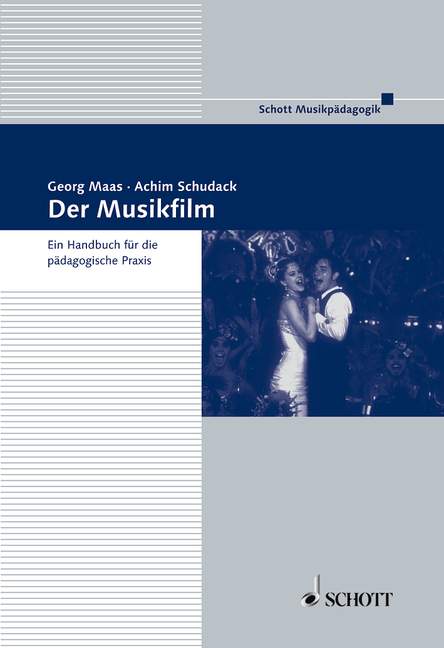 |
Der MusikfilmGeorg Maas | Achim SchudackThe symbiosis of music and film, which dates back to the early days of cinema, has developed into many different forms, largely dependent on genre. Today, the spectrum ranges from music documentaries such as Rhythm Is It! to feature films such as The Children of Monsieur Mathieu, from cinematic reinterpretations of well-known operas such as Carmen to music videos. This volume is not about the subservient role of music in film, as is typical of film music, but about the cinematic staging of music. The following forms of music film are presented:
Each chapter offers detailed suggestions for music lessons in secondary schools.
|
Play film music yourself
From Piano to Saxophone
- For Piano: Pianotainment Movie von Hans-Günter Heumann
- For Guitar: Movie Hits by Peter Ansorge und Bruno Szordikowski
- For Choir: Movie Songs by Clemens Schäfer
- For Violin: Pop for Violin Movie Special by Michael Zlanabitning
- For Cello: Pop for Cello Movie Special by Michael Zlanabitnig
- For Trumpet: Movie Classics by Martin Schädlich
- For Alto Saxophone: Movie Classics by Dirko Juchem
Klaus Doldinger
Since the 1960s, jazz musician and composer Klaus Doldinger has shaped the German TV and film scene with the characteristic sound of his film music, some of which has already achieved cult status. His work holds a strong presence, whether across theme tunes for Tatort, Liebling Kreuzberg, and Ein Fall für zwei, or accompanying music for a wealth of internationally broadcast TV series such as Derrick, Wolffs Revier, Der Alte, and Peter Strohm.
Doldinger became known worldwide with the music for the two internationally successful blockbusters, Das Boot and The Neverending Story, both produced by Wolfgang Petersen. For his music for Das Boot, he received the German Record Prize in 1982 and the “Golden Camera” in 2007; the music for The Neverending Story was nominated for the Saturn Award in 1985, in the Best Film Music category.
Discover our film music in the Schott Shop – from piano editions and choral arrangements to complete orchestral materials.
Sign up to our Newsletter and stay informed about new editions and exciting events.
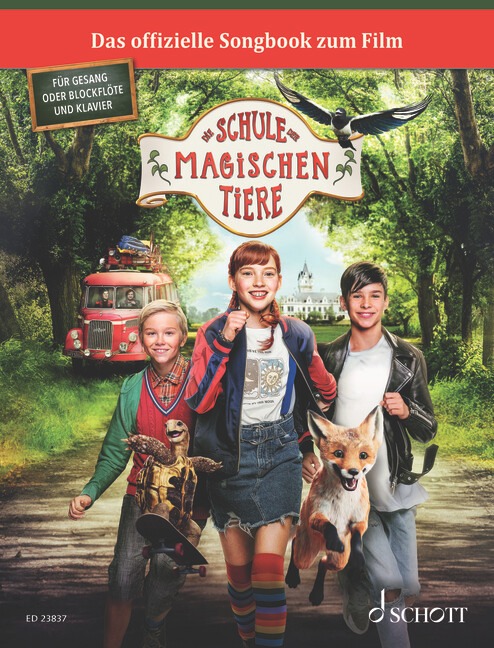
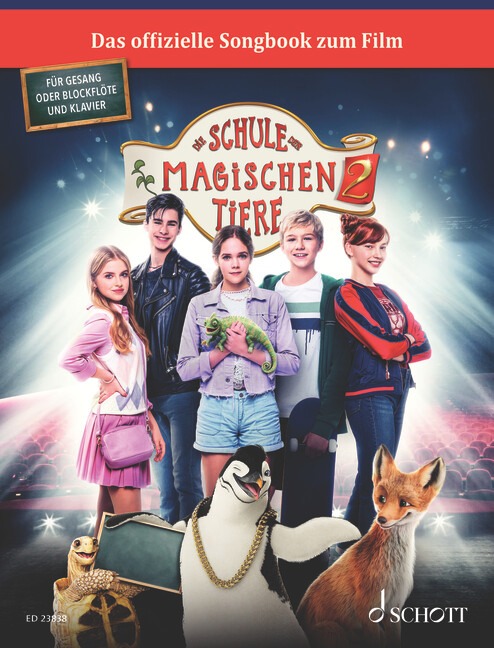
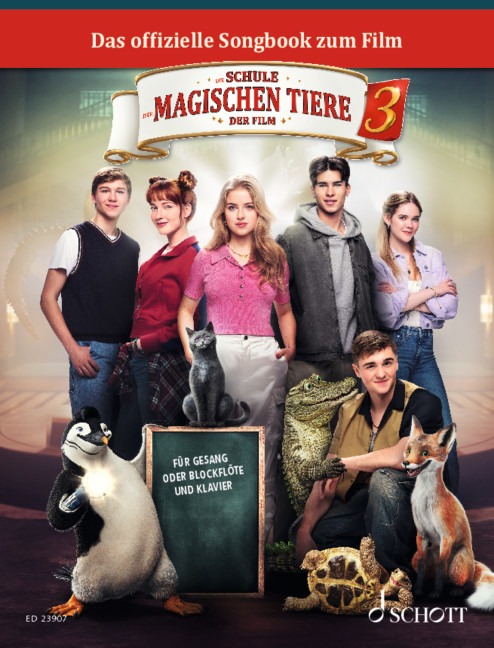
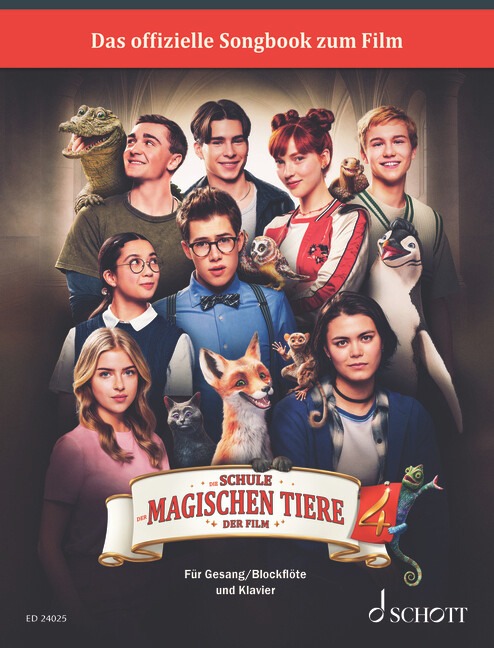
The Music for "Schule der magischen Tiere"
|
|
|
|
|