français
  deutsch
  english

Richard Wagner
Pays d'origine:
Allemagne
Date d'anniversaire:
22 mai 1813
Date de décès:
13 février 1883
À venir
Die Walküre
Chef d'orchestre: Steven Moore
Orchestre: Amatørsymfonikerne
29 mai 2026 |
Charlottenlund (Danemark) , Gentofte Rådhus
À propos de Richard Wagner
The childhood of Richard Wagner (born on 22 May 1813) was divided between Dresden and Leipzig, where he had his first composition lessons in 1831/32 from Christian Theodor Weinlig, cantor at the Thomasschule. In 1833 he became chorus master at the Würzburg theatre. Later he held brief appointments as music director at theatres in Bad Lauchstädt, Magdeburg, and Königsberg, where he married the actress Minna Planer in 1836.
A conducting engagement took him to Riga in 1837, but in 1839 Wagner and Minna left Riga and his creditors under cover of night, heading for Paris over the stormy Baltic Sea. There he remained for three hard years, completing Rienzi (1840). His years in Paris turned into a bitterly disappointing experience. He eked out something less than a living by doing musical hack-work and writing articles. His first success with Rienzi in Dresden in 1842 led to his appointment as musical director (Hofkapellmeister) at Dresden in 1843, and shortly afterwards Der fliegende Holländer as well as his innovative Tannhäuser were performed for the first time. Some of his outstanding achievements were a performance of Beethoven’s Ninth Symphony and his revised version of Gluck’s Iphigenie in Aulis.
In May 1849, having taken part in the revolt in Saxony, Wagner had to flee abroad, and after failing to establish himself as opera composer in Paris he settled with his wife in Zurich in 1857. They lived in a house on the Wesendonck estate under the patronage of the financier Otto von Wesendonck. While in Zurich he published various theoretical writings and composed Das Rheingold, Die Walküre and two acts of the opera Siegfried. While working on the Ring cycle, Wagner had fallen in love with Mathilde Wesendonck, the wife of his wealthy patron. The Ring Cycle work was interrupted in 1857 and not continued until 12 years later. He shifted his interest to a new subject, the love tragedy Tristan und Isolde. In an untenable situation in 1858 he moved first to Venice, then to Lucerne, Paris and Vienna.
Although he was composing what would become some of the most famous pieces in music history, Wagner struggled financially until 1864, when Ludwig II of Bavaria called him to Munich and began supporting him. So, in 1865 Tristan und Isolde and in 1868 Die Meistersinger von Nürnberg were premiered in Munich. Already by 1866 Wagner had fallen into disfavour amongst members of the court, who were suspicious of his influence on the king. He left Munich and went to Tribschen (near Lucerne), where he married Cosima von Bülow in 1870, the daughter of his friend Franz Liszt, who always supported him humanly and artistically. Around that time Die Meistersinger was finished, and he worked steadily at the unfinished portion of Der Ring des Nibelungen and further evolved the intellectual framework for his towering mature masterpieces.
In 1872 Wagner, his wife and the three children Isolde, Eva and Siegfried settled in Bayreuth. Wagner was anxious to have a special Festival Theatre for the complete cycle and spent much energy trying to raise money for it. Finally, King Ludwig II provided the necessary support. In 1872 the cornerstone was laid on Bayreuth’s Green Hill and the opera house was built to his personal specifications and suited to the massive fusion of music, staging, text, and scene design that his later operas entailed. The first festival – an artistic triumph but a financial disaster – was held there in 1876, when the complete Ring was given conducted by Hans Richter. In 1882 the second Bayreuth Festival took place with sixteen performances of Parsifal under Hermann Levi, which were financially successful. After that, Wagner and his family who had already spent the winter in Italy for some years, went to Venice where he died on 13 February 1883 of the heart trouble that had been with him for some years.
Produits
-
 The Nibelung's Ring (WWV 86) A Theatre Festival Play for Three Days and a Preliminary Evening (Vols. 10-13)Compositeur: Richard WagnerEditeur: Christa JostMedia Type: PartitionEdition: Partition, complete editionSéries: Richard Wagner - Complete Works, Vol. 11/II
Die Walküre, Vol. 11/II
Numéro du produit: RWA 111-20Format papierFormat papierEn stock239,00 €TTC, hors expédition -
 L'Anneau du Nibelung (WWW 86) Opéra en un prologue et trois actes (vol. 10-13)Compositeur: Richard WagnerEditeur: Christa JostMedia Type: PartitionEdition: Partition et notes critiques, complete editionSéries: Richard Wagner - Complete Works, Vol. 11/III
Die Walküre, Vol. 11/III
Numéro du produit: RWA 111-30Format papierFormat papierEn stock265,00 €TTC, hors expédition -
 VorspielCompositeur: Richard WagnerEditeur: Christa JostMedia Type: Matériel en location / d'exécutionEdition: Matériel d'exécutionLangue: AllemandMatériel en location / d'exécutionMatériel en location / d'exécution
 -
 "Du bist der Lenz"Compositeur: Richard WagnerEditeur: Christa JostMedia Type: Matériel en location / d'exécutionEdition: Matériel d'exécutionLangue: AllemandMatériel en location / d'exécutionMatériel en location / d'exécution
 -
Wotans Abschied und FeuerzauberCompositeur: Richard WagnerMedia Type: Matériel en location / d'exécutionEdition: Matériel d'exécutionMatériel en location / d'exécutionMatériel en location / d'exécution
-
Der Ritt der WalkürenCompositeur: Richard WagnerMedia Type: Matériel en location / d'exécutionEdition: Matériel d'exécutionMatériel en location / d'exécutionMatériel en location / d'exécution
-
 Wotans Abschied und FeuerzauberCompositeur: Richard WagnerMedia Type: Matériel en location / d'exécutionEdition: Matériel d'exécutionLangue: AllemandMatériel en location / d'exécutionMatériel en location / d'exécution
 -
Siegmunds LiebesliedCompositeur: Richard WagnerMedia Type: Matériel en location / d'exécutionEdition: Matériel d'exécutionLangue: AllemandMatériel en location / d'exécutionMatériel en location / d'exécution
-
 (Die Walküre)Compositeur: Richard WagnerMedia Type: Partition électronique en PDFInstrumentation: soprano and pianoNuméro du produit: ED 22889 Q815928Partition PDFPartition PDFEn stock3,99 €TTC
 -
für kleines OrchesterCompositeur: Richard WagnerArrangeur: Nikolaj KasanliMedia Type: Matériel en location / d'exécutionEdition: Matériel d'exécutionMatériel en location / d'exécutionMatériel en location / d'exécution
-
 for orchestra (2nd version)Compositeur: Richard WagnerEditeur: Peter Jost | Egon VossMedia Type: Matériel en location / d'exécutionEdition: Matériel d'exécutionMatériel en location / d'exécutionMatériel en location / d'exécution
 -
 (Elsa's dream) from "Lohengrin"Compositeur: Richard WagnerArrangeur: Karl Klindworth | Wilhelm LutzInstrumentation: soprano et pianoNuméro du produit: ED0 2846Type de produitEn stockPrix à partir de 3,99 €TTC
 -
 (Lohengrin)Compositeur: Richard WagnerMedia Type: Partition électronique en PDFInstrumentation: soprano and pianoNuméro du produit: ED 22889 Q815924Partition PDFPartition PDFEn stock3,99 €TTC
 -
Elsas Traum aus "Lohengrin"Compositeur: Richard WagnerEditeur: Johannes DöbberMedia Type: PartitionSérie: Operngesänge, 232
Instrumentation: soprano et pianoLangue: AllemandNuméro du produit: RL35630Format papierFormat papierEn stock8,00 €TTC, hors expédition -
 from "Tannhäuser"Compositeur: Richard WagnerEditeur: Fritz Meyer | E. ThomasInstrumentation: violon et pianoNuméro du produit: ED0 2904Type de produitEn stockPrix à partir de 3,99 €TTC
 -
"Freudig begrüßen wir die edle Halle" aus "Tannhäuser"Compositeur: Richard WagnerArrangeur: Heinrich PoosEdition: Partition de choeurInstrumentation: choeur mixte (SATB) et piano à 4 mains ou orchestreNuméro du produit: ED 7156-01Type de produitEn stockPrix à partir de 3,99 €TTC
-
 "Freudig begrüßen wir die edle Halle" aus "Tannhäuser"Compositeur: Richard WagnerArrangeur: Heinrich PoosMedia Type: PartitionEdition: Partition, (= Klavierstimme)Instrumentation: choeur mixte (SATB) et piano à 4 mains ou orchestreLangue: AllemandNuméro du produit: ED 7156Format papierFormat papierEn stock25,50 €TTC, hors expédition
 -
 Media Type: PartitionEdition: Partition et partiesInstrumentation: BlasorchesterNuméro du produit: 3016250Format papierFormat papierÉpuisé81,50 €TTC, hors expédition
 -
 Media Type: PartitionEdition: Partition et partiesInstrumentation: BlasorchesterNuméro du produit: 3010731Format papierFormat papierÉpuisé137,50 €TTC, hors expédition
 -
 Media Type: PartitionEdition: PartitionInstrumentation: BlasorchesterNuméro du produit: 3016251Format papierFormat papierÉpuisé12,50 €TTC, hors expédition
 -
Media Type: PartitionEdition: PartitionInstrumentation: BlasorchesterNuméro du produit: 3010732Format papierFormat papierÉpuisé25,50 €TTC, hors expédition
-
aus der Oper „Tannhäuser”Compositeur: Richard WagnerMedia Type: PartitionInstrumentation: voix et piano à 4 mainsLangue: AllemandNuméro du produit: AF 6228Format papierFormat papierEn stock10,95 €TTC, hors expédition
-
aus der Oper „Tannhäuser”Compositeur: Richard WagnerMedia Type: PartitionEdition: PartitionInstrumentation: voix et orchestreLangue: AllemandNuméro du produit: AF 2967Format papierFormat papierEn stock10,95 €TTC, hors expédition
-
 (Lohengrin)Compositeur: Richard WagnerMedia Type: Partition électronique en PDFInstrumentation: soprano and pianoNuméro du produit: ED 22889 Q815925Partition PDFPartition PDFEn stock3,99 €TTC
 -
 (Siegfried)Compositeur: Richard WagnerMedia Type: Partition électronique en PDFInstrumentation: soprano and pianoNuméro du produit: ED 22889 Q815931Partition PDFPartition PDFEn stock3,99 €TTC
 -
 for orchestra (A Faust ouverture, 1st version)Compositeur: Richard WagnerEditeur: Egon VossMedia Type: Matériel en location / d'exécutionEdition: Matériel d'exécutionMatériel en location / d'exécutionMatériel en location / d'exécution
 -
 Compositeur: Richard WagnerArrangeur: Louis BrassinInstrumentation: pianoNuméro du produit: ED0 75Type de produitEn stockPrix à partir de 4,99 €TTC
 -
arranged for bass and orchestra by Georg VollerthumCompositeur: Richard WagnerArrangeur: Georg VollerthunMedia Type: Matériel en location / d'exécutionEdition: Matériel d'exécutionMatériel en location / d'exécutionMatériel en location / d'exécution
-
 von Mathilde WesendonckCompositeur: Richard WagnerMedia Type: Matériel en location / d'exécutionEdition: Matériel d'exécutionLangue: AllemandMatériel en location / d'exécutionMatériel en location / d'exécution
 -
 eingerichtet von Rudi KöhlerCompositeur: Felix Mendelssohn Bartholdy | Giovacchino Rossini | Louis Spohr | Friedrich Hieronymus Truhn | Richard WagnerMedia Type: PartitionEdition: Partition et partiesNuméro du produit: EE 5458Format papierFormat papierEn stock24,00 €TTC, hors expédition
 -
 (Tannhäuser und der Sängerkrieg auf Wartburg)Compositeur: Richard WagnerMedia Type: Partition électronique en PDFInstrumentation: soprano and pianoNuméro du produit: ED 22889 Q815923Partition PDFPartition PDFEn stock3,99 €TTC
 -
 Der Ring des NibelungenCompositeur: Richard WagnerEditeur: Hartmut FladtMedia Type: Matériel en location / d'exécutionEdition: Matériel d'exécutionLangue: AllemandMatériel en location / d'exécutionMatériel en location / d'exécution
 -
 The Nibelung's Ring (WWV 86) A Theatre Festival Play for Three Days and a Preliminary Evening (Vols. 10-13)Compositeur: Richard WagnerEditeur: Hartmut FladtMedia Type: PartitionEdition: Partition et notes critiques, complete editionSéries: Richard Wagner - Complete Works, Vol. 13/III
Götterdämmerung, Vol. 13/III
Numéro du produit: RWA 113-30Format papierFormat papierEn stock266,00 €TTC, hors expédition -
 The Nibelung's Ring (WWV 86) A Theatre Festival Play for Three Days and a Preliminary Evening (Vols. 10-13)Compositeur: Richard WagnerEditeur: Hartmut FladtMedia Type: PartitionEdition: Partition, complete editionSéries: Richard Wagner - Complete Works, Vol. 13/II
Götterdämmerung, Vol. 13/II
Numéro du produit: RWA 113-20Format papierFormat papierEn stock230,00 €TTC, hors expédition -
 The Nibelung's Ring (WWV 86) A Theatre Festival Play for Three Days and a Preliminary Evening (Vols. 10-13)Compositeur: Richard WagnerEditeur: Hartmut FladtMedia Type: PartitionEdition: Partition, complete editionSéries: Richard Wagner - Complete Works, Vol. 13/I
Götterdämmerung, Vol. 13/I
Numéro du produit: RWA 113-10Format papierFormat papierEn stock376,00 €TTC, hors expédition -
 Der Ring des NibelungenCompositeur: Richard WagnerEditeur: Hartmut FladtEdition: Partition d'étudeInstrumentation: solistes, choeur et orchestreNuméro du produit: ETP 8057Type de produitEn stockPrix à partir de 59,99 €TTC
 -
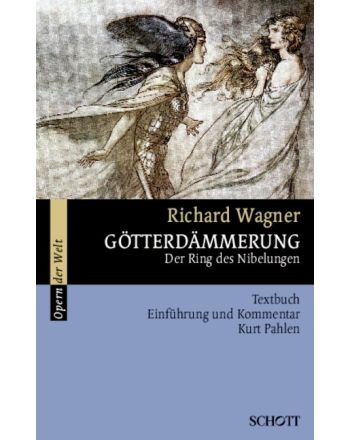 Der Ring des NibelungenType de produitEn stockPrix à partir de 14,99 €TTC
 -
 sämtliche Harfenstimmen für 1 Instrument eingerichtetCompositeur: Richard WagnerEdition: Partie séparée, HarfeSérie: Edition Schott
Instrumentation: harpeNuméro du produit: BSS 28536Type de produitEn stockPrix à partir de 19,99 €TTC -
TrauermarschCompositeur: Richard WagnerArrangeur: Nikolaj KasanliMedia Type: Matériel en location / d'exécutionEdition: Matériel d'exécutionMatériel en location / d'exécutionMatériel en location / d'exécution
-
 A Symphonic JourneyCompositeur: Richard Wagner | Ryan WigglesworthArrangeur: Ryan WigglesworthMedia Type: Matériel en location / d'exécutionEdition: Matériel d'exécutionInstrumentation: soprano et orchestreMatériel en location / d'exécutionMatériel en location / d'exécution
 -
 Brünnhildes Schlussgesang "Starke Scheite schichtet mir dort"Compositeur: Richard WagnerEditeur: Hartmut FladtMedia Type: Matériel en location / d'exécutionEdition: Matériel d'exécutionInstrumentation: soprano et orchestreLangue: AllemandMatériel en location / d'exécutionMatériel en location / d'exécution
 -
 Version with reduced wind instruments by Alfons AbbassCompositeur: Richard WagnerMedia Type: Matériel en location / d'exécutionEdition: Matériel d'exécutionLangue: AllemandMatériel en location / d'exécutionMatériel en location / d'exécution
 -
Reduzierte Besetzung von Gotthold Ephraim LessingCompositeur: Richard WagnerMedia Type: Matériel en location / d'exécutionEdition: Matériel d'exécutionLangue: AllemandMatériel en location / d'exécutionMatériel en location / d'exécution
-
aus "Der Ring des Nibelungen" - Dritter TagCompositeur: Richard WagnerMedia Type: Matériel en location / d'exécutionEdition: Matériel d'exécutionLangue: AllemandMatériel en location / d'exécutionMatériel en location / d'exécution
-
Funeral MusicCompositeur: Richard WagnerMedia Type: PartitionEdition: Partition d'étudeInstrumentation: orchestreNuméro du produit: ETP 811Format papierFormat papierEn stock11,50 €TTC, hors expédition
-
Der Ring des Nibelungen - Dritter TagCompositeur: Richard WagnerMedia Type: PartitionEdition: PartitionInstrumentation: solistes, choeur et orchestreNuméro du produit: BSS 21953Format papierFormat papierEn stock235,00 €TTC, hors expédition
-
Schluss-Szene der Brünnhilde (Reduzierte Besetzung von Gotthold Ephraim Lessing)Compositeur: Richard WagnerMedia Type: Matériel en location / d'exécutionEdition: Matériel d'exécutionLangue: AllemandMatériel en location / d'exécutionMatériel en location / d'exécution
-
 Morgendämmerung und Siegfrieds RheinfahrtCompositeur: Richard WagnerMedia Type: Matériel en location / d'exécutionEdition: Matériel d'exécutionMatériel en location / d'exécutionMatériel en location / d'exécution
 -
 Tod und TrauermarschCompositeur: Richard WagnerMedia Type: Matériel en location / d'exécutionEdition: Matériel d'exécutionMatériel en location / d'exécutionMatériel en location / d'exécution
 -
Schluss-Szene der BrünnhildeCompositeur: Richard WagnerMedia Type: Matériel en location / d'exécutionEdition: Matériel d'exécutionLangue: AllemandMatériel en location / d'exécutionMatériel en location / d'exécution


représentations
Meistersinger
Chef d'orchestre: Sebastian Weigle
Orchestre: Yomiuri Nippon Symphony Orchestra
31 juillet 2026 |
Kawasaki (Japon) , Kawasaki Symphony Hall — Première nationale
Die Walküre
Chef d'orchestre: Svetoslav Borisov
Orchestre: Orchestra of the Varna State Opera
31 juillet 2026 |
Tyrnovo (Bulgarie) , Open air theater Veliko
Performance of excerpts.
Rienzi, der Letzte der Tribunen
Chef d'orchestre: Nathalie Stutzmann
Orchestre: Orchester der Bayreuther Festspiele
3 août 2026 |
Bayreuth (Allemagne) , Festspielhaus
Lohengrin
Chef d'orchestre: Tarmo Peltokoski
Orchestre: Latvijas Nacionālais simfoniskais orķestris
6 août 2026 |
Cesis (Lettonie) , Koncertzālē — Première nationale
Rienzi, der Letzte der Tribunen
Chef d'orchestre: Nathalie Stutzmann
Orchestre: Orchester der Bayreuther Festspiele
8 août 2026 |
Bayreuth (Allemagne) , Festspielhaus
Lohengrin
Chef d'orchestre: Tarmo Peltokoski
Orchestre: Latvijas Nacionālais simfoniskais orķestris
8 août 2026 |
Cesis (Lettonie) , Koncertzālē
Der fliegende Holländer
Chef d'orchestre: Henrik Nánási
Orchestre: Helsingborgs Symfoniorkester
8 août 2026 |
Ribe (Danemark) , Dom
Iphigénie en Aulide
Chef d'orchestre: Michael Hofstetter
Orchestre: Thüringer Philharmonie Gotha-Eisenach
12 août 2026 |
Bayreuth (Allemagne) , Friedrichsforum
Rienzi, der Letzte der Tribunen
Chef d'orchestre: Nathalie Stutzmann
Orchestre: Orchester der Bayreuther Festspiele
14 août 2026 |
Bayreuth (Allemagne) , Festspielhaus
Rienzi, der Letzte der Tribunen
Chef d'orchestre: Nathalie Stutzmann
Orchestre: Orchester der Bayreuther Festspiele
17 août 2026 |
Bayreuth (Allemagne) , Festspielhaus
Rienzi, der Letzte der Tribunen
Chef d'orchestre: Nathalie Stutzmann
Orchestre: Orchester der Bayreuther Festspiele
19 août 2026 |
Bayreuth (Allemagne) , Festspielhaus
Rienzi, der Letzte der Tribunen
Chef d'orchestre: Nathalie Stutzmann
Orchestre: Orchester der Bayreuther Festspiele
22 août 2026 |
Bayreuth (Allemagne) , Festspielhaus
Rienzi, der Letzte der Tribunen
Chef d'orchestre: Nathalie Stutzmann
Orchestre: Orchester der Bayreuther Festspiele
24 août 2026 |
Bayreuth (Allemagne) , Festspielhaus
Rienzi, der Letzte der Tribunen
Chef d'orchestre: Nathalie Stutzmann
Orchestre: Orchester der Bayreuther Festspiele
26 août 2026 |
Bayreuth (Allemagne) , Festspielhaus
Goetterdaemmerung
Chef d'orchestre: Kent Nagano
Orchestre: Dresdner Festspielorcherster; Concerto Köln
10 septembre 2026 |
Luzern (Suisse) , Kultur- und Kongresszentrum
Die Meistersinger von Nürnberg
Chef d'orchestre: Frank Beermann
Orchestre: Nordwestdeutsche Philharmonie
11 septembre 2026 |
Minden (Allemagne) , Stadttheater — Première soirée
Goetterdaemmerung
Chef d'orchestre: Kent Nagano
Orchestre: Dresdner Festspielorcherster; Concerto Köln
13 septembre 2026 |
Paris (France) , Théâtre des Champs-Élysées
Die Meistersinger von Nürnberg
Chef d'orchestre: Frank Beermann
Orchestre: Nordwestdeutsche Philharmonie
13 septembre 2026 |
Minden (Allemagne) , Stadttheater
Die Meistersinger von Nürnberg
Chef d'orchestre: Frank Beermann
Orchestre: Nordwestdeutsche Philharmonie
18 septembre 2026 |
Minden (Allemagne) , Stadttheater
Die Meistersinger von Nürnberg
Chef d'orchestre: Frank Beermann
Orchestre: Nordwestdeutsche Philharmonie
20 septembre 2026 |
Minden (Allemagne) , Stadttheater