english
  deutsch
  français
Rodion Shchedrin (1932 – 2025)
- By Christopher Peter
- 29 Aug 2025
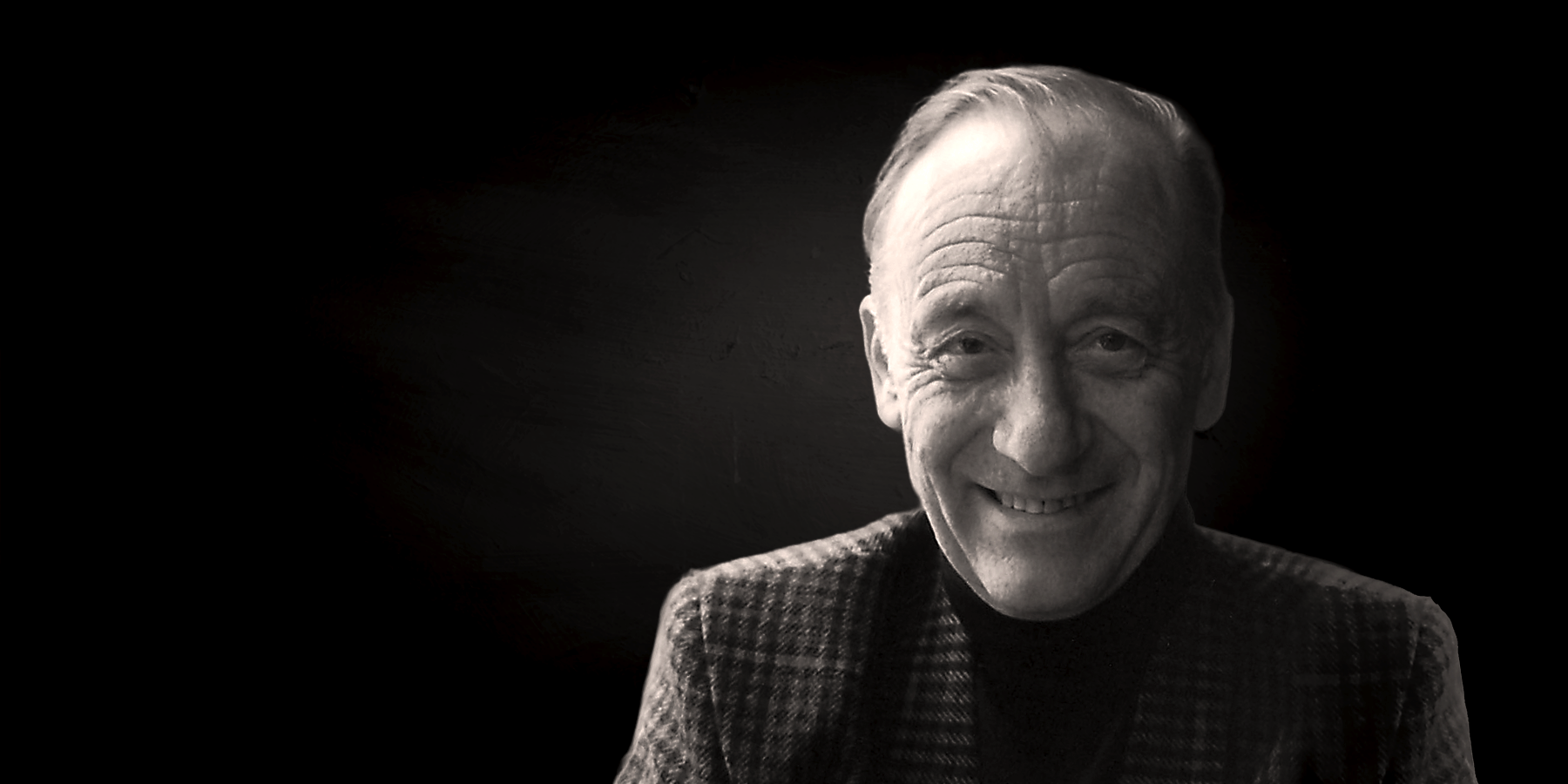
“I wish that my works could be taken as a diary of my feelings”
Remembering the composer Rodion Shchedrin
The great Russian composer and pianist Rodion Shchedrin has died at the age of 92.
Born 16 December 1932 in Moscow, Shchedrin experienced first hand the turmoil of the Second World War when, as a child, he was evacuated with his family from Moscow. He began work as a composer under the complex conditions of the USSR, and soon gained recognition both nationally and internationally. Throughout his life, he felt strongly bound to his homeland, especially to Russian culture and literature.
Schchedrin owed his musical career to the state choir school, where his path toward music began in the late 1930s. His later choral compositions reveal these roots, as well as an inner connection to the Russian orthodox liturgy handed down through his family. The young Shchedrin entered the Moscow Conservatory in 1950, where he studied composition under Yuri Shaporin and piano under Jakov Flier. He became an outstanding pianist and wrote a large number of works for his instrument, in which he often gave the first performances. Later, he also recorded them on CD.
In the course of his life, Shchedrin found many friends and admirers among the great conductors and interpreters. Leonard Bernstein gave the first performance of his 2nd Orchestral Concerto in New York as early as 1968, and later, Lorin Maazel and Valery Gergiev championed his works and commissioned new ones. He wrote virtuoso concertos and intricate chamber music for the pianist Olli Mustonen, cellist Mstislav Rostropovich, violinist Maxim Vengerov and clarinettist Jörg Widmann. His catalogue of works includes altogether six piano concertos, one concerto each for violin, viola, cello, trumpet and oboe, as well as several for various combinations of instruments.
Rodion Shchedrin also leaves a series of fascinating operas. With Dead Souls (1976), Lolita (1992), The Enchanted Wanderer (2002) and Levsha [The Left-Hander] (2012/13) he brought great literature to the stage, and stirring human destinies above all. “In my opinion, the body temperature of an opera audience should rise above normal in the course of a performance – to around 39.7° C.!” was his credo. Shchedrin liked to borrow from classical Russian literature – Chekhov, Gogol and Tolstoy were the poets he admired. Above all, he had a feeling for literary texts: “I always had an awestruck relationship with poetry. It bewitched, stirred and touched me”.
He was also enchanted by a woman he came to know while working on his first ballet composition. In 1958, Rodion Shchedrin married the legendary prima ballerina of the Moscow Bolshoi Theatre, Maya Plisetskaya, for whom he composed altogether five ballets. Carmen-Suite (1967), Anna Karenina (1985) and Lady with the Dog (1985) attest to the alliance between these two exceptional artists. Shchedrin continued to movingly express his love for Maya into old age.
A master of the orchestra, Shchedrin composed three symphonies, six concertos for orchestra with programmatic titles, and a number of smaller works for chamber and symphony orchestra. Shchedrin liked the term “tone painting”, and even gave his variations for orchestra the title Self-Portrait (1984). In Dialogue with Shostakovich (2001), he memorialised his friendship with Shostakovich, with the two composers’ monograms (DSCH [D-Eb-C-B] and SHCHED [Eb-B-C-B-E-D]) appearing as motives.
In 1973, Shchedrin succeeded Shostakovich as Chairman of the Russian Composers’ Association at special request – extraordinary, since he had never been a member of the Communist party. “Life in the Soviet Union always meant that one had to make compromises. Constantly in little things, and occasionally in more important matters. But as far as my artistic work was concerned, there were never any compromises”. Not only did he create his works unflinchingly, Schchedrin was also politically active. In 1963, he vindicated Dmitri Shostakovich’s opera Lady Macbeth of Mtsensk in an article in the newspaper Pravda, where 27 years before it had been reviled by the infamous article, “Chaos instead of Music,” and as a result had been banned from the stage. When Soviet troops marched into Czechoslovakia in 1968, Shchedrin refused to sign an open letter intended to justify this action.
In the aftermath of perestroika, Shchedrin lived alternately in Munich and Moscow. He has collaborated fruitfully with Schott Music since 1993, and over 60 works have evolved over this period. In his autobiography, “What is written, is written”, in which he looks back over decades of a fulfilled life as a composer, Rodion Shchedrin also reveals himself as an incisive storyteller. As a composer, Shchedrin always wanted to maintain contact with the general public and to touch people directly with his music. He has succeeded in this over and over again, both in his Russian homeland and throughout the world. His friend Lorin Maazel was clear as to the reason: “The skilful refinement of his musical language leads us into the depths of his scintillating music, which is full of subtlety, irony, wit, zest for life and genuine humour”.
Rodion Shchedrin died on 29 August 2025 in Munich. With his passing, the musical world has lost one of its most interesting voices, in which Russian tradition and a restrained western avant-garde are charmingly combined. We remember both Rodion and Mayawith admiration; both gave us unforgettable artistic experiences and bestowed their friendship on us.
photo: Peter Andersen