english
  deutsch
  français
Bastille Day - 14 July
- 14 Jul 2026
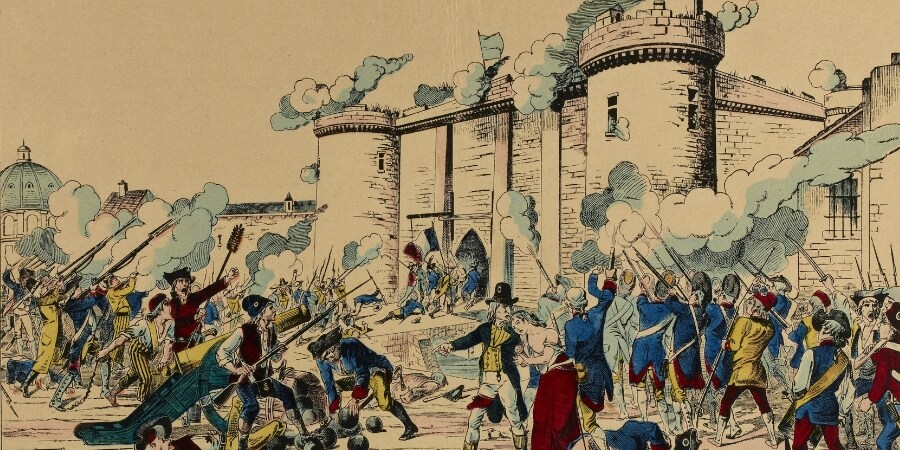
The year is 1789. Under the reign of Louis XVI, King of France, the country has descended into chaos, a consequence of dire economic choices in the royal court alongside a bad harvest. Tension foments in the people of Paris, accelerating when Jacques Necker, Chief Minister, is dismissed, sparking fears of a conservative overhaul. On 14th July 1789, frustration boils over. Armed insurgents, mostly civilians with mutineers of the French Guard, storm the Bastille, symbolising royal authority. This siege marked the first stage of the French Revolution, a decade-long upheaval that resulted in the execution of Louis XVI and Marie Antoinette, and claimed an estimated 1.4 to 2 million lives in the ensuring Revolutionary and Napoleonic Wars that followed.
Music of and about Revolution
A revolution is only worth as much as the people behind it, from villagers and city dwellers to tradesfolk and artists. Music sits at the centre of culture, with a universal quality to unite and divide as required; songs to celebrate victory, songs to mourn defeat. In 1792, amidst war against Austria, Claude Joseph Rouget de Lisle composed La Marseillaise, adopted as France's national anthem in 1879 and harnessed by revolutionaries for their own means.
In anticipation of Bastille Day on 14th July, I sought to explore how the uprisings in France and other countries might have influenced composers. I'm happy to report that I came across a few examples which were of interest from across Europe and America, compositions that are either a reflection or a result of revolution.
Beethoven's Heroic Symphony
In the aftermath of the French Revolution, and just short of a decade after the First Republic's formation, Beethoven was finishing his Third Symphony, the Eroica. He admired the then-First Consul, Napoleon, who seemed to represent a nation moving beyond monarchy toward true democracy.
The music doesn't depict revolution itself, but captures the ideals behind it, ideals Napoleon later betrayed by crowning himself Emperor in 1804. On hearing this, Beethoven raged that Napoleon would now "tread under foot all the rights of Man"; that he had "become a tyrant."
The work embodies not revolution's violence, but its purpose and optimism, its heroic scale mirroring that vision. Beethoven struck his dedication once Napoleon took his new title.
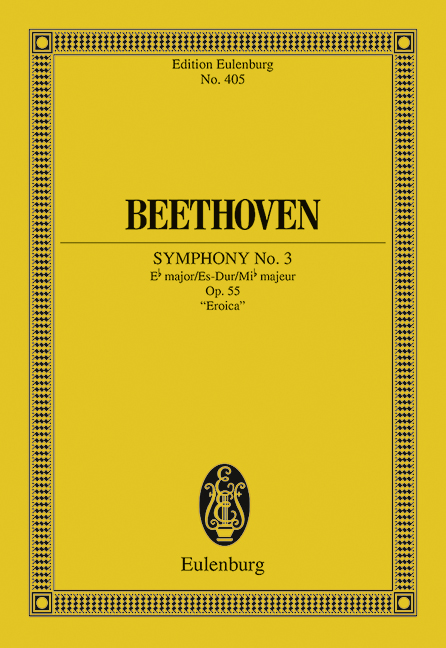
Beethoven: Symphony No. 3 in Eb Major Op. 55
"Eroica"
ISMN: 979-0-2002-0342-4
Order No: ETP 405
Shostakovich's Eleventh Symphony
At the turn of the 20th century, unarmed petitioners from a police-sponsored workers' association were fired upon by Tsarist troops outside the Winter Palace in Saint Petersburg. Some fifty years later, Shostakovich was commissioned to mark the 1917 Revolution's fortieth anniversary, and chose this earlier event, Bloody Sunday, as his focus, tracing the 1905 uprising's arc: the oppression; the massacre; the mourning; and the alarm it sounded to rise up. To achieve this more authentically, the composer incorporated quoted revolutionary and prison songs.
As Shostakovich was composing what would become his Eleventh Symphony, subtitled The Year 1905, Hungary was undergoing its own revolution, with Soviet tanks crushing dissent, echoing Russia's own struggles half a century earlier. The composer publicly denied any connection, but privately described a work about people who had "stopped believing."
Though officially patriotic, the symphony carries, through a historical lens, a quietly damning reflection of revolution's cyclical betrayal.
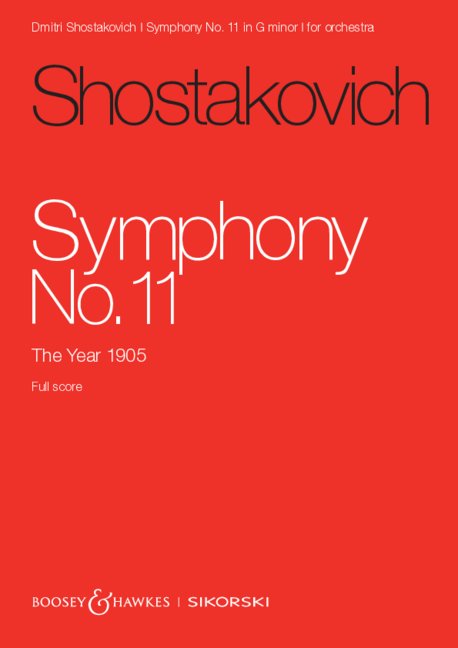
Shostakovich: Symphony
No. 11
The Year 1905
ISMN: 979-0-003-04378-4
Order No: SIK2511
Henze in Cuba
Composed in Havana in 1969, Hans Werner Henze's Symphony No. 6 marked a pretty decisive break from his earlier, more lyrical symphonic writing. Written during his residence in Cuba, it takes much of its verve from the revolutionary fervor around him, still broiling from the revolution that occurred a decade prior. To elicit this sense of uprising, a banjo quotes a Vietnamese freedom son; a guitar carries a Theodorakis liberation hymn, and the finale erupts in the Cuban son rhythm, which contrasts heavily with the traditional European approach.
Henze called the work a deliberate reversal: after two decades writing for Europe's ruling classes, he wanted "affirmation, direct avowal of revolution." That statement shapes the symphony's structure: the performers split into two orchestras, with one playing in a traditional European idiom, the other playing Cuban and revolutionary sounds. The two don't blend; they confront each other; the old world pitted aurally and physically against the new.
Unapologetically partisan, and very much radical for its time, the Sixth Symphony does not much represent a revolution observed, but rather a revolution in progress.
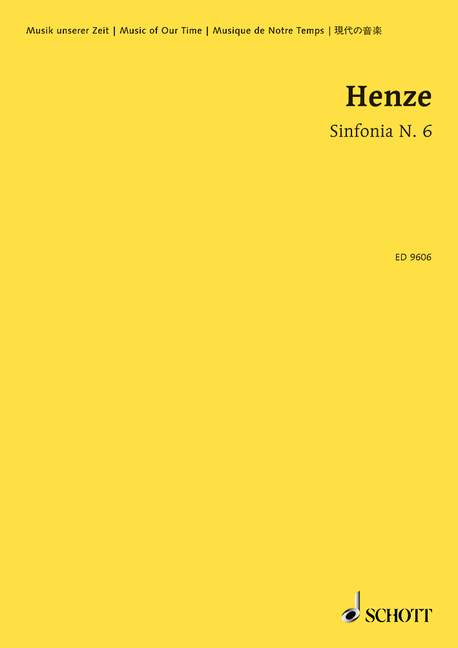
Henze: Sinfoni N. 6
New Version 1994
ISMN: 979-0-001-14482-7
Order No: ED 9606
The Road Ahead
Where Beethoven felt the promise of revolution, Shostakovich quietly felt its betrayal, whereas Henze felt himself amidst the fight still underway. These three historical vantage points are some of my favourites, but there's an entire world of revolutionary music out there. No matter where you are, there is bound to be discontent among the people. Were that discontent to boil over, the impact of resulting events on the future can be at once frightening and awe-inspiring. There's so many more works that can be spoken about, but suffice it to say that the revolution and thereby the will of the people is not restricted to the time in which their cause takes place, but can echo in music through the times ahead.