 français
  deutsch
  english

Wolfgang Fortner
Pays d'origine:
Allemagne
Date d'anniversaire:
12 octobre 1907
Date de décès:
5 septembre 1987
À venir
Bluthochzeit
Chef d'orchestre: Duncan Ward
10 mai 2026 |
Frankfurt am Main (Allemagne) , Oper — Première soirée
À propos de Wolfgang Fortner
Wolfgang Fortner was born in Leipzig on 12 October 1907. He learnt piano and organ at school and attended many concerts at the Leipzig Konzertverein which exclusively performed contemporary music. In 1927, Fortner began to study composition with Hermann Grabner and organ with Karl Straube at the Leipzig Conservatoire. At the same time, he studied musicology with Theodor Kroyer as well as philosophy and German philology at the University of Leipzig; in 1931, he qualified as a teacher and took a position at lecturing in composition and music theory at the Evangelisches Kirchenmusikalisches Institut in Heidelberg where he taught intermittently until 1954. He then served as a professor of composition at the Detmold Nordwestdeutsche Musikakademie until 1957 and at the Freiburg Staatliche Hochschule für Musik from 1957 until 1973, setting up the Institute for New Music there in 1964. Another important station of his extensive teaching activities was the Darmstadt International Summer Course for New Music, founded in 1946, over which Fortner had considerable influence until the late fifties.
As one of the most important composition teachers in post-war Germany and as a result of his numerous international guest lectures, Fortner had a strong influence on a younger generation of composers. Among his pupils were Hans Werner Henze, Milko Kelemen, Rudolf Kelterborn, Arghyris Kounadis, Nam June Paik, Robert HP Platz, Rolf Riehm, Wolfgang Rihm, Manfred Stahnke, Wilfried Steinbrenner, Hans Zender, and Bernd Alois Zimmermann.
In 1935 Fortner founded the Heidelberg Chamber Orchestra and in conjunction with South German Radio set up the concert series musica viva in 1947. He succeeded Karl Amadeus Hartmann in becoming director of the musica viva concerts of the Bavarian Radio in Munich, and together with Ernst Thomas ran the series until 1978.
In 1950 Wolfgang Fortner was appointed a member of GEMA’s advisory board. In 1955 he became a member of the Berlin Academy of the Arts, and a year later a member of the Bavarian Academy of Fine Arts in Munich. In addition, he served for 14 years (1957-71) as president of the German section of the International Society for New Music. In 1975, the German Dramatists' Union, Germany's oldest writers' federation, elected him president.
As early as 1929, whilst still a student, Fortner concluded a contract for Die vier marianischen Antiphonen which marked the beginning of his professional relationship with Schott. His opera Bluthochzeit after Federico García Lorca (world premiere in Cologne in 1957) became one of the most successful operas after 1945. Fortner's development as a composer ranges from the beginnings of neoclassicism via the application of serial techniques, the incorporation of structures of the medieval isorhythmical motet (Machaut-Balladen, 1973), jazz elements (e.g. in Mouvements, 1953) or orchestral improvisations (In seinem Garten liebt Don Perlimplín Belisa, Elisabeth Tudor) to his last opera That Time after Samuel Beckett (world premiere in Baden-Baden in 1977) in which he used live electronics.
The ballet Carmen-Bizet-Collagen was written by Fortner (in collaboration with Wilfried Steinbrenner) in 1970, based on an idea by the director of the Stuttgart Ballet, John Cranco, who had been inspired to write the libretto by the conciseness of rhythm of Fortner's music.
For his artistic œuvre and his commitment to political and cultural issues, Fortner received numerous honours and awards, including the Schreker Prize of Berlin in 1948, the Spohr Prize of Braunschweig in 1953, the Great Arts Award of North Rhine-Westphalia in 1955, as well as the Bach Prize of Hamburg in 1960, and the Reinhold Schneider Prize of Freiburg in 1977. On the occasion of his 70th anniversary in 1977, he was awarded the Grand Order of Merit of the Federal Republic of Germany and honorary doctorates by the universities of Heidelberg and Freiburg. Furthermore, he was given the Golden Needle of the Dramatists' Union and the Richard Benz Medal of Heidelberg.
Wolfgang Fortner died in Heidelberg on 5 September 1987.
As one of the most important composition teachers in post-war Germany and as a result of his numerous international guest lectures, Fortner had a strong influence on a younger generation of composers. Among his pupils were Hans Werner Henze, Milko Kelemen, Rudolf Kelterborn, Arghyris Kounadis, Nam June Paik, Robert HP Platz, Rolf Riehm, Wolfgang Rihm, Manfred Stahnke, Wilfried Steinbrenner, Hans Zender, and Bernd Alois Zimmermann.
In 1935 Fortner founded the Heidelberg Chamber Orchestra and in conjunction with South German Radio set up the concert series musica viva in 1947. He succeeded Karl Amadeus Hartmann in becoming director of the musica viva concerts of the Bavarian Radio in Munich, and together with Ernst Thomas ran the series until 1978.
In 1950 Wolfgang Fortner was appointed a member of GEMA’s advisory board. In 1955 he became a member of the Berlin Academy of the Arts, and a year later a member of the Bavarian Academy of Fine Arts in Munich. In addition, he served for 14 years (1957-71) as president of the German section of the International Society for New Music. In 1975, the German Dramatists' Union, Germany's oldest writers' federation, elected him president.
As early as 1929, whilst still a student, Fortner concluded a contract for Die vier marianischen Antiphonen which marked the beginning of his professional relationship with Schott. His opera Bluthochzeit after Federico García Lorca (world premiere in Cologne in 1957) became one of the most successful operas after 1945. Fortner's development as a composer ranges from the beginnings of neoclassicism via the application of serial techniques, the incorporation of structures of the medieval isorhythmical motet (Machaut-Balladen, 1973), jazz elements (e.g. in Mouvements, 1953) or orchestral improvisations (In seinem Garten liebt Don Perlimplín Belisa, Elisabeth Tudor) to his last opera That Time after Samuel Beckett (world premiere in Baden-Baden in 1977) in which he used live electronics.
The ballet Carmen-Bizet-Collagen was written by Fortner (in collaboration with Wilfried Steinbrenner) in 1970, based on an idea by the director of the Stuttgart Ballet, John Cranco, who had been inspired to write the libretto by the conciseness of rhythm of Fortner's music.
For his artistic œuvre and his commitment to political and cultural issues, Fortner received numerous honours and awards, including the Schreker Prize of Berlin in 1948, the Spohr Prize of Braunschweig in 1953, the Great Arts Award of North Rhine-Westphalia in 1955, as well as the Bach Prize of Hamburg in 1960, and the Reinhold Schneider Prize of Freiburg in 1977. On the occasion of his 70th anniversary in 1977, he was awarded the Grand Order of Merit of the Federal Republic of Germany and honorary doctorates by the universities of Heidelberg and Freiburg. Furthermore, he was given the Golden Needle of the Dramatists' Union and the Richard Benz Medal of Heidelberg.
Wolfgang Fortner died in Heidelberg on 5 September 1987.
Liste d'œuvres
Galerie

photo: H. Zemann

photo: Peter Andersen

photo: Strobel

For high resolution photos, please contact: [email protected]
Chronologie
1907
Wolfgang Fortner was born on 12 October in Leipzig; he was nine when he first started composing, and had both piano and organ lessons whilst at school.
1927-31
Fortner studied at the Konservatorium in Leipzig (composition with Hermann Grabner, a pupil of Max Reger and organ with Karl Straube), and went on to the University of Leipzig where he studied Musicology with Theodor Kroyer, Philosophy with Hans Driesch and German studies with Hermann August Korff.
1929
5 April: The contract for "Vier Marianische Antiphonen" for choir and orchestra (1928) inaugurated Fortner’s professional relationship with Schott.
1931
Fortner finished his studies as a qualified teacher and became lecturer in composition and music theory at the Evangelische Kirchenmusikalische Institut of the Badische Landeskirche in Heidelberg (today called the Hochschule für Kirchenmusik Heidelberg), a post he holds until 1954 – only interrupted during the war.
1935
Fortner founded the Heidelberg Chamber Orchestra
1946
Fortner and Wolfgang Steinecke (the former culture consultant and director for culture in Darmstadt) participated at the inauguration of the "Kranichsteiner Ferienkurse für Neue Musik" (today the International Holiday Course for New Music Darmstadt); Fortner lectured at the course until the late 50s.
1947
Wolfgang Fortner worked in collaboration with the Süddeutscher Rundfunk in Heidelberg to set up the concert series "Musica Viva"
1948
Schreker Prize, City of Berlin
1950
GEMA invites Fortner to become a member on its advisory council.
1953
Spohr Prize, City of Braunschweig
1954-57
Fortner took a teaching post as Professor for Composition at the Nordwestdeutsche Musikakademie Detmold.
1955
The Academy of Arts Berlin (west) invited Fortner to become a member – he later became chairman for music.
1955
Major Art Prize from Nordrhein-Westfalen
1956
Fortner was invited to become a member of the Bavarian Academy of Fine Art.
1957-73
Fortner took a position as Professor of Composition at the State High School for Music in Freiburg im Breisgau; 1964, the school set up the Institute for New Music at Fortner’s suggestion.
1957-71
Fortner was president of the ISCM (International Society for Contemporary Music).
1960
Bach Prize of the Freie und Hansestadt Hamburg (following Paul Hindemith 1951, Philipp Jarnach 1954, and Boris Blacher 1957)
1964
Fortner succeeded Karl Amadeus Hartmann as the director of "musica viva" in Munich; together with Ernst Thomas, he ran the concert series until 1978.
1975
The Dramatiker-Union, Germany's oldest foundation for writers (founded in 1871 in Leipzig), named Fortner as president.
1975
Having dedicated so much of his life to teaching, Fortner helped and guided many younger generations of composers. His pupils (amongst others) include: Hans Werner Henze, Rudolf Kelterborn, Gottfried Schnabel, Peter Westergaard, Friedhelm Döhl, Arghyris Kounadis, Nam June Paik, Robert HP Platz, Manfred Stahnke, Wilfried Steinbrenner and Hans Zender.
1975
Guest lectures led him to Austria, Térésopolis (Brasil) and to Tanglewood, Massachusetts where he directed courses with the Boston Symphony Orchestra.
1977
Reinhold-Schneider-Preis, Freiburg im Breisgau
1977
Honours given on his 70th Birthday 1977: Großes Verdienstkreuz mit Stern des Verdienstordens der Bundesrepublik Deutschland, the highest decoration awarded for service in Germany; An honoury doctorate from the Ruprecht-Karls-University Heidelberg and the Albert-Ludwigs-University Freiburg; Freeman of the Staatliche Hochschule für Musik Heidelberg–Mannheim; Richard-Benz medal for Art and Science, Heidelberg; Badge of honour from the Dramatiker-Union
1987
Wolfgang Fortner died on September 5 in Heidelberg. The Wolfgang Fortner collection can be found in the Bayerische Staatsbibliothek, Munich.
Produits
-
 für StreichorchesterCompositeur: Wolfgang FortnerMedia Type: Matériel en location / d'exécutionEdition: Matériel d'exécutionMatériel en location / d'exécutionMatériel en location / d'exécution
 -
 Italienische Ouvertüre nach Niccolò PicciniCompositeur: Wolfgang FortnerMedia Type: Matériel en location / d'exécutionEdition: Matériel d'exécutionMatériel en location / d'exécutionMatériel en location / d'exécution
 -
"Flieg' hin, Zeit, du bist meine Magd"Compositeur: Wolfgang FortnerEdition: Partition de choeurSérie: Schott Choral Music
Instrumentation: choeur d'hommes (TTBB)Numéro du produit: C 39780Type de produitEn stockPrix à partir de 2,99 €TTC -
für Gesang (einen oder zwei Tenöre) und OrchesterCompositeur: Wolfgang FortnerMedia Type: Matériel en location / d'exécutionEdition: Matériel d'exécutionLangue: FrançaisMatériel en location / d'exécutionMatériel en location / d'exécution
-
für Gesang (einen oder zwei Tenöre) und OrchesterCompositeur: Wolfgang FortnerMedia Type: PartitionEdition: Partition d'étudeSéries: Music Of Our Time
Machaut-Balladen
Instrumentation: 1 ou 2 ténors et orchestreNuméro du produit: ED 6620Format papierFormat papierEn stock35,00 €TTC, hors expédition -
 für 12 VioloncelliCompositeur: Wolfgang FortnerMedia Type: Matériel en location / d'exécutionEdition: Matériel d'exécutionMatériel en location / d'exécutionMatériel en location / d'exécution
 -
für OrchesterCompositeur: Wolfgang FortnerMedia Type: Matériel en location / d'exécutionEdition: Matériel d'exécutionMatériel en location / d'exécutionMatériel en location / d'exécution
-
Dem Andenken eines guten HundesCompositeur: Wolfgang FortnerMedia Type: PartitionEdition: Partition d'étudeSéries: Music Of Our Time
Marginalien
Instrumentation: orchestreNuméro du produit: ED 6308Format papierFormat papierEn stock20,00 €TTC, hors expédition -
 Kantate in alter ManierType de produitEn stockPrix à partir de 12,99 €TTC
 -
 Kantate nach Worten des späten HölderlinCompositeur: Wolfgang FortnerEdition: Réduction pour pianoSéries: Edition Schott
Mitte des Lebens
Instrumentation: soprano, flûte, violon, clarinette basse, cor et harpeNuméro du produit: ED 6595Type de produitEn stockPrix à partir de 12,99 €TTC -
Kantate nach Worten des späten HölderlinCompositeur: Wolfgang FortnerMedia Type: Matériel en location / d'exécutionEdition: Matériel d'exécutionLangue: AllemandMatériel en location / d'exécutionMatériel en location / d'exécution
-
für Klavier und OrchesterCompositeur: Wolfgang FortnerMedia Type: Matériel en location / d'exécutionEdition: Matériel d'exécutionMatériel en location / d'exécutionMatériel en location / d'exécution
-
Compositeur: Wolfgang FortnerMedia Type: PartitionEdition: Partition d'étudeSérie: Mouvements
Instrumentation: piano et orchestreNuméro du produit: ED 4554Format papierFormat papierEn stock18,00 €TTC, hors expédition -
 und ein AnhangCompositeur: Wolfgang FortnerEdition: Partition d'exécutionInstrumentation: 2 flûtesNuméro du produit: ED 6675Type de produitEn stockPrix à partir de 12,99 €TTC
 -
 Prélude, Variationen und Epilog zu einem eigenen ThemaCompositeur: Wolfgang FortnerMedia Type: PartitionEdition: PartitionInstrumentation: flûte, violon, violoncelle et clavecinNuméro du produit: ED 5064Format papierFormat papierEn stock17,00 €TTC, hors expédition
 -
 Lyrische Tragödie in zwei Akten und sieben BildernCompositeur: Wolfgang FortnerMedia Type: Matériel en location / d'exécutionEdition: Matériel d'exécutionLangue: AnglaisMatériel en location / d'exécutionMatériel en location / d'exécution
 -
Der Hochzeitsgesang des CatullCompositeur: Wolfgang FortnerMedia Type: Matériel en location / d'exécutionEdition: Matériel d'exécutionLangue: LatinMatériel en location / d'exécutionMatériel en location / d'exécution
-
nach ungarischen Tänzen aus dem 16. JahrhundertCompositeur: Ferenc FarkasArrangeur: Wolfgang FortnerMedia Type: PartitionEdition: Jeu de parties, 5 Violinen I; 5 Violinen II; 3 Violen; 3 Violoncelli/KontrabässeSérie: Concertino
Instrumentation: orchestre à cordesNuméro du produit: CON 182-70Format papierFormat papierEn stock59,00 €TTC, hors expédition -
 nach ungarischen Tänzen aus dem 16. JahrhundertCompositeur: Ferenc FarkasArrangeur: Wolfgang FortnerMedia Type: PartitionEdition: PartitionSérie: Concertino
Instrumentation: orchestre à cordesNuméro du produit: CON 182Format papierFormat papierÉpuisé18,00 €TTC, hors expédition -
Compositeur: Wolfgang FortnerMedia Type: PartitionEdition: Partition de choeurInstrumentation: choeur mixte (SSAATTBB)Langue: ItalienNuméro du produit: ED 6903Format papierFormat papierEn stock32,00 €TTC, hors expédition
-
über die Tonfolge b-a-c-hCompositeur: Wolfgang FortnerMedia Type: Matériel en location / d'exécutionEdition: Matériel d'exécutionMatériel en location / d'exécutionMatériel en location / d'exécution
-
über die Tonfolge b-a-c-hCompositeur: Wolfgang FortnerMedia Type: PartitionEdition: Partition d'étudeSérie: Phantasie
Instrumentation: 2 pianos, 9 instruments solo et orchestreNuméro du produit: ED 4271Format papierFormat papierEn stock21,50 €TTC, hors expédition -
 Compositeur: Wolfgang FortnerMedia Type: PartitionEdition: Partition et partiesInstrumentation: trio avec pianoNuméro du produit: ED 6793Format papierFormat papierEn stock36,50 €TTC, hors expédition
 -
 Type de produitEn stockPrix à partir de 16,99 €TTC
 -
Compositeur: Wolfgang FortnerMedia Type: PartitionInstrumentation: orgueNuméro du produit: ED 2269Format papierFormat papierEn stock16,00 €TTC, hors expédition
-
Parergon zu den "Impromptus"Compositeur: Wolfgang FortnerMedia Type: Matériel en location / d'exécutionEdition: Matériel d'exécutionLangue: AllemandMatériel en location / d'exécutionMatériel en location / d'exécution
-
für Soloinstrumente und OrchesterCompositeur: Wolfgang FortnerMedia Type: Matériel en location / d'exécutionEdition: Matériel d'exécutionMatériel en location / d'exécutionMatériel en location / d'exécution
-
Compositeur: Wolfgang FortnerMedia Type: PartitionEdition: Partition d'étudeSérie: Prismen
Instrumentation: seul-instruments (flûte, hautbois, clarinette, harpe, batterie) et orchestreNuméro du produit: ED 6654Format papierFormat papierEn stock35,00 €TTC, hors expédition -
zu "Elisabeth Tudor"Compositeur: Wolfgang FortnerMedia Type: Matériel en location / d'exécutionEdition: Matériel d'exécutionMatériel en location / d'exécutionMatériel en location / d'exécution
-
Concerto suite from the Opera "Elisabeth Tudor"Compositeur: Wolfgang FortnerMedia Type: PartitionEdition: Partition d'étudeSérie: Prolegomena
Instrumentation: grand orchestreNuméro du produit: ED 6346Format papierFormat papierEn stock24,00 €TTC, hors expédition -
 nach schwäbischen VolkstänzenCompositeur: Wolfgang FortnerSérie: Edition Schott
Instrumentation: pianoNuméro du produit: ED 2481Type de produitEn stockPrix à partir de 8,99 €TTC -
 Compositeur: Wolfgang FortnerEdition: Partition d'étudeSéries: Edition Schott
Serenade
Instrumentation: flûte, hautbois et bassonNuméro du produit: ED 3621Type de produitEn stockPrix à partir de 12,99 €TTC -
 Compositeur: Wolfgang FortnerEdition: Jeu de partiesSéries: Edition Schott
Serenade
Instrumentation: flûte, hautbois et bassonNuméro du produit: ED 2276Type de produitEn stockPrix à partir de 19,99 €TTC -
 Type de produitEn stockPrix à partir de 15,99 €TTC
 -
 Compositeur: Wolfgang FortnerSérie: Edition Schott
Instrumentation: voix moyenne et pianoNuméro du produit: ED 1605Type de produitEn stockPrix à partir de 18,99 €TTC -
für großes OrchesterCompositeur: Wolfgang FortnerMedia Type: Matériel en location / d'exécutionEdition: Matériel d'exécutionMatériel en location / d'exécutionMatériel en location / d'exécution
-
 Compositeur: Wolfgang FortnerMedia Type: PartitionInstrumentation: pianoNuméro du produit: ED 7121Format papierFormat papierEn stock20,00 €TTC, hors expédition
 -
Compositeur: Wolfgang FortnerEdition: Jeu de parties, Parties solistesSéries: Concertino
Sechs Madrigale
Instrumentation: 2 violons et violoncelle (solistesstisch ou choeurisch)Numéro du produit: CON 52-71Type de produitEn stockPrix à partir de 9,99 €TTC -
 Compositeur: Wolfgang FortnerEdition: Partie séparée, Violine 1Série: Concertino
Instrumentation: 2 violons et violoncelleNuméro du produit: CON 52-11Type de produitEn stockPrix à partir de 2,99 €TTC -
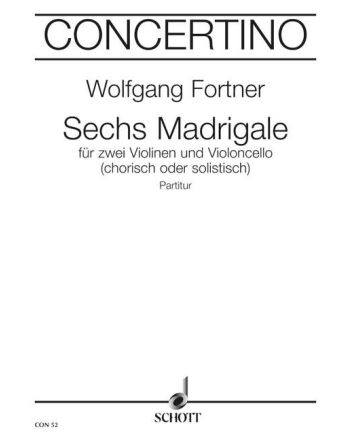 Compositeur: Wolfgang FortnerEdition: PartitionSéries: Concertino
Sechs Madrigale
Instrumentation: 2 violons et violoncelle (solistesstisch ou choeurisch)Numéro du produit: CON 52Type de produitEn stockPrix à partir de 14,99 €TTC -
Compositeur: Wolfgang FortnerMedia Type: Partition électronique en PDFEdition: Partie séparée, Violine 2Série: Concertino
Instrumentation: 2 violons et violoncelleNuméro du produit: CON 52-12 Q15126Partition PDFPartition PDFEn stock1,99 €TTC -
Compositeur: Wolfgang FortnerMedia Type: Partition électronique en PDFEdition: Partie séparée, VioloncelloSérie: Concertino
Instrumentation: 2 violons et violoncelleNuméro du produit: CON 52-13 Q15125Partition PDFPartition PDFEn stock1,99 €TTC -
 Compositeur: Wolfgang FortnerSérie: Edition Schott
Instrumentation: violon et pianoNuméro du produit: ED 2275Type de produitEn stockPrix à partir de 26,99 €TTC -
 Compositeur: Wolfgang FortnerSérie: Edition Schott
Instrumentation: flûte et pianoNuméro du produit: ED 1330Type de produitEn stockPrix à partir de 20,99 €TTC -
 Compositeur: Wolfgang FortnerInterprète: Albrecht Breuninger | Moritz Eggert | Sebastian HessMedia Type: CDNuméro du produit: WER 66242CDCDEn stock18,50 €TTC, hors expédition
 -
 Type de produitEn stockPrix à partir de 12,99 €TTC
 -
für zwei Violinen, Viola, Violoncello und KontrabassCompositeur: Wolfgang FortnerMedia Type: Matériel en location / d'exécutionEdition: Matériel d'exécutionMatériel en location / d'exécutionMatériel en location / d'exécution
-
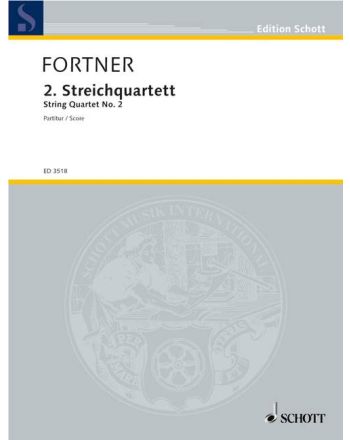 Compositeur: Wolfgang FortnerEdition: Partition d'étudeSéries: Edition Schott
2. Streichquartett
Instrumentation: quatuor à cordesNuméro du produit: ED 3518Type de produitEn stockPrix à partir de 18,99 €TTC -
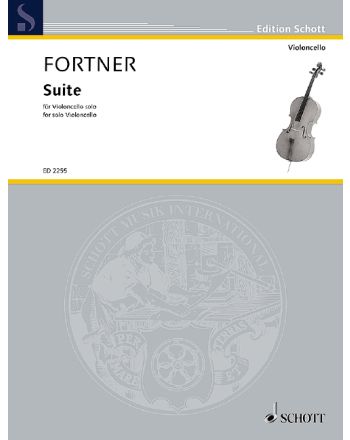 Compositeur: Wolfgang FortnerSérie: Edition Schott
Instrumentation: violoncelleNuméro du produit: ED 2255Type de produitEn stockPrix à partir de 13,99 €TTC -
nach Musik des Jan Pieters Sweelinck (1562-1621)Compositeur: Wolfgang FortnerMedia Type: Matériel en location / d'exécutionEdition: Matériel d'exécutionMatériel en location / d'exécutionMatériel en location / d'exécution