 français
  deutsch
  english

Nikolai Kapustin
À venir
À propos de Nikolai Kapustin
The right hand taps a chordal theme in cheerful syncopations, and beneath it the left hand shakes out its strings of quavers like a happy dog frolicking with a toy – as in a crazed Bach prelude – the whole in a captivating and clear, altogether graceful piano piece, that reveals an open-minded thinker with a good sense of wit. (Jan Brachmann, Frankfurter Allgemeine Zeitung)
Childhood, Education and Initial Successes
Nikolai Kapustin was born on November 22, 1937 in Gorlovka in the Ukrainian SSR (now Horlivka, Ukraine). At the age of 14 he moved to Moscow, where he received piano lessons under Awrelian Rubach. Rubach, a pupil of Felix Blumenfeld, who also taught Vladimir Horowitz, supported Kapustin in his increasing enthusiasm for jazz music. From 1956, Kapustin took up studies with Alexander Goldenweiser at the Moscow Conservatory, receiving his diploma in 1961.
At this time, Kapustin was playing in several jazz ensembles: he had his own quintet and was a member of Juri Saulski’s Big Band. Kapustin appeared with them not only as an outstanding up-and-coming pianist, but also made his first break-through as a composer in 1957 with his Concertino for piano and orchestra op. 1 written for them.
Working with Big Bands and Orchestras
Following his studies, Kapustin joined the orchestra of Oleg Lundstrem, for which he composed further works and was active as pianist on many tours throughout the Soviet Union. From 1972 to 1977 he worked with Boris Karamischev’s orchestra, which now also included string instruments – a circumstance which was worked out in the composition of his Piano Concerto No. 2 op. 14, which, unlike its predecessor, contained strings.
In 1980 Kapustin was awarded membership of the Union of Russian Composers, and this encouraged him in increased compositional activities, which he pursued freelance from 1984.
Compositional Style and Jazz Influences
In his music, Kapustin uses stylistic elements derived from jazz within classical forms and styles such as sonata, sonatina, concerto, prelude, fugue, suite, variations, nocturne and berceuse. Along with the Suite in the Old Style op. 28, outstanding examples can be found in the 24 Preludes and Fugues op. 82, in which Kapustin, following the models of Bach, Chopin, Scriabin and Shostakovich, systematically presents all 24 tonalities.
Almost all the pieces display lively virtuosity, which in their unrelenting motor rhythms and activity bring Bach’s keyboard works to mind. In spite of the constantly audible jazz idiom of his music, Kapustin did not see himself as a jazz musician: “I never sought to be a true jazz pianist, but I had to be on account of my composing.
I am not interested in improvisation – and what is a jazz musician without improvisation? All improvisation, as far as I am concerned, is written down, and it is all the better for that; it is allowed to mature.”
Compositional Work and Reception
Kapustin’s works amount to over 100 pieces. Besides his six piano concertos and ten further works for piano and orchestra, Kapustin wrote purely orchestral works such as Sinfonietta in Four Movements op. 49 and Chamber Symphony op. 57 as well as two solo concertos for cello and one for saxophone. His works for solo piano include twelve sonatas, ten bagatelles and eight studies. For a long while, Kapustin’s activities were little known in his own country.
Since the noughties, however, his music has been discovered and made known to a broader and increasing audience by pianists such as Steven Osborne, Marc-André Hamelin, Yuja Wang and most recently by Frank Dupree. Kapustin died on July 2, 2020 in Moscow.
Liste d'œuvres
Galerie



Chronologie
Born on 22 November in Gorlovka (Ukrainian SSR)
first contact with American jazz music through radio broadcasts at the home of his classmate Andrei Mikhalkov
Studied with Alexander Goldenweiser at the Moscow Conservatoire
Member of various jazz ensembles, including a quintet and Yuri Saulski's big band.
First breakthrough as a composer with the Concertino for piano and orchestra, Op. 1, at the Sixth World Festival of Youth and Students in Moscow
Composition of his Piano Concerto No. 2, Op. 14
Member of the State Symphonic Film Orchestra
active as a freelance composer
first recordings of his music on the Russian label Melodiya
Produits
-
 Compositeur: Nikolai KapustinSérie: Edition Schott
Instrumentation: pianoNuméro du produit: ED 22997Type de produitEn stockPrix à partir de 19,99 €TTC -
 Compositeur: Nikolai KapustinSérie: Edition Schott
Instrumentation: pianoNuméro du produit: ED 23156Type de produitEn stockPrix à partir de 13,99 €TTC -
- Bestseller
 Compositeur: Nikolai KapustinSérie: Edition Schott
Instrumentation: pianoNuméro du produit: ED 22657Type de produitEn stockPrix à partir de 19,99 €TTC -
 Compositeur: Nikolai KapustinSérie: Edition Schott
Instrumentation: pianoNuméro du produit: ED 22993Type de produitEn stockPrix à partir de 13,99 €TTC -
 Compositeur: Nikolai KapustinSérie: Edition Schott
Instrumentation: pianoNuméro du produit: ED 22826Type de produitEn stockPrix à partir de 14,99 €TTC -
 Compositeur: Nikolai KapustinSérie: Edition Schott
Instrumentation: pianoNuméro du produit: ED 23153Type de produitEn stockPrix à partir de 15,99 €TTC -
 Compositeur: Nikolai KapustinSérie: Edition Schott
Instrumentation: pianoNuméro du produit: ED 22994Type de produitEn stockPrix à partir de 13,99 €TTC -
 Compositeur: Nikolai KapustinSérie: Edition Schott
Instrumentation: pianoNuméro du produit: ED 23659Type de produitEn stockPrix à partir de 12,99 €TTC -
- Bestseller
 Compositeur: Nikolai KapustinSérie: Edition Schott
Instrumentation: pianoNuméro du produit: ED 22659Type de produitEn stockPrix à partir de 18,99 €TTC -
 Compositeur: Nikolai KapustinEdition: Partition et partiesSérie: Edition Schott
Instrumentation: flûte et violoncelleNuméro du produit: ED 22307Type de produitEn stockPrix à partir de 12,99 €TTC -
 Compositeur: Nikolai KapustinSérie: Edition Schott
Instrumentation: pianoNuméro du produit: ED 22273Type de produitEn stockPrix à partir de 10,99 €TTC -
 Compositeur: Nikolai KapustinEdition: Partition et partiesSérie: Edition Schott
Instrumentation: piano, violon et violoncelleNuméro du produit: ED 22306Type de produitEn stockPrix à partir de 18,99 €TTC -
 Compositeur: Nikolai KapustinSérie: Edition Schott
Instrumentation: pianoNuméro du produit: ED 22776Type de produitEn stockPrix à partir de 8,99 €TTC -
 for trumpet solo and big bandCompositeur: Nikolai KapustinEditeur: Andreas RaggerMedia Type: Matériel en location / d'exécutionEdition: Matériel d'exécutionInstrumentation: trompette et BigbandMatériel en location / d'exécutionMatériel en location / d'exécution
 -
 Compositeur: Nikolai KapustinSérie: Edition Schott
Instrumentation: pianoNuméro du produit: ED 23728Type de produitEn stockPrix à partir de 6,99 €TTC -
 Compositeur: Nikolai KapustinSérie: Edition Schott
Instrumentation: pianoNuméro du produit: ED 22978Type de produitEn stockPrix à partir de 8,99 €TTC -
 for big bandCompositeur: Nikolai KapustinMedia Type: Matériel en location / d'exécutionEdition: Matériel d'exécutionMatériel en location / d'exécutionMatériel en location / d'exécution
 -
 Compositeur: Nikolai KapustinSérie: Edition Schott
Instrumentation: pianoNuméro du produit: ED 22920Type de produitEn stockPrix à partir de 8,99 €TTC -
 for big bandCompositeur: Nikolai KapustinMedia Type: Matériel en location / d'exécutionEdition: Matériel d'exécutionMatériel en location / d'exécutionMatériel en location / d'exécution
 -
 Compositeur: Nikolai KapustinSérie: Edition Schott
Instrumentation: violoncelle et pianoNuméro du produit: ED 22849Type de produitEn stockPrix à partir de 10,99 €TTC -
 arranged for violoncello solo and string orchestra by Andres Reukauf (2026)Compositeur: Nikolai KapustinArrangeur: Andres ReukaufMedia Type: Matériel en location / d'exécutionEdition: Matériel d'exécutionMatériel en location / d'exécutionMatériel en location / d'exécution
 -
 Compositeur: Nikolai KapustinSérie: Edition Schott
Instrumentation: piano à 4 mainsNuméro du produit: ED 23677Type de produitEn stockPrix à partir de 13,99 €TTC -
 Compositeur: Nikolai KapustinSérie: Edition Schott
Instrumentation: pianoNuméro du produit: ED 23155Type de produitEn stockPrix à partir de 11,99 €TTC -
 for orchestraCompositeur: Nikolai KapustinMedia Type: Matériel en location / d'exécutionEdition: Matériel d'exécutionMatériel en location / d'exécutionMatériel en location / d'exécution
 -
for big bandCompositeur: Nikolai KapustinMedia Type: Matériel en location / d'exécutionEdition: Matériel d'exécutionMatériel en location / d'exécutionMatériel en location / d'exécution
-
 for piano and orchestraCompositeur: Nikolai KapustinArrangeur: Frank DupreeMedia Type: Matériel en location / d'exécutionEdition: Matériel d'exécutionMatériel en location / d'exécutionMatériel en location / d'exécution
 -
 for piano and orchestraCompositeur: Nikolai KapustinMedia Type: Matériel en location / d'exécutionEdition: Matériel d'exécutionMatériel en location / d'exécutionMatériel en location / d'exécution
 -
 for violin and orchestraCompositeur: Nikolai KapustinMedia Type: Matériel en location / d'exécutionEdition: Matériel d'exécutionMatériel en location / d'exécutionMatériel en location / d'exécution
 -
 for violin, piano and string orchestraCompositeur: Nikolai KapustinMedia Type: Matériel en location / d'exécutionEdition: Matériel d'exécutionMatériel en location / d'exécutionMatériel en location / d'exécution
 -
 for 2 pianos and percussionCompositeur: Nikolai KapustinMedia Type: Matériel en location / d'exécutionEdition: Matériel d'exécutionMatériel en location / d'exécutionMatériel en location / d'exécution
 -
 for 11 instrumentsCompositeur: Nikolai KapustinMedia Type: Matériel en location / d'exécutionEdition: Matériel d'exécutionMatériel en location / d'exécutionMatériel en location / d'exécution
 -
 for saxophone and orchestraCompositeur: Nikolai KapustinMedia Type: Matériel en location / d'exécutionEdition: Matériel d'exécutionMatériel en location / d'exécutionMatériel en location / d'exécution
 -
 for orchestraCompositeur: Nikolai KapustinMedia Type: Matériel en location / d'exécutionEdition: Matériel d'exécutionMatériel en location / d'exécutionMatériel en location / d'exécution
 -
 for piano and big bandCompositeur: Nikolai KapustinMedia Type: Matériel en location / d'exécutionEdition: Matériel d'exécutionMatériel en location / d'exécutionMatériel en location / d'exécution
 -
 for piano and orchestraCompositeur: Nikolai KapustinMedia Type: Matériel en location / d'exécutionEdition: Matériel d'exécutionMatériel en location / d'exécutionMatériel en location / d'exécution
 -
 for piano and orchestraCompositeur: Nikolai KapustinMedia Type: Matériel en location / d'exécutionEdition: Matériel d'exécutionMatériel en location / d'exécutionMatériel en location / d'exécution
 -
 for piano and orchestraCompositeur: Nikolai KapustinMedia Type: Matériel en location / d'exécutionEdition: Matériel d'exécutionMatériel en location / d'exécutionMatériel en location / d'exécution
 -
 for piano and big bandCompositeur: Nikolai KapustinMedia Type: Matériel en location / d'exécutionEdition: Matériel d'exécutionMatériel en location / d'exécutionMatériel en location / d'exécution
 -
 for violoncello and orchestraCompositeur: Nikolai KapustinMedia Type: Matériel en location / d'exécutionEdition: Matériel d'exécutionMatériel en location / d'exécutionMatériel en location / d'exécution
 -
 for violoncello and string orchestraCompositeur: Nikolai KapustinEdition: Réduction pour piano avec partie solisteSérie: Edition Schott
Numéro du produit: ED 23471Type de produitEn stockPrix à partir de 31,99 €TTC -
 for cello and string orchestraCompositeur: Nikolai KapustinMedia Type: Matériel en location / d'exécutionEdition: Matériel d'exécutionMatériel en location / d'exécutionMatériel en location / d'exécution
 -
 for piano and orchestraCompositeur: Nikolai KapustinMedia Type: Matériel en location / d'exécutionEdition: Matériel d'exécutionMatériel en location / d'exécutionMatériel en location / d'exécution
 -
 Compositeur: Nikolai KapustinSérie: Edition Schott
Instrumentation: pianoNuméro du produit: ED 22922Type de produitEn stockPrix à partir de 9,99 €TTC -
 Compositeur: Nikolai KapustinSérie: Edition Schott
Instrumentation: pianoNuméro du produit: ED 23732Type de produitEn stockPrix à partir de 8,99 €TTC -
 Compositeur: Nikolai KapustinSérie: Edition Schott
Instrumentation: pianoNuméro du produit: ED 22617Type de produitEn stockPrix à partir de 11,99 €TTC -
 Compositeur: Nikolai KapustinSérie: Edition Schott
Instrumentation: pianoNuméro du produit: ED 22270Type de produitEn stockPrix à partir de 10,99 €TTC -
 Compositeur: Nikolai KapustinEdition: Partition et partiesSérie: Edition Schott
Instrumentation: 2 flûtes, violoncelle et pianoNuméro du produit: ED 23656Type de produitEn stockPrix à partir de 45,99 €TTC -
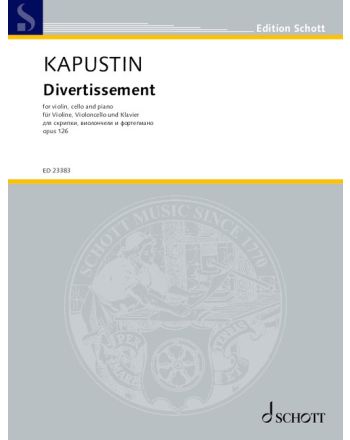 Compositeur: Nikolai KapustinEdition: Partition et partiesSérie: Edition Schott
Instrumentation: violon, violoncelle et pianoNuméro du produit: ED 23383Type de produitEn stockPrix à partir de 38,99 €TTC -
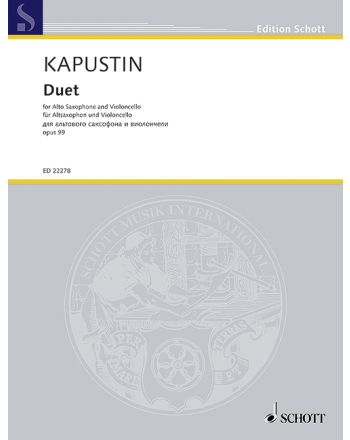 Compositeur: Nikolai KapustinEdition: Partition d'exécution, 2 Spielpartituren enthaltenSérie: Edition Schott
Instrumentation: saxophone alto et violoncelleNuméro du produit: ED 22278Type de produitEn stockPrix à partir de 14,99 €TTC -
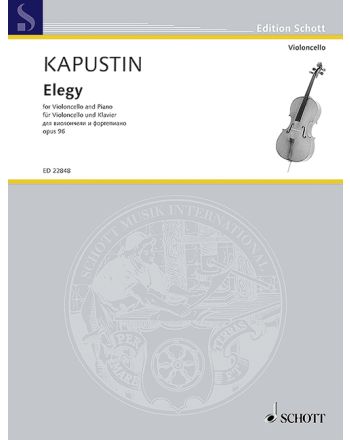 Compositeur: Nikolai KapustinSérie: Edition Schott
Instrumentation: violoncelle et pianoNuméro du produit: ED 22848Type de produitEn stockPrix à partir de 10,99 €TTC