français
  deutsch
  english
Lieferzeit
2-3 Tage
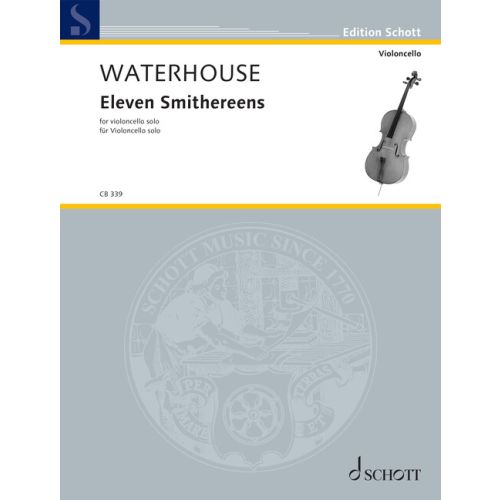
Eleven Smithereens
for violoncello solo
A contemporary cycle for violoncello solo: eleven pieces of strong character linked by a leitmotif, with extended playing techniques and optional spoken verses. Can be performed flexibly - individually or as a closed sequence.
14,99 €
TTC
Détails du produit
Description
In eleven contrasting miniatures, this solo work explores the tonal and technical possibilities of the cello. Created during the COVID-19 lockdown, the cycle sees itself as a musical dialog between player and instrument - chamber music for one person. Extended playing techniques, a continuous rhythmic leitmotif and poetic verses combine to create a flexibly performable work whose parts can be played individually or as a cycle.
Contenu
S – serioso, scalpiccio, solenne
MN (mutato nomine)
inquieto, energico
Ice – grave, freddo
Tree – largo, massiccio
Hyper
senza rigore, eccentrico, astruso
Everie – larghetto dolce, sognante, con sentimento un poco orientaleggiante
Roguish – moderato, cattivello, sarcastico
Elephant – monumentale, pesante ma un poco grazioso
Eucalypti – adagio, delicato, fragante
Nightdream – quasi senza tempo, statico
Smithereens – vivace, robusto, all’irlandese
MN (mutato nomine)
inquieto, energico
Ice – grave, freddo
Tree – largo, massiccio
Hyper
senza rigore, eccentrico, astruso
Everie – larghetto dolce, sognante, con sentimento un poco orientaleggiante
Roguish – moderato, cattivello, sarcastico
Elephant – monumentale, pesante ma un poco grazioso
Eucalypti – adagio, delicato, fragante
Nightdream – quasi senza tempo, statico
Smithereens – vivace, robusto, all’irlandese
Plus d'infos
Titre:
Eleven Smithereens
for violoncello solo
Edition:
Edition séparée
Niveau de difficulté:
difficile
Maison d'édition:
Schott Music
Year of composition:
2021
Durée:
16 ′0 ′′
Séries:
Détails techniques
Type de support:
Partition électronique en PDF
Numéro du produit:
CB 339 Q817487
Pages :
28
Format:
23.1cm x 30.3cm
Format de fichier:
(PDF / 1,89 MB)
Fabricant:
Plus de cette série
Cello Library


Edition Schott


représentations
Commentaires
Seul(e)s les utilisateurs/-trices enregistré(e)s peuvent écrire des commentaires. S’il vous plaît, connectez-vous ou créez un compte.