 français
  deutsch
  english
Lieferzeit
2-3 Tage
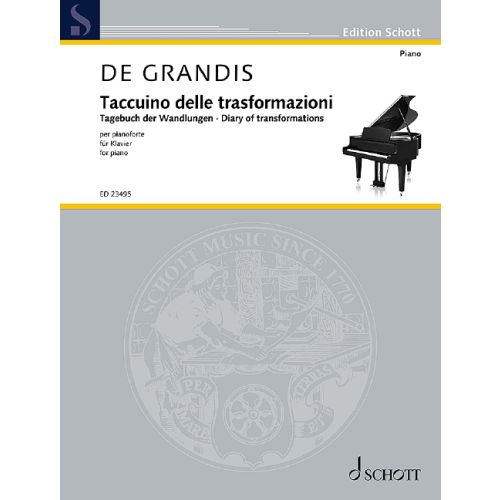
Diary of transformations, in form of a chaconne
Piano anthology
piano
Prix à partir de
20,99 €
TTC
Détails du produit
Contenu
chaconne
I Above the skies, in the waters of Manasarowar
II About Gledalough and ist moon nights
III On self-contemplation, in the form of a two-part fugue
IV Old melody
V two-part round, with a few liberties
VI song with implied tonality
VII About the fall of Angels
VIII Study in form of irrepressible emotion - IX Echoes, from Khembalung valley
X(a) Recitative
X(b) Tocada espanola
(Finale) Variations X-XV, in the form of a Passacaglia, on the theme of the Chaconne as the finale
I Above the skies, in the waters of Manasarowar
II About Gledalough and ist moon nights
III On self-contemplation, in the form of a two-part fugue
IV Old melody
V two-part round, with a few liberties
VI song with implied tonality
VII About the fall of Angels
VIII Study in form of irrepressible emotion - IX Echoes, from Khembalung valley
X(a) Recitative
X(b) Tocada espanola
(Finale) Variations X-XV, in the form of a Passacaglia, on the theme of the Chaconne as the finale
Plus d'infos
Titre:
Diary of transformations, in form of a chaconne
Piano anthology
Edition:
Edition séparée
Niveau de difficulté:
avancé
Maison d'édition:
Schott Music
Year of composition:
1987
Durée:
22 ′0 ′′
Série:
Titre:
Diary of transformations, in form of a chaconne
Piano anthology
Edition:
Edition séparée
Niveau de difficulté:
avancé
Maison d'édition:
Schott Music
Year of composition:
1987
Durée:
22 ′0 ′′
Série:
Titre:
Diary of transformations, in form of a chaconne
Piano anthology
Edition:
Edition séparée
Niveau de difficulté:
avancé
Maison d'édition:
Schott Music
Year of composition:
1987
Durée:
22 ′0 ′′
Série:
Détails techniques
Numéro du produit:
ED 23495
ISMN13:
979-0-001-21422-3
Type de support:
Partition
Numéro du produit:
ED 23495
ISMN13:
979-0-001-21422-3
UPC:
842819115434
Poid:
0,18 kg
Pages :
40
Format:
23.1cm x 30.3cm
Obligatoire :
Reliure à dos agrafé
Fabricant:
Type de support:
Partition électronique en PDF
Numéro du produit:
ED 23495 Q556569
ISMN13:
979-0-001-21422-3
Pages :
40
Format:
23.1cm x 30.3cm
Format de fichier:
(PDF / 2,45 MB)
Fabricant:
Plus de cette série
Edition Schott


Commentaires
Seul(e)s les utilisateurs/-trices enregistré(e)s peuvent écrire des commentaires. S’il vous plaît, connectez-vous ou créez un compte.