• Joy of Music – Over 250 years of quality, innovation, and tradition

Tagged with 'BBC Proms'

Work of the Week – Ryan Wigglesworth: For Laura, after Bach

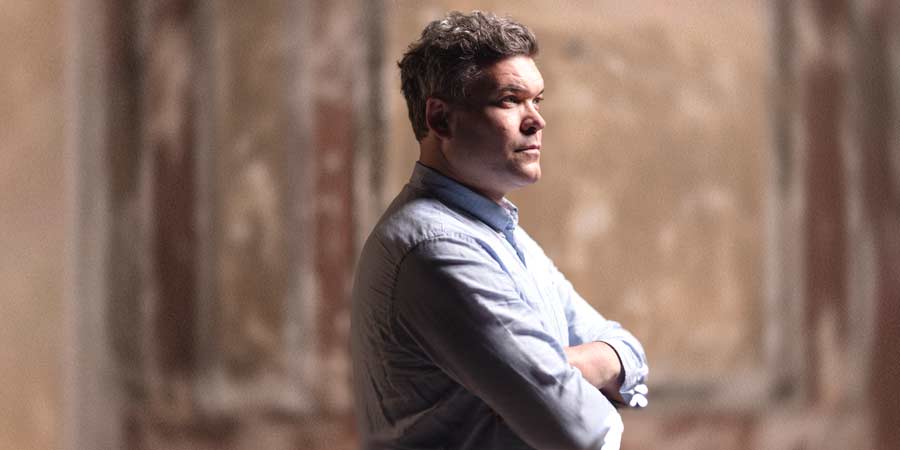
British composer Ryan Wigglesworth stands with arms crossed in front of a blurred, brown-toned wall. He wears a light blue shirt and looks thoughtfully to the side.

With For Laura, after Bach, British composer and conductor Ryan Wigglesworth pays tribute to Laura Samuel, long-time leader of the BBC Scottish Symphony Orchestra, who passed away in 2024. The piece will be premiered on 27 July 2025 at the Royal Albert Hall as part of the BBC Proms, conducted by the composer himself together with the orchestra’s string section – the very ensemble to which Laura Samuel was so closely connected.

Read more

Schott Music at the BBC Proms: Discover the 2025 Line-up

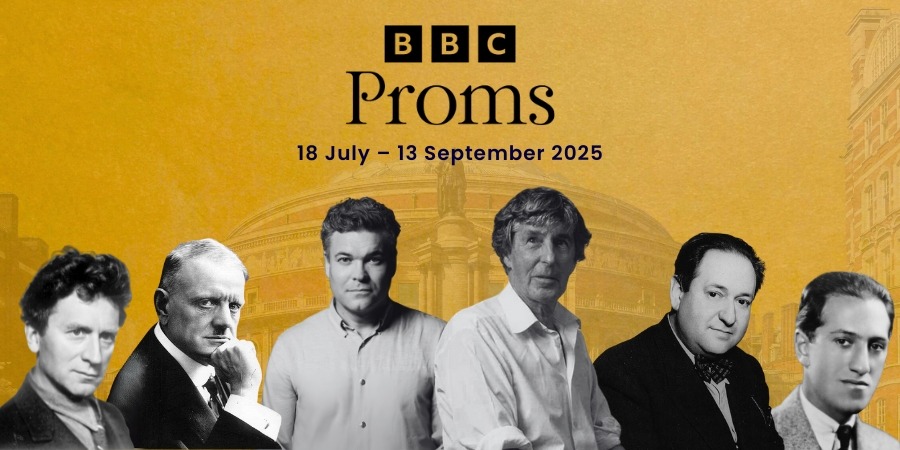
Promotional image for the BBC Proms 2025 with the Royal Albert Hall on a gold background. Text reads “BBC Proms – 18 July to 13 September 2025.” Below are black-and-white portraits of six featured composers.

For over 130 years, the BBC Proms has curated phenomenal musical programmes for diverse audiences through its iconic summer concert series at the Royal Albert Hall in London. What began as a series of affordable “promenade” concerts has grown into a prestigious platform for live orchestral music and contemporary works.

Spanning eight weeks, this year’s Proms (18 July – 13 September 2025) features several acclaimed composers from the Schott Music roster, from 20th-century masters to some of the most distinctive voices composing today. In this blog, we shine a light on those composers, share fascinating facts about their work, and offer listening links so you can enjoy their music wherever you are.

Read more

Work of the Week - Ryan Wigglesworth: Piano Concerto

Ryan Wigglesworth will make no fewer than three appearances as a conductor at this year’s BBC Proms, including on 28 August 2019 when he will direct the world premiere of his Piano Concerto with Marc-André Hamelin and Britten Sinfonia. The new work is the result of a joint commission between BBC Radio 3 and Melbourne Symphony Orchestra.


From the chorale figures of its opening arioso, to the contrapuntal scherzo and trio and the fugal finale, Wigglesworth’s Piano Concerto is characterised by its incorporation of Classical form and stylistic elements into his own contemporary idiom.
The solo piano part, neither bravura nor particularly virtuosic, often displays a poetic, intimate character. The work’s four movements are studies in character. The first, songlike; the second, a fast scherzo with a gentler central trio; the third, a nocturne based on a folk melody; and finally, a lively contrapuntal Gigue. - Ryan Wigglesworth

The lightly scored Notturno is one of the work’s more intimate moments. The orchestra is reduced to just strings and harp, accompanying the soloist in a small set of variations based on a Polish folk song Wigglesworth first heard around a campfire. His personal association of the melody with night is rendered in the dream-like and occasionally nightmarish quality of this movement.

Ryan Wigglesworth: Piano Concerto – Incorporation of classical form in a contemporary idiom


Audiences will be able to hear Wiggleworth’s Piano Concerto in performances around the world in coming seasons, including on 27, 28 and 29 February 2020 with Seattle Symphony Orchestra.


Photo: Benjamin Ealovega

Work of the Week - Huw Watkins: The Moon

On 8 August 2019, BBC National Orchestra and Chorus of Wales conducted by Tadaaki Otaka will give the world premiere of Huw Watkins’ new work The Moon at the BBC Proms. The work, which has been inspired by the fiftieth anniversary of the moon landing on 20 July 1969, is the result of a major BBC Radio 3 commission for chorus and orchestra that will be further augmented by the Royal Albert Hall’s organ.


The piece tries to capture our experience of viewing the moon from Earth, and is also somehow about looking back at us here on Earth from above. – Huw Watkins

Rather than dealing with the moon landing directly, Watkins’ new work instead explores the collective experience of wonder, and sometimes unease, associated with the moon and space. The Moon is composed in a single movement spanning twenty minutes during which listeners are guiding through their journey by settings of poetry by Percy B. Shelley, Philip Larkin and Walt Whitman.

Huw Watkins: The Moon - Inspired by the moon landing


The Moon is Watkins’ third work composed for BBC NOW as Composer in Association with the orchestra. During his tenure, the orchestra has given performances of many of his existing orchestral and chamber works, as well as premiered the Cello Concerto (2016), written for his brother Paul Watkins and first performed at the BBC Proms under Thomas Søndergård, and Spring (2017) for orchestra.


Photo: © B Ealovega

Work of the week – Andrew Norman: Spiral

On 14 June, the Berlin Philharmonic will give the world premiere of Andrew Norman’s Spiral as part of the orchestra’s farewell season of their principal conductor Simon Rattle, and within their “tapas” series of new works approximately six minutes in length, designed to whet the appetite for contemporary music.

Andrew Norman is widely regarded as one of the most successful composers of his generation and regularly receives commissions from major international orchestras. Last year he achieved great success with his children’s opera A Trip to the Moon, written for the Berlin Philharmonic’s “Vokalhelden” (Vocal heroes) project. In the same year, Norman’s orchestral work Play won a Grawemeyer Award, and he was named “Composer of the Year” at Musical America.

Andrew Norman - Spiral: a musical force


Norman’s Spiral traces the transformations of a few instrumental gestures as they orbit each other in ever contracting circles. The strings are instructed to play divisi and, one after the other, they entwine to create the effect of a musical spiral.
"...the idea of a "spiral-shaped" orchestra piece is something I've been thinking about for a while. Some of the musical ideas and gestures in this piece were definitely inspired by my experiences of and with Simon and the Berlin Philharmonic (namely their unique physical energy and precision)." – Andrew Norman

Further performances of Spiral will follow in Berlin on 15 & 16 June. On 23 July the BBC Symphony Orchestra will perform the UK premiere at the BBC Proms, who co-commissioned the work, with Karina Canellakis conducting.

Work of the Week: Gerald Barry – Canada

Ludwig van Beethoven and Canada. What do those two have in common?

Gerald Barry’s new work for voice and orchestra, Canada, will have its world premiere at the Royal Albert Hall as part of the BBC Proms on 21 August.


Specially commissioned for the Proms, it will be performed by tenor Allan Clayton and the City of Birmingham Symphony Orchestra conducted by Mirga Gražinytė-Tyla.

"Some time ago I was in Toronto airport returning to Dublin. When I got through security, Canada suddenly came into my head: a setting of the Fidelio Prisoners' Chorus for voice and orchestra." Gerald Barry

Gerald Barrys Canada – A tribute to Beethoven


The text, in English, French and German, includes the lines "Speak softly! We are watched with eyes and ears" from Beethoven’s politically charged and only opera, Fidelio. Barry holds Beethoven in high regard, considering him to be the greatest composer that ever lived. Many of his own works draw on the letters and works of Beethoven.  These include Schott and Sons, Mainz for bass solo and SATB choir which uses selected texts from Beethoven’s letters to his publisher and Beethoven for bass voice and ensemble which also features excerpts from Beethoven’s personal letters to his "Immortal Beloved".
“Canada, the name and country, is both everyday and strange to me - exotically normal.” Gerald Barry

Other new works for Barry this season include an Organ Concerto for organist Thomas Trotter commissioned jointly by Birmingham Symphony Orchestra, the London Philharmonic Orchestra and the RTÉ National Symphony Orchestra.

Beethoven would celebrate his 250. birthday in 2020. If you’re still looking for suitable musical programme, you’re invited to have a look at the recent Schott journal for inspiration.

Work of the Week – Julian Anderson: Incantesimi

The Berlin Philharmonic and Sir Simon Rattle will give two national premieres of Julian Anderson's new orchestral work Incantesimi this week at the Lucerne Festival on Wednesday 31 August and at the BBC Proms on Saturday 3 September.


Written with this orchestra's particular colour in mind, Incantesimi is an 8-minute glittering exploration of orbiting musical ideas. Following its world premiere in Berlin in June, the Berlin Philharmonic have taken the piece on tour to Rotterdam, Lucerne, and culminating with the UK premiere at the Royal Albert Hall, London.

Incantesimi (meaning ‘spells’ or ‘enchantments’ in Italian) is based on five musical ideas which circle around each other, sometimes accompanying in the background, sometimes rising to the foreground. The work is characterised by a recurring Cor Anglais solo, a long arching string figure, low chords, and bell chords in the middle and high registers. The piece unfolds slowly in what the composer describes as an “almost hypnotic state”, which lends the work its title. Toward the end of the work, the tempo dramatically shifts, bringing about an eruption of sound. This subsides and the music continues its orbit to close the piece.
When Sir Simon Rattle asked me to compose a work for the Berlin Philharmonic, I decided to write a piece which focused upon line and timbre unfolding at a slow rate. I have always admired the ability of Rattle and the Berlin Philharmonic to play long, flowing musical lines with exceptional beauty of tone. – Julian Anderson

A co-commission between the Berliner Philharmoniker Foundation, the Royal Philharmonic Society and Boston Symphony Orchestra, Incantesimi will be given its US premiere by the BSO on 26 January 2017 followed by performances on 27 and 28 January at Symphony Hall, Boston, Massachusetts.

Work of the Week – Thomas Larcher: Symphony No. 2

On 28 August, Thomas Larcher’s Symphony No. 2 ‘Kenotaph’ will receive its UK premiere at the BBC Proms in London, played by the BBC Symphony Orchestra and conducted by Semyon Bychkov. Bychkov, to whom the symphony is dedicated, conducted the world premiere with the Vienna Philharmonic earlier this year on 3 June in Vienna.


While his earlier compositions primarily extended from his wealth of experience as a chamber musician, Larcher has progressively ventured into larger orchestral writing, beginning with Red and Green (2010). This later became the creative groundwork to his first symphony Alle Tage for baritone and orchestra (2015) following the success of A Padmore Cycle (2014) for tenor and orchestra.

Thomas Larcher’s Symphony No. 2 - “a grave for lost and forgotten souls”


Symphony No. 2 is a 35-minute long, four-movement symphony that still maintains in passages the more intimate sounds of how it was originally envisioned - as a concerto for orchestra. Written for a large orchestra with prominent percussion, Larcher’s composition traverses diverse levels of musical energy, seeking ways to find tonality and structure that is at once exploratory yet aware of classical tradition and form. The symphony’s subtitle ‘Kenotaph’ (cenotaph) refers to monuments erected to commemorate those killed in war, or in the composer’s own words, “graves for lost and forgotten souls”. Feeling anguish over the continuing European immigrant crisis in particular, Larcher poured his feeling into this work.
Thousands upon thousands of people drowned in the Mediterranean while all of Europe stood on the sidelines idly observing this tragedy or even looking away. [The symphony] is a symbol for what has been going on and is still going on in the middle of Europe. – Thomas Larcher

Performances of Larcher’s works in the next few months include Ouroboros for cello and chamber orchestra by the Norwegian Chamber Orchestra on 13 September with cellist Jean-Guihen Queyras and conductor Per Kristian Skalstad, and by the BBC Philharmonic on 13 October with cellist Matthew Barley and Ben Gernon conducting. On 6 October, Edward Gardner will conduct A Padmore Cycle with tenor Mark Padmore and the Bergen Philharmonic Orchestra. The Tonkünstler-Orchester Niederösterreich conducted by Yutaka Sado will perform Red and Green in Austria from 7-10 October.