english
  deutsch
  français
Learn to Play the Piano by Yourself: A 13-Step Plan for 2026
- 15 Jan 2026
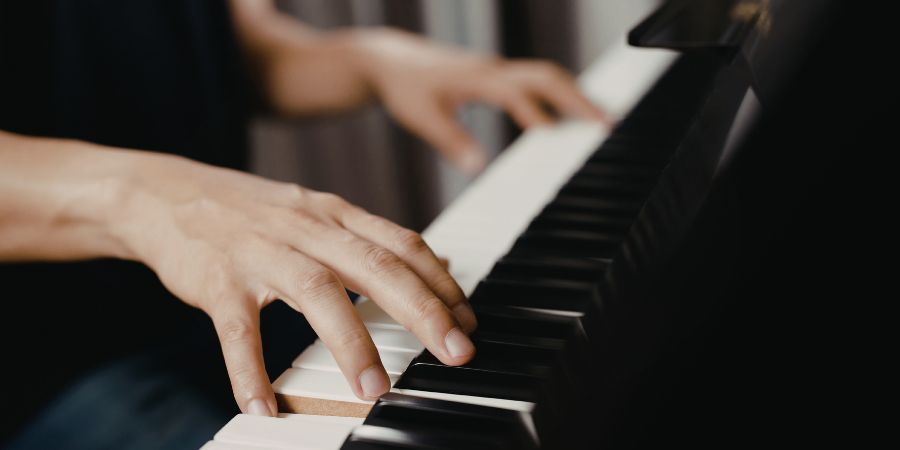
With 2026 already well underway, it’s time to make good on those classic New Year's resolutions: whether you’re hoping to exercise more, have a healthier diet, or perhaps finally learn to play an instrument. At the top of many people's lists is the dream of learning to play the piano.
Perhaps you've also asked yourself: can you teach yourself to play the piano? The answer is a resounding yes! With the right method, a little patience and the appropriate teaching materials, you can definitely teach yourself. In this article, we'll show you how to turn your resolution into reality.
Why Learning to Play the Piano is the Ideal New Year's Resolution
Playing the piano is not just a hobby, but also a superb workout for the brain. It promotes concentration, reduces stress and strengthens your cognition. One boon of self-study is that you get to set the pace. Whether in the evening after a day at work or over the weekend, your piano is waiting for you.
Learning Piano for Beginners: The Basics in 13 Steps
To get off to a good start, you should take a structured approach. Here are the most important steps to take you from complete beginner to your first song:
- The correct sitting position: make sure you are sitting upright and relaxed, and at the correct height.
- Hand position: Your fingers should be slightly curved, as if you were holding a ball. Your fingers should touch the keys in such a way that your forearm, wrist and the back of your hand form a straight line.
- Understanding the keyboard: Learn the pattern of black and white keys (C major scale).
- Fingering: Each finger is assigned a number (thumb = 1, little finger = 5).
- First note values: Learn the difference between whole, half and quarter notes.
- Rhythm and time signature: Use a metronome to stay in time (e.g. 4/4 time).
- Right hand separately: Start with simple melodies using only your right hand.
- Left hand separately: Practise simple accompaniments or bass notes.
- Bringing your hands together: The biggest hurdle will be coordinating both hands.
- Learn basic chords: C major, G major and F major immediately opens up the world of pop music.
- Dynamics and expression: Learn to play loudly (f = forte) and softly (p = piano).
- Understand accidentals: What do sharp (#) and flat (b) mean?
- Regularity: It is better to practise for 15 minutes every day than three hours once a week.
Fit in 15 Minutes – An Introduction to Sound-Oriented Piano Playing
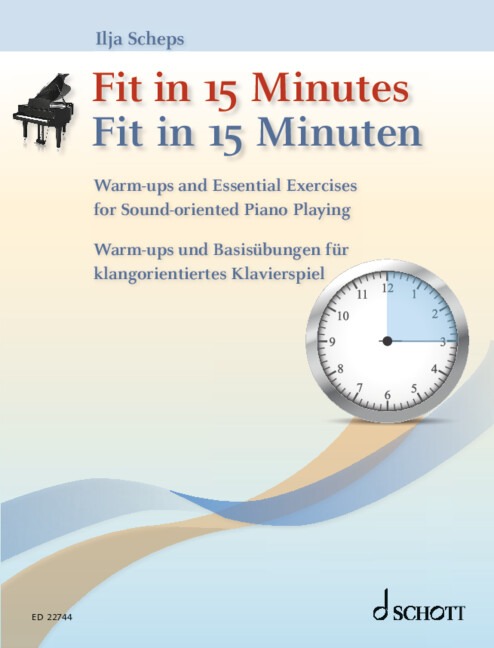 |
Fit in 15 MinutesIlja SchepsHow can you play the piano virtuosically, expressively, freely and relaxed? In searching for answers to these questions, Prof. Ilja Scheps draws on his knowledge and experience gained during his training at the Tchaikovsky Conservatory in Moscow and his many years of concert and teaching activities worldwide. Beginners, advanced players and professionals will find new inspiration and practical tips for developing a sound-oriented piano playing technique right from the start.
|
Our Tip for Self-Taught Learners that say ‘Playing the piano is my favourite hobby’
ViMost hobbies begin with a solid starting point that gives you enough momentum to keep going. Many people fail at the beginning because they get lost in the confusing range of options available. If you really want to learn in a structured way and enjoy yourself, you need a common thread.
Enter Hans-Günter Heumann’s tried-and-tested piano method, as featured in his Classical Piano Method series. Using classical music as its basis, the first book can teach you everything you need to know from the history of the piano all the way through to chords, finger exercises, and intervals.
Why this book:
- Step-by-step piano tuition for beginners and returners, building solid technique from the very first lesson.
- Learn through carefully graded exercises and well-known classical pieces from the baroque, classical and romantic eras.
- All in one method books combining music, technique, theory, guidance and recorded performances for listening and play along.
Simply Playing the Piano Well – A Solid Path to Enjoyment and Success
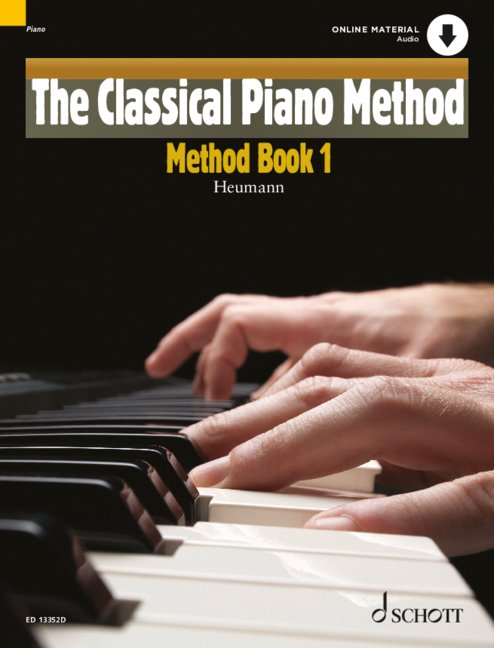 |
The Classical Piano MethodHans-Günter Heumann Created by renowned piano teacher and composer Hans-Günter Heumann, The Classical Piano Method is purpose-built for adult beginners, young students, and pianists returning after a break away from the keys. Firmly based in classical repertoire, this carefully structured method aims to guide students through small, achievable steps, from basic fingering and technique to well-known works from across the baroque, classical and romantic periods.
|
Tips for quick learning success when studying on your own
To help you stick to your New Year's resolutions beyond February, here are three professional tips to keep up the momentum:
- 'Divide and conquer!’: If a passage is too difficult, practise just one bar; first with your right hand, then with your left, then together.
- 'Slow is fast!’: Practise a new piece extremely slowly. Only when you have mastered the fingering should you increase the tempo.
- ‘Record yourself!’: Smartphone videos help you to identify mistakes in your posture or rhythm.
Your Path to the Keys
Learning to play the piano yourself is easier than ever in 2026. All you need is motivation and the right tools.
With materials from Schott Music and a daily dose of discipline, you'll be surprised how quickly you can play your favourite songs. Ready to get started with your new hobby? Grab your sheet music, sit down at the piano and make this your most musical year yet!
Beginner Repertoire Recommendations
|
|
|