• Joy of Music – Over 250 years of quality, innovation, and tradition

Christopher Peter

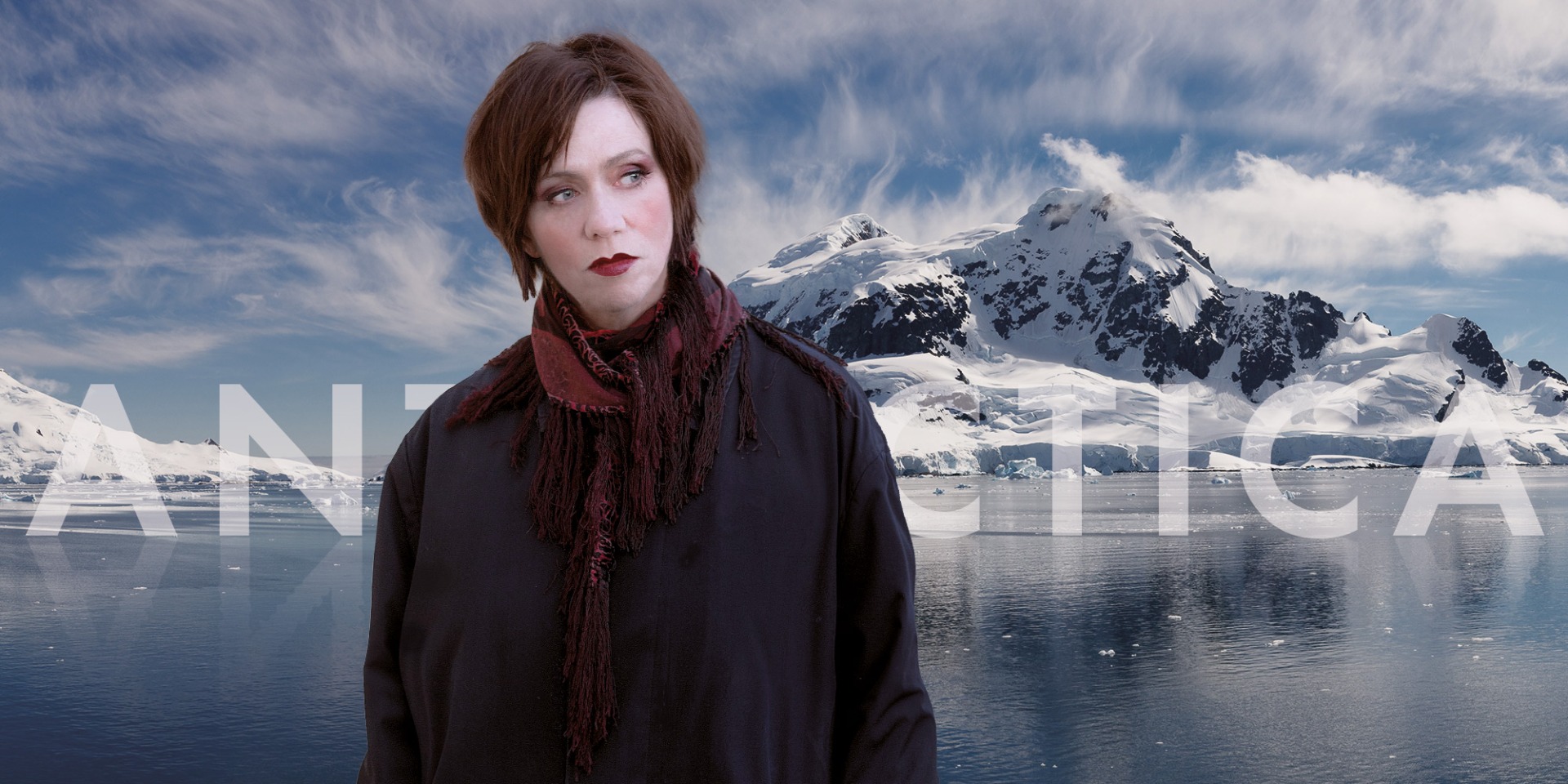
Work of the Week – Mary Finsterer: Antarctica

Work of the Week – Mary Finsterer: Antarctica

The eternal ice is no more: The climate crisis leaves its marks even at the coldest and southernmost spots on earth. In their new opera Antarctica, Australian composer Mary Finsterer and her librettist Tom Wright paint a picture of a changing continent. The new piece will be premiered on 5 June 2022 at Holland Festival with Asko|Schoenberg Ensemble, conducted by Jack Symonds. Director Imara Savage and her team are responsible for the scenic realization at Amsterdam’s Muziekgebouw aan ’t  IJ. 

Read more

Work of the Week – Elisabeth Naske: The Story of the Little Mole Who Knew It Was None of His Business

Work of the Week – Elisabeth Naske: The Story of the Little Mole Who Knew It Was None of His Business

A digestion mishap causes an investigation: This is the starting point of Elisabeth Naske’s new children’s opera which will be premiered at Wuppertaler Bühnen on 20 May 2022. The Story of the Little Mole Who Knew It Was None of His Business (German original title: ‘Vom kleinen Maulwurf, der wissen wollte, wer ihm auf den Kopf gemacht hat’) only requires three performers on the stage: a singer, an actor and a viola player.

Read more

Work of the Week – Gerald Barry: Cello Concerto

Work of the Week – Gerald Barry: Cello Concerto

“Cellissimo” is Music for Galway’s new international cello festival on the edge of Europe. It presents its first concerto gala with the RTÉ Concert Orchestra’s concert on 11 May 2022 at Leisureland Center in Galway. In this unique combination of aquatic and concert hall, Edward Elgar’s famous cello concerto is combined with the world premiere of Gerald Barry’s Cello Concerto. Cellist Adrian Mantu from Galway is soloist alongside conductor David Brophy. 

Read more

Work of the Week – Fazıl Say: Violin Concerto No. 2

Work of the Week – Fazıl Say: Violin Concerto No. 2

With his first violin concerto “1001 Nights in the Harem” from 2007, Turkish composer Fazıl Say wrote one of the most successful concertos of our time. The successor is his Violin Concerto No. 2 “Spring mornings in the days of quarantine”awaiting its world premiere this week on 6 May at Konzerthaus Berlin Friedemann Eichhorn (violin) will be accompanied by the Konzerthausorchester Berlin under Christoph Eschenbach. 

Read more

Work of the Week – Thomas Larcher: The Living Mountain

Work of the Week – Thomas Larcher: The Living Mountain

A Tyrolean in Amsterdam: It’s the flattest of all European countries which is focussing on mountain climbing this week. The Akso|Schoenberg Ensemble is presenting Thomas Larcher’s The Living Mountain for soprano and ensemble on 30 April 2022. Soloist of the world premiere at the Concertgebouw is Sarah Aristidou, Gregory Charette conducting.

Read more

Work of the Week – Valentin Silvestrov: Prayer for the Ukraine

Work of the Week – Valentin Silvestrov: Prayer for the Ukraine

The war in Ukraine continues to shock the whole world as millions of people are leaving their homes and communities in search of peace. Among them, the renowned Ukrainian composer, Valentin Silvestrov, who celebrates his 85thbirthday in September. Originally, Silvestrov did not want to leave Kiev, but as the war progressed he and his family were forced to flee to Berlin, where the composer has been living and composing since 8 March. His Prayer for the Ukraine, composed in 2014, is now seeing performances in concert halls around the world.

Read more

Work of the Week – Peter Eötvös: Cziffra Psodia

5 November 2021 marks the 100th birthday of Georges Cziffra. After Liszt, no other composer represented the Hungarian style better than him and no existing composition was difficult enough for the legendary virtuoso. 

On Cziffra’s birthday, Peter Eötvös’ new piano concerto Cziffra Psodia will receive its world premiere to celebrate the centenary. Soloist Janós Balász and Orchestre Philharmonique de Radio France will perform the piece under the baton of Mikko Franck at Budapest’s MüPa concert hall. 
I wrote the piano concerto on the occasion of Georges Cziffra's 100th birthday. My family had personal connections to him and I had the opportunity to get to know him when I was still a child. Cziffra's whole life was one of success and tragedy. It was rhapsodic and dramatic. This is precisely the atmosphere I have tried to create in my piano concerto. The characteristic, metallic rhythm heard in the first movement is reminiscent of the work in the quarry during his imprisonment. The later, meditative state of the moments of his withdrawal from the public has been composed in three quiet cadenzas. Each movement ends with a short violin solo, a personal tribute. Peter Eötvös

On 7 November, the French premiere of Cziffra Psodia will be presented in Paris at the Maison de la Radio et de la Musique. Swiss and Norwegian premieres with Orchestre de la Suisse Romande and Stavanger Symphony Orchestra are scheduled for 2022/2023. 

photo: Tibor Bozi

Work of the Week – Paul Dessau: Die Verurteilung des Lukullus

On Monday 1st November 2021, the opera Die Verurteilung des Lukullus (“The condemnation of Lucullus”) by Paul Dessau will be performed at Staatsoper Stuttgart. It is the first time that the work has been staged in the state capital of Baden-Württemberg. Julia Lwowski and Franziska Kronfoth, the founders of musical theatre collective "Hauen und Strechen" are directing the production alongside conductor Bernhard Kontarsky, who has been working with the Staatsoper Stuttgart since the 1960s.

The opera from 1949 is based on a radio play by Bertolt Brecht called The interrogation of Lucullus, which the poet had written in 1939. During the Nazi-regime, both Brecht and Dessau were exiled from Germany, and later decided to settle down in the Soviet occupation zone. In the founding year of the German Democratic Republic, they worked together on the libretto of "Lucullus" which was intended to criticize the Second World War and any military expansion. Due to Dessau’s modernist musical language and because the criticism on the exploitive ruling was considered too weak by the socialistic leaders, conflicts with the production team emerged. The world premiere, held at the provisionary Admiralspalast of the German State Opera in East-Berlin on 17 March 1951 was a closed event which then led to a huge dispute. The authors were required to make modifications and changes, among other aspects, to the title of the opera from The interrogation of Lucullus to The condemnation of Lucullus. Subsequently, further performances were allowed, and the piece was publicly performed in the repertoire of the state opera.

Bertolt Brecht and Paul Dessau’ Lucullus as a General and Braggart


From the plot: After the ostentatious act of state for his funeral, the roman military leader Lucullus, the dead man is called to court at the realm of shadows. Among his jurors, there are also his victims so that his triumphal victories are judged differently than what he is used to. Not only are his victories being considered but also the victims on his enemies’ side and among his own troops. The final judgement is clear: "Into nothingness with him!"

The choice of instruments in the score is striking. Dessau completely abandons violins and violas and instead includes a percussion section with nine players. The alternation of wind and percussion sounds and the use of low strings results in a contrasting and effective sound pattern.
The fact that I introduce Lucullus with kettledrums and trumpets has nothing in common with the classical cliché of the hero's introduction. For me, it is meant paradisiacally. I introduce him with kettledrums and trumpets to say, now comes a great braggart. (Paul Dessau)

Further performances at the Staatsoper Stuttgart take place on the 6, 13, 15, and 20 November 2021.

Work of the Week – Joseph Schwantner: Violin Concerto

On Friday, October 15, Joseph Schwantner's Concerto for Violin and Orchestra will be first performed at Orchestra Hall Detroit, MI, with violinist Yevgeny Kutik and the Detroit Symphony Orchestra under the baton of Leonard Slatkin.

It is the first work which the 78-year old composer names 'violin concerto, after former works for solo violin and orchestra carry the titles Angelfire and The Poet's Hour... The latter  being the starting point for the new 30-minute concerto:
The genesis of the violin concerto originally began as a short soliloquy for violin and strings commissioned by the Seattle Symphony to commemorate my friend, Gerard Schwarz’s retirement as the orchestra’s musical director. I had always planned to later expand and re-imagine the music as part of a larger scale work for violin and orchestra. When Gerard also performed the music with his All-Star Orchestra and violinist, Yevgeny Kutik, I was enthralled with Yevgeny’s masterful and nuanced performance. He brings a dramatic and an emotional arc to his impressive technique and captivating musical personality and that vision remained in my mind’s ear all during the writing of the concerto. (Joseph Schwantner)

One day after the premiere, there will be one further concert at the same venue. Both concerts will also be available as live streams.

Mikis Theodorakis 1925–2021

Ode to freedom: on the death of the composer Mikis Theodorakis


The Greek composer Mikis Theodorakis has died in Athens on 02.09.2021 at the age of 96.

Born in Greece in 1925, Mikis Theodorakis resolutely devoted his life to fighting for freedom and justice, searching for valid and comprehensible forms of musical expression and pursuing the significance of art. This long journey ended in Athens on Thursday morning of 2 September in Athens.

Theodorakis tells of his beginnings as follows: “My career as a composer began in the early 1940s when no suitable environment actually existed for my career choice: no orchestra, no symphonic concerts, no music conservatoires, not even a grand piano. When I saw a film showing a performance of Beethoven’s Ninth Symphony, I told my teachers at school the next day that I would now concern myself exclusively with music from this point onwards – and that is just what I did.” This astonishing early certainty was to develop into a compositional output that encompassed over a hundred larger-scale works including symphonies, ballet music, chamber music, theatre music and opera. While Theodorakis conducted a large proportion of his works’ premieres himself, prominent conductors such as Thomas Beecham, Charles Dutoit und Zubin Mehta were also great champions of his compositions. Yet the true core of his oeuvre is an amazing series of more than a thousand songs of enduring popularity. In the years to come an entire nation, perhaps the whole world, shall continue to sing his melodies.

Before Theodorakis became established in genre of the contemporary song, he studied the techniques and artistry of classical music with Olivier Messiaen in Paris. Supporters and admirers of the young composer included Dmitri Shostakovich, Hanns Eisler, Benjamin Britten and Darius Milhaud, who predicted a brilliant career for the tall and lively man constantly overflowing with musical ideas. Theodorakis’ impressive output of symphonic and chamber music ceased however upon his return to Athens in 1960, where he would not compose another purely instrumental work for more than 20 years. He instead turned his attention to song cycles, oratorios and film music, through which his political and social beliefs could be voiced. The works Theodorakis produced in this period were not only of uninhibited and innovative artistic merit, but also intended to be rooted in the identity of the people, with a message to communicate. Soon artists such as Agnes Baltsa, the Beatles, Dalida, Maria Farantouri, Mary Hopkin, Maria del Mar Bonet, Marino Marini, Milva, Georges Moustaki, Nana Mouskouri, Edith Piaf, Herman van Veen and many more adopted his songs into their own repertoires, and spread his messages across the world.

Theodorakis first turned to the field of opera later in his career as he approached the age of sixty, yet subsequently produced new works in an established rhythm of every four years. All five of his operas offer new interpretations of classical Greek mythology in which Theodorakis combines European musical tradition with his intrinsic melody-writing and the characteristic Greek idiom.

Theodorakis occupies a unique position in the musical and intellectual history of our time. His worldwide popularity, the great variety of his artistic creativity, and his political career have established him as one of the most significant figures in contemporary history. Throughout his life he selflessly stood up for international human rights, despite being interned in prison camps while Greece was under military dictatorship, and later exiled. He was a humanist out of profound conviction who never retreated into his art, but repeatedly involved himself in politics and always took a stand, above all in the most problematic of times. In 2018, Theodorakis was honoured for his timeless music and dedication to human rights with the award of an honorary doctorate in philosophy from the University of Salzburg.

The lasting legacy of Mikis Theodorakis in Greece and beyond is found not only his struggle for freedom, even in the face of personal torture and exile, it is in his flawless coupling of art with the voice of the people. What could be a more pertinent example than his perhaps most famous composition: the dance melody for Michael Cacoyannis’ legendary film Zorba the Greek, which has become an unofficial Greek national anthem. The significance of this melody for the people of Greece echoes the power of Verdi’s Va pensiero, and the melody that first inspired Theodorakis to become a composer, Beethoven’s Ode to Joy.