 français
  deutsch
  english
Détails du produit
Description
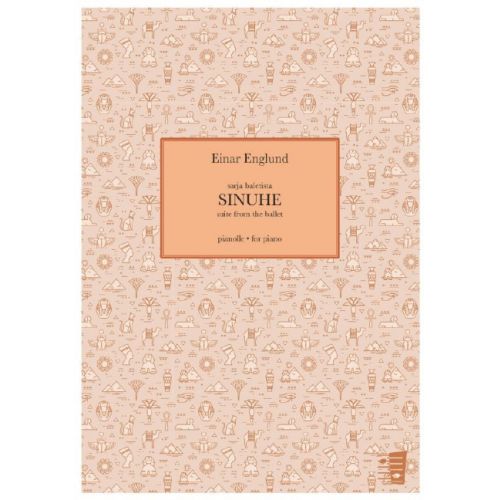
It was through Einar Englund (1916-1999) that the Neoclassicism already familiar elsewhere in the world landed on Finnish shores in the late 1940s. A composer especially of large-scale orchestral and chamber works, Englund is one of the greatest Finnish symphonists.
Sinuhe is an example of a Finnish composition founded on a non-Finnish subject handled in a non-National-Romantic way. This probably partly explains why the score has fallen into oblivion in Finland: the Oriental moods and the Nile do not correspond to the view of a Finnish composition as one favouring topics from the national epic, the Kalevala, and lakeland scenery. The music also incorporates motifs derived from Lapp yoiks used by Englund in his score for the film The White Deer (1952). When it was written, the ballet's combination of a historical subject with an exotic, stylised idiom showed that Englund had his finger on the international pulse, unlike, say, Samuel Barber's ballet Medea (1946) and Aram Khachaturian's ballet Spartacus (1956).
The suite from Sinuhe is in five scenes. It omits the original overture and almost all the music for the second half of the ballet. Sinuhe's hapless love for the courtesan Nefernefer is described with languorous sensuality. His servant Kaptah throws himself into a frenzied dance with the Cretan maidens. The suite ends with the rhythmic war dance of his friend Horemheb.