• Joy of Music – Plus de 250 ans de qualité, innovation et tradition
Lieferzeit
2-3 Tage

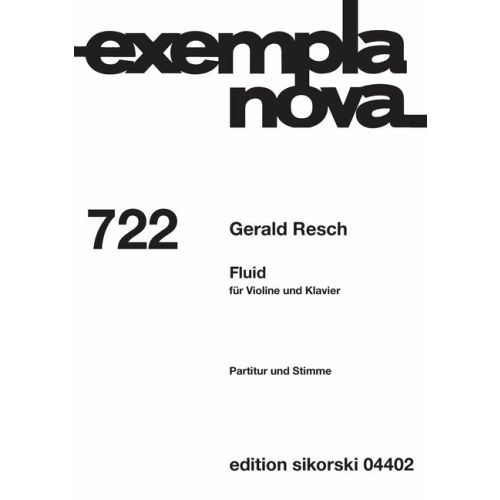
Fluid

für Violine und Klavier
Fluid ist ein dialogisches Spiel zwischen zwei grundverschiedenen Instrumenten. Die Violine – mit ihrem kantablen, expressiven Ton – und das Klavier – mit seiner rhythmischen Klarheit und klanglichen Direktheit – begegnen sich hier in einem permanenten Austausch. Grundlage ist eine 20-tönige Melodie, die von beiden Partnern in unterschiedlichen Ausschnitten, Schattierungen und Kombinationen durchlaufen wird.
Numéro du produit: SIK04402
16,00 €
TTC, hors expédition
Type de produit
Format papier
not yet published, no backorder possible

Détails du produit

Description

Gerald Resch's duo Fluid is a dialogical interplay between two fundamentally different instruments. The violin – with its cantabile, expressive tone – and the piano – with its rhythmic clarity and tonal directness – meet here in a permanent exchange. The basis of the six-and-a-half-minute composition is a 20-note melody, which is played by both partners in different sections, shades and combinations.
The structure of Fluid remains deliberately transparent: complexity is created above all by overlapping and varying elements that have already been introduced. Rhythmically lively, but never overloaded, the piece moves through bright, often filigree soundscapes. It is music that remains in motion – constantly in flux, in the literal sense.
fluid was premiered on May 16, 2023 in the Mittlerer Saal of the Brucknerhaus Linz by Benjamin Herzl (violin) and Ingmar Lazar (piano).


Plus d'infos

Titre:
Fluid
für Violine und Klavier
Niveau de difficulté:
avancé to difficile
Maison d'édition:
Sikorski
Durée:
6 ′30 ′′
Série:

Détails techniques

Type de support:
2 Partition
Numéro du produit:
SIK04402
ISMN13:
979-0-003-04402-6
ISBN13:
978-3-689-03027-8
Pages :
24
Format:
21cm x 29.7cm
Obligatoire :
Reliure à dos agrafé
Fabricant:
Boosey & Hawkes Deutschland GmbH
10969 Berlin
Allemagne

Plus de cette série

exempla nova

Commentaires

Écrire la première critique